The Ivory Suvarnabhumi

The Ivory Suvarnabhumi is ideal for somebody needing easy access to Bangkok International Airport. Though the airport is just about 2 km away aircraft noise is non-existent.

What added to our time getting to the hotel from the airport was the thirty-minute wait for the free airport pick-up service. The driver was very apologetic though.

The hotel is compact, but with rooms that are surprisingly spacious, comfortable and spotless. What I liked best was the bright and cheerful colour chosen. Ivory naturally.

Staff at the hotel were at a minimum and I wondered if these were serviced apartments.  However, the front office person did try hard tracking down a telephone number for us.

There is a restaurant in front of the building but I didn’t think it was part of the hotel and anyway, the fare offered was extremely limited in choice. We checked in at about 9.30 pm and then went in search of something to eat but there was nothing to be found. For Bangkok, the streets were surprisingly deserted. I got the impression that it was an industrial area with a lot of warehouses that were locked for the night.

This hotel has to be accessed by taxi.

Bravo Hotel – bravo!

The Bravo Hotel in Pyin Oo Lwin is much better than Lonely Planet makes it out to be.

It’s easy to miss it because in a very central part of town that is crowded with shops and signboards. And the boutique in the front obscures the entrance.

Inside, the hotel was much better than it looked from the outside. The owner tried a bit of hard sell but since we were tired after a long day in, and from, Mandalay, he had already half convinced us. We checked out the rooms and were pleasantly surprised. And at $15 a night, including breakfast, it was a steal.

Pyin Oo Lwin was cold and wet and we were grateful for the clean, large room. The beds and blankets were inviting, comfortable and warm. The toilet too, was clean with plenty of hot running water.

The corridors and landing were decorated with various bric-a-brac, some tasteful, others kitschy. Breakfast was supposed to be at 7.30 am but was about 15 minutes late.

The owner and other staff were extremely helpful, offering tips on how to get the most of our stay in the town, advising us on prices etc., sometimes getting us better prices than our Burmese friend had negotiated for us. We were even lent some guide books.

The Bravo Hotel is great value for money.

Shah’s Village – Kuala Lumpur

Shah’s Village Hotel is an older property that has seen better days but it still is a very charming, comfortable and convenient place to stay.

The lobby is spacious and has a colonial feel to it. A wide staircase leads to the rooms and one can almost imagine descending those stairs, formally dressed, to a ball. The rooms are big and clean and come with a mini fridge and safe.

The restaurant serves excellent food and the breakfast buffet, which is included in the rate, is varied and substantial.

The pool area is surrounded by thick foliage with a rainforest quality to it.

The staff are helpful, yet unobtrusive.

Unlike many hotels that claim otherwise, the Wi-Fi here really works.

The hotel is less than a five-minute walk from the Taman Jaya LRT and so getting to the city centre is very easy. A little further away is the Amcorp Mall with a wide range of shopping choices. About a 15-minute walk is P. J. Baru, a restaurant which offers some of the best food in Kuala Lumpur and never seems to close. I’m not sure whether a 2.00 am meal there is dinner or breakfast!

Karin Hotel – Udon Thani

Karin Hotel is as central as central can be. It’s a ten-minute walk to Central Plaza, presumably the most central place in Udon Thani.

Despite being a strictly no-frills, budget hotel it is surprisingly good value for money.

The rooms are adequate though the beds could do with a change of mattresses. The springs in them have long since retired. But then the bounce goes out of most of us as we age.

The good thing about the TV set is that it discourages staying in the room and watching the idiot box.

The rooms in the new wing are better but more expensive. If you’re looking for a place to just shower and sleep, the old wing is perfectly adequate.

The food in the restaurant can be given a miss. Missing the breakfast is mandatory if you don’t want a bad start to the day. So don’t pay the extra charge for that option.

The staff at the reception have been there for a while and over the years they have mellowed. They are a little more polite nowadays. And speak a little more English too.

Udon Thani offers a range of good eating places but none of them are in the vicinity of the hotel.

On Writing

I was a compulsive reader by about the age of ten but hated anything to do with writing. That was work. In school, the topics for essays were guaranteed to freeze the fingers and atrophy the brains. One of our teachers had a system of grading that always tripped me up. Students who showed considerable improvement over the previous week got A’s, while those who didn’t, got D’s and had to do the assignment again.  Thus, weaker classmates could get higher grades than the better ones. True, this encouraged those who couldn’t write, but for others thought capable of producing good work, those weeks when our efforts were “deemed inadequate” could be discouraging.  I was writing essays for friends who did my math or Hindi homework. They’d get high marks for composition but I’d have to rewrite mine because of “insufficient improvement”. The number of ideas I had was limited and trying to ration them out amongst the 2-3 essays that I had to write the night before put a strain on my brain, my fingers, and on my grades.

In my early 20s I thought I’d like to be a writer. I started off with a couple of letters to the editor and though I had some short stories published I didn’t see myself as a writer. Writers were people who wrote books, I thought. And that was hard work.

Then with my 25th birthday approaching I was expecting a massive depression.

On that day, a year before, my heart had been broken and I still hadn’t got over it. I decided that I’d be able, from the depths of my despair, to write something really profound. I was on holiday, far away from the city that we both lived in.  It was my birthday and I decided to treat myself to lunch in the beautiful, and expensive, Lake Palace Hotel in Udaipur. I was a bit overwhelmed by my surroundings. But there was nobody to share the meal with, or the shock of the bill when it arrived.

My birthday came and went. Weeks later I remembered that I had forgotten to be depressed. I had missed the chance to wallow in despair and profundity. So I faked a depression and wrote a short story. I thought it was really good and sent it off. But it got me my first rejection slip. The editor had got it wrong, I thought. This was real literature. Submission after submission was followed by rejection after rejection. Seeing all those rejects gave me a depression.  And this one wasn’t faked.

Based on the story, one magazine did offer me a job as a staff writer. That was some consolation for the rejection slip they included in the envelope. But if they had a problem with my story, I had a problem with their politics and I declined politely.

Since then there has been little inclination to write. Once in a while I feel differently but prudence and procrastination suppress any literary urges.

@ Percy Aaron, 29 July 2013

Step back in time

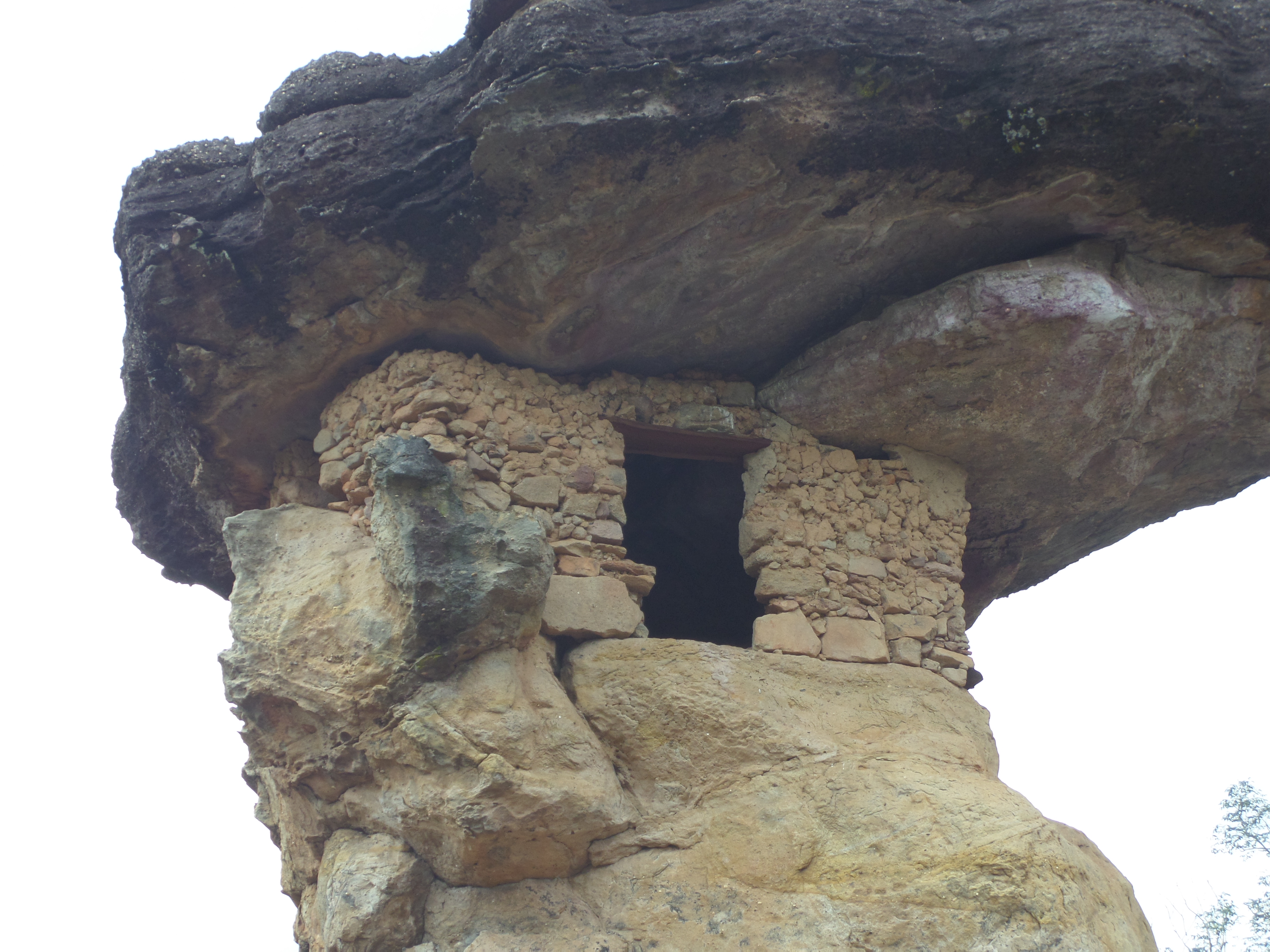
Approximately 75 km from Udon Thani, in Ban Phue District, is the Phu Prabhat Historical Park.

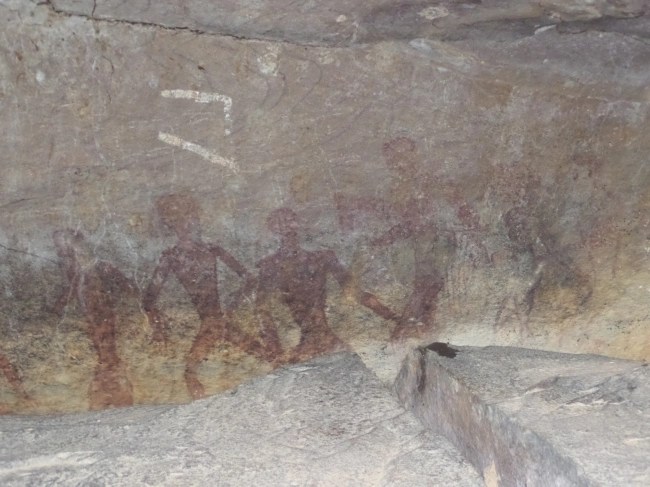
Geologists suggest that millions of years ago the area was covered by glaciers and when these melted the resulting moraine, or debris, caused the strange formations of stone. The area is scattered with unusual shapes of menhir (stand-alone rocks) and archaeologists believe that around the 14th -16th centuries of the Buddhist calendar, Buddhists and Hindu hermits lived here. These men are believed to have prayed, meditated and in general, retreated from the world in their little rock-hewn abodes. Looking at these rocks, the Hoh Nang U-sa in particular, one cannot help but wonder about the tools and techniques, these ancient people used in their building activities.

On some of the rocks one can still see carvings or drawings of men and beasts from many centuries ago, though time and the elements are slowly eroding these. However, I suspect that some of the Buddha images strewn around the place are of more recent vintage.

(Photographs by Devinder Raj)

The park is well-maintained and the entrance fees of 100 baht per person is a pittance for the opportunity to spend a few hours in a tranquil setting while the mind wanders back many centuries in time.

Thoughts on Rabindranath Tagore’s ‘Jogajog’

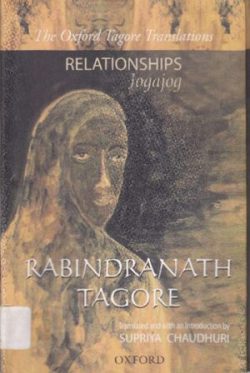
Relationships by Rabindranath Tagorecopy

(This article was first published in Live Encounters: https://liveencounters.net/2021-le-mag/07-july-2021/percy-aaron-my-thoughts-on-relationships-jogajog-by-rabindranath-tagore/)

The story revolves around the Chatterjees and the Ghoshals, two families locked in a feud that goes back some generations. While the former have fallen on hard times, the latter have seen their wealth grow rapidly within one generation due to the acumen and single-minded ambition of Madhusudan, the head of the Ghoshal family.

The story was first serialized in the literary journal Bichitra under the title Tin Purush. When it was published as a novel in 1929, Rabindranath Tagore changed its name to Jogajog. Supriya Chaudhuri, the translator of this edition, the fifth in the series by Oxford Tagore Translations, opted for Relationships as the word nearest in meaning to the author’s original choice. The book contains a note by Tagore as to why he chose Jogajog and the translator, in her longish introduction, explains her choice of Relationships.

Bipradas, the scion of the Chatterjee clan is in declining health, physically and financially. Marriage has passed him by for a variety of reasons. Madhusudan is single too but now that he has accumulated great wealth, he wants a wife, but not just any wife.  He has his eyes set on 19-year old Kumudini, the unmarried youngest sister of Bipradas.

Kumudini Chatterjee, the main protagonist, is “beautiful, tall and slender like a stalk of tuberose; her eyes were not especially large, but they were deep black, and her nose was drawn exquisitely, as though made of flower-petals. She was as fair as a white conch-shell with two graceful hands whose ministering touch was like the gift of the goddess Lakshmi; one could only accept it gratefully”.

If her physical description is quite over-the-top, her skills in other areas are equally so. In chess, she is “so skilled that Bipradas had to play with some caution” and “Bipradas’s hobby was photography. Kumu too learnt the art”. She knows Sanskrit, reads the classics and is an accomplished esraj player. One gets the impression that had she taken up tennis, she would have won Wimbledon.

Her brother Bipradas is “handsome as a god” and skilled in everything he touches, be it chess, the classics, Sanskrit, playing the esraj and hunting. Despite not being a very believable character, he does come across as likeable. One gets the feeling that had he been as good in business as he was in the arts, the family would not have been in such dire straits financially.

The hagiographic characterization does not stop with Kumudini or Bipradas. Their father “was tall and fair-skinned, with a mane of shoulder-length hair and large finely-drawn eyes whose gaze bespoke unchecked mastery……” He “possessed great strength and a handsome body…

Besides having all these exceptional qualities, the ‘good’ people are invariably tall and fair-skinned, while the others are not. While “Madhusudan was not ugly, he was exceedingly hard-featured. What struck one immediately was his dark face….. His wiry hair was as curly as any African’s…. He was short… His arms were hairy”. By character, he “was obsequious in his politeness, his face lit up constantly in hospitable smiles” especially when he was with English people. Shyamsundari, the widow of his elder brother, is “dark BUT beautiful” – as if these two qualities are incompatible. That she has an affair with Madhusudan is contemptible.

The lopsided characterization of the ‘good’ people versus the ‘bad’ people continues with little attempt to balance out the characters.

It is the mindless superstition that makes Kumudini such a bogus unattractive character.  In a letter to the poet Radharani Debi, Tagore tries to explain his heroine. “She had installed in the figure of her deity the complete ideal of manhood that inwardly, unknown to herself, had attracted her mind on the threshold of adolescence.  In point of fact, she had given her womanly love in the guise of worship to that deity. This Kumu, caught up in the mist of her belief, imagined that it was her deity who had beckoned her through a proposal of marriage…”   This excessive religiosity is not piety but a sign of mental health issues. That she believes it is divinely ordained that she marry a man she has never met, then finds him repulsive, makes no attempt to communicate with him, and for whatever reason, makes him feel inferior, only makes her more unlikeable. I wonder if Madhusudan ever saw her smile?

“Ever since their mother’s death, Bipradas had become entirely dependent on Kumu’s care. …everything was in Kumu’s charge. He had become so accustomed to this that nothing pleased him in daily use unless it was touched by Kumu’s hand”.  The admiration between brother and sister for each other is mutual. At best it’s protective, at worst, incestuous.

This novel was written more than a hundred years ago and the main impression is of a suffocating caste-ridden Bengali society mired in rituals and mindless superstition. It couldn’t have been very pleasant being a woman.

While it’s not fair to judge a novel written about one hundred years ago by 2021 standards, I did find the characterization unconvincing, especially when coming from the great Rabindranath Tagore.

For the nineteen years of her girlhood an intense sense of purity had enveloped and pervaded her every limb”. Was Rabindranath Tagore’s Kumudini meant to be a caricature of somebody he knew?


© Percy Aaaron