“Are you Burenang?” the burly plainclothesman asked, referring to me by my pen name.
“No,” I lied.
He sensed my fear. From his pocket he pulled a pamphlet I had written and stared at my picture below the text. “You chose,” he hissed, “your life or your writing.” A few feet behind, stood his partner. Under his loose shirt I could see the outline of the gun in his waistband.
Bounthanong Xomxayphol’s first brush with the royalist authorities, came when he was only 20. He was certainly intimated but not deterred. He continued to write, changing his pen name or moving from house to house whenever he sensed danger, or a sympathizer in the police tipped him off. The war was going badly for the royalist government and though the pressure eased, he was always a target.
The Vientiane of the 60s and 70s was a frontier town. The American War on Vietnam flooded across Lao borders and the capital filled with foreign soldiers, merchants and mercenaries, who played alongside the French colonials and their local supporters. Anything and everything was for sale, especially guns, girls and drugs. The majority of the people remained mired in deprivation and exploitation.
Bounthanong was passionate about books and words came easily to him. So, the decision to become a writer was inevitable. It was the best way, he felt, to catalogue the injustices he saw all around him.
He told Champa Holidays that he was probably one of the few Lao, who as a child, had his own library at home. An avid reader from an early age, he was profoundly influenced by the works of the short story writer, Outhin Bounyavong and the poet Panay (Pakien Viravong). Later, it was Guy de Maupassant, Victor Hugo and O. Henry.
After high school, he went to the Royal Institute of Law and Administration, becoming an active member of the Lao Progressive Students Association. He wrote a series of articles in the student newspaper denouncing CIA activities in Indochina. In 1973 he had printed 1,000 copies of The Bright Side of Darkness, his first collection of political articles, essays and short stories and sold them outside schools and theatres. This resulted in that first visit from the secret police with the warning to choose between his art and his life.
“I am not a fly that travels around collecting news of other people to report to the powerful in the hope of collecting a reward…I have no wish for this land to have any more cowards than it already has.”
A Bar at the Edge of a Cemetery
Gorbachev’s glasnost sent ripples beyond the Soviet Union, and this eased some of the restrictions But, the more things changed, the more they remained the same. Writers, by the very nature of their profession, are outsiders and if they wish to remain objective, they must stand aloof from the society they chronicle. This brings on its own set of problems and to avoid these, some collaborate, while others adapt or allegorize.
“Oh you men! What a life a poor bird has! I harmed no one. All I wanted was for to live.”
Oh! Men….May I breathe
In 2011, Bounthanong received the Lao Top Artist Award from the government. Three months later, he won the SEA Write Award for his short story Kadook America (American Bones), a powerful anti-war tale of a Lao-American team searching for the remains of U.S. servicemen missing in action during the American War in Vietnam.
There was no medicine that could cure his anger whi8ch had remained a lingering disease in his mind. During the past few days, however, he had been forced to suffer the imaginable. Here he stood digging up and sifting through the dirt, not to search for gold, but rather the bones of American soldiers, the same people who ten years earlier had arrived in Laos to murder his own parents and relatives.
American Bones
Earlier this year, Bounthanong earned another laurel when he won the Mekong River Literature Award (MERLA) for his novel Fai Noom (Young Fighter). Champa Holidays asked Bounthanong about his writing schedules. Despite having written about 150 short stories, over 100 poems and 4 novels, he has no fixed routine. He reads a lot and writes only when he has an idea. Otherwise, he spends his time sipping freshly brewed coffee, puffing on strong cigarettes, and observing, in the way writers do.
Why do we need to lie about a book that we’ve half read, quarter understood and that’s given us zero enjoyment?
Many years ago, I did an online writing course with Oxford University. In order to encourage all the participants to get to know each other better, the course instructor asked us to draw up a list of the five best works of fiction we had ever read. Remembering all the good books that ‘we had ever read’ was an almost impossible task, made doubly difficult, if I recollect correctly, by the fact that we were given just 24 hours. The idea of giving us such a short time was that we would remember only the books that had had the greatest impact on us. For me, and presumably some others, there was another consideration: like with films, there were many books I had read two or three decades earlier, that I no longer felt the same way about.
From the lists drawn up by the sixteen of us – spanning five continents- mine was distinctly low-to-mid brow. I had long since passed out of that phase when I read a book because a critic had declared ‘If there’s one book that you read this year, this must be it’. On the list there were several that I had never even heard of, not even the authors. For somebody who thought he was very well-read, on a variety of genres and a wide range of topics, the realization that I was so unschooled, pricked my ego.
In the forum though, I admitted to my ignorance and pointed out that there were books and authors I was hearing of for the first time. I also wrote that there were several – Ulysses, for example – which after two or three attempts, I had decided to try again only in the after-life. One by one, several of the others started admitting to the same. A few even ‘delisted’ books they had mentioned earlier, while two of them said that they had inadvertently included books that they hoped to read sometime in the future. With a degree of smugness, I patted myself on the back for puncturing some pretentiousness.
I remember once leaving a novel written by a friend on my desk in the school staffroom. The resident scholar picked it up, looked at the front and back covers, flipped through it and then said, ‘I haven’t read this one. His other books are OK. How do you pronounce his name?’ I looked at him in disbelief. The publisher’s blurbs, front and back, clearly stated that it was a debut novel.
So if reading, fiction at least, is supposed to be a very private pleasure why do so many of us get caught up in name dropping, or should I say title dropping? Why do we need to lie about a book that we’ve half read, quarter understood and that’s given us zero enjoyment? Why do we need to persist with a book on the NYT bestseller list or a Booker Prize winner, when we are struggling through every page? Why even pick up one of a genre that we detest?
Remember the story of the Emperor’s New Clothes and the little boy innocent enough to exclaim that the man was naked? I suppose it’s the same with books. Who among us would be daring enough to openly say that a book is unreadable when it’s made it to the bestseller list of a leading newspaper or magazine? Who would be brave, or is it naive, enough to declare a Booker – White Tiger, for example – or Pulitzer Prize winner ordinary, even as we wonder at the political and financial reasons behind the nomination?
And do the reviewers get it right? Have they properly understood a book they are touting or ripping to shreds? Does it make sense to let a critic decide our reading tastes? Some months ago, I watched a Nobel laureate being interviewed on a well-known news channel. Its book critic, in discussing the author’s oeuvre, made a reference to the message of one of his works. The author replied that was not the message of the book. With a very straight face, the interviewer let that gaffe pass. Remember the people who claimed that Lucy in the Sky with Diamonds was a Beatles’ ode to LSD, despite composer John Lennon repeatedly stating it was a response to a painting by his four-old son.
Talking about the Booker Prize, I once read an article by one of its judges that she had read the 145 novels on the long list in seven months. That’s 145 books in 210 days. Or an average of 1.4 books per day! This person wrote that she had read every page of every book in the selection process that year. Was her declaration also a work of fiction? In the comments section, I posted that question, but unsurprisingly never received a reply.
Another wrote, ‘and it ate up all my free time: during every bus journey, every moment sitting waiting for a film to start, every interval of whatever play I was reviewing, I’d whip out a book and cram a few more pages in’. Was she doing justice to the play or to the book?
Still another wrote that she would even read a few pages before a dental appointment. Admittedly, reading ‘a book a day’ because it’s a job, can numb the mind. I didn’t realize that it has similar effects on the gums. Maybe, dentists should consider books for their patients instead of anesthesia. The critic didn’t say whether she read while swimming or bungee jumping, or checking her Facebook and Instagram accounts, though I’d bet she tweeted between paragraphs.
In the past there have been leaks about judges, skipping large sections of books they were passing judgement on, and in some cases not even reading all the ones that had been allocated to them. Even the most diligent of us sometimes slips up on the job and we should keep this in mind when allowing a reviewer or a judge, to determine our tastes.
I read about 5-10 books at a time (on a variety of subjects) and admittedly that slows me down. But even as a voracious reader, I still manage to finish just about 4-5 a month. It took me almost a month to finish Ma Jian’s, The Dark Road, as I was unfamiliar with Chinese names and settings. Despite having read a lot of Russian literature, about eleven months had passed before I sorted through the numerous characters, each with several variations to their names, not counting the diminutives, in Simon Sebag Montefiore’s brilliant three-part biography of Joseph Stalin.
So, a Booker judge reading 1.4 books a day, is a bit difficult to swallow. Writers, with any respect for their craft, spend months, if not years, polishing and re-polishing a manuscript, agonizing over words and sentences till they think that they have a jewel. How do they feel when a so-called judge has read through their book at the speed of pound? Or dollar? How can any reader understand a novel they are speed-reading, if the settings and names are from a land and culture completely alien to them?
Reading and appreciating a well-written work of fiction – like sipping a fine wine – requires time, a certain mood and total concentration. Anything short of that is an injustice to a good writer. And to a good reader too, because reading properly is also a craft.
Phet is crouched in the deepest interior of cave, eyes wide with fear. Resting his head against his father’s knee, he watches his five-year old twin, unafraid as always, playing catch-me-if-you can with some of the other village children. All around them people are screaming as they climb over those squatting near the entrance. Villagers who have found places are urging the stragglers to move faster. The cave is full but still they make place for the laggards. A dog, its tail tucked between its legs, is burrowing under the crouching bodies. Phet sees his grandmother at the mouth of the cave, hobbling inside on the arm of his aunt. The younger woman looks back anxiously; backwards, upwards. His mother pulls him and his father into another tunnel trying to create room where none is possible.
Then a blinding light and an ear-splitting explosion fills the cave with dust and debris. The next minute, his aunt, his grandmother and several others are just blood, bones and brains splattered over the rocks at the entrance. There is no time to grieve, or even scream. As the fires start, his mother grabs his hand. His father picks up another sibling, and they run, stepping into the crimson human pulp. All around them the cave is emptying as quickly as it filled up.
In the sky the warplane circles like a vulture observing carrion from above. As the villagers rush to the open rice fields, it turns around and dips down, slowing for a strafing run. Phet’s father stops and holds up his hand, they won’t make it, which right now is a good thing. In slow motion, they watch the plane’s machine guns stitching the shallow water of the rice fields, turning it from brown to red.
The next day the old man returns to work, breaking his back in his little rice field. Despite the deaths the previous day, grieving is an unaffordable luxury when so many mouths remain to be fed. But a few nights later, over a rusty mug filled with the locally brewed rice wine, the tears come for his mother, his sister and his son Thip, Phet’s twin.
***
Since that fateful day, life had moved on. Things were still difficult for most villagers. There was still the constant hunger but at least there was peace – some kind of peace. Now at least, those big birds in the sky no longer rained death and indiscriminate destruction.
True, most promises weren’t kept and there was no end to the sacrifices being demanded. True, some people were expected to sacrifice so much more than others. Villagers who were close to the important people visiting from the towns, always seemed to have more for doing so much less. The village chief spent less time in the fields and more time assembling them after a hard day’s work exhorting them to grow more food. The exhortations were always the same: work harder; give more; be patient; and always be vigilant, especially of the enemies in their midst. Phet’s father was really confused. Usually, the enemies were those villagers who cared and shared the most. Those who had fought hardest during the revolution, were now the ‘enemies in our midst’. The old man couldn’t understand. Most times there was never enough food in the village and yet when these people from the towns arrived, the food and drink were plentiful, at least at their table. On each visit, they took away more than half the rice and vegetables grown by the villagers. They were taking away the food to distribute to others who had nothing, they said but it was difficult to imagine any village having less food than this one.
About five years ago, Bounmy his friend, had asked these important people if he could accompany them as they distributed the food to distant villages. He went off with them, very excited at the opportunity to ride in a truck. But he didn’t return and later they told him that he was working for the Party in another part of the country. Selfish Bounmy, not even keeping in touch with his elderly mother. On another visit, Kham the hardest working of them all, had pointed out to these important visitors that they looked healthier and stronger than any of the scrawny villagers and maybe they should stop making speeches and help in the fields. A few mornings later, a couple of them came back and took him away to meet the big chief in the capital. Now more than three years later, he hadn’t returned to his struggling wife and three children. The village headman said that he had met another woman, much younger than his wife, and married her. So it was always with those complaining: leaving without even saying goodbye to family and friends.
As the years went by, life began to ease for some villagers. A few had relatives overseas, people who had left before or during the war. Now they sent back money or parcels. Then a message would come from the town and the lucky ones would journey to the post office there.
True they had to part with almost half of what they received but they never grudged this as it was going to help those villages that had even less. The village headman took a cut too, but that was because he gave the villager a lift into town on his dilapidated motorbike. Despite having to give away almost two-thirds of what was received, there was always enough for a few chickens to share with friends. Gradually, some homes started acquiring bicycles and transistors.
Occasionally a visitor would arrive from these faraway lands to see relatives, trace their roots, and even to marry a local girl. Then they would pay for the slaughter of a pig or two and the whole village would be invited to party.
Early this year a man arrived from America looking for a bride from this village. As always with these visitors, he wanted to impress the local people by being generous with his food and drink. Each night the villagers got together with this Lao-American, sharing his bourbon or offering their homemade brew. The prospective groom, twice divorced, was in his late fifties. While the bride-to-be was just nineteen. But she was beautiful and her impoverished family could do with the handsome dowry promised. One night, after the liquor had taken effect the reminiscing began. Family histories were related, roots traced and ghosts from the past resurrected. Stories from the war were told and retold and those who had died were remembered. But of so many, there was no trace. Most families had paid a heavy price.
Then one night the visitor mentioned a colleague from the same factory back in Minnesota who had lost his whole family in the caves that day the warplane had come. A stranger had grabbed the five-year old’s hand and run, not letting go. And she hadn’t let go even after crossing the border into Thailand, not through all the years in refugee camps, or later in wintry Minneapolis. Aunt Mai had adopted the little boy and cared for him all the years, until the cancer got her last year.
***
Down from the mountains they came and after two days of arduous travel, Phet and his family finally arrived in the capital, Vientiane. Now they were at Wattay International Airport in their finest tatters. Phet, his parents and his three sisters went up to the observation deck while their children went up and down in the lift, pressing numbers at random. After a while, somebody spotted a plane in the sky, and a shout went out. Phet looked into the sky and squinted as the giant silver bird descended. Then memories from thirty years ago came flashing back. He started to shake uncontrollably. His frail old father held his arm, not knowing whether it was excitement, or just his son’s recurring malaria. Steadying himself against the railing Phet pulled up his shirt and wiped his forehead. He choked back a scream and gripped his father’s arm tightly.
The panic subsided by the time the screaming monster taxied to a stop on the tarmac. Phet’s sisters were giggling nervously while their children, bored with the lift, were gaping at the big bird now spitting out tiny dolls of men and women. From the distance, he watched the passengers walking towards the terminal clutching bags or bundles in their hands. He stared hard at all the men but couldn’t identify his twin, despite all the photographs exchanged since contact had first been made.
They took the lift to the ground floor and Phet saw the crowds milling around the Arrivals gate. His mother pushed through the throng, her tiny frame slipping between the people in front of her. His sisters, already teary eyed, struggled not to burst with emotion in front of these slick city folk. His father, too scared to go to the toilet in case his son disappeared for another thirty years, had wet his trousers. He didn’t look well at all.
Phet didn’t know how he would react when he met his twin face-to-face. Even at five, his brother had been his hero, his universe.
Then Phet saw his mother being hugged by a muscular, handsome lookalike. From behind the crowds, he could hear her shouting, crying. His sisters were rushing towards their long-lost baby brother. As he helped his father forward, the old man stumbled. Phet struggled to hold him upright, then saw his father, eyes closed clutching his chest.
Just finished ‘Homecoming’. A very interesting piece. Is this a made-up story by you, or are you retelling a true tale? Either way, a very well-written piece.
From Hatsa, a small trading post on the banks of the muddy Nam Ou River in remote northern Laos, we sailed upstream through some stunning and largely unspoilt scenery. At times the colour of the water changed to a deep ochre. The current was strong and the boatman guided us skillfully past the occasional rapids splashing water onto everyone and filling up the boat. His assistant sat on the prow using an oar to push the craft away whenever it got close to any of the rocks. On placid stretches he kept himself busy baling out the water.
At regular intervals the boat stopped for villagers to get on or off and after about forty-five minutes it was our turn. We waded onto a sandy, deserted bank. All around us the high hills were covered with tall trees and dense vegetation. The only sounds were the rushing waters and the various bird calls, some recognisable, most not.
Travelling upstream on the Nam Ou
Indian file, we started climbing through dense undergrowth. At times the vegetation was so thick we could see only a few steps ahead. I pulled my cap tight over my head and covered my face with my hands or elbows to protect it from nettles and thorny twigs. Almost immediately the leeches started feasting on us, while the mosquitoes hovered around waiting their turn. We climbed and climbed and I slipped and slipped. Bringing up the rear, it was difficult to keep up with David and Souk, our guide, who had to stop frequently to allow me to catch my breath.
After about an hour of steady climbing I was totally exhausted and just couldn’t go on. I suggested they continue without me. Finding my way back would have been impossible and I was secretly relieved that David disagreed.
Soon I sat down on the path, dizzy from exhaustion and hunger. Sweat poured down my face and back as mosquitoes and large red ants bit me. David opened his backpack and gave me some biscuits and water. After a while I felt better but still didn’t think that I could make it.
David insisted on carrying my backpack and though I felt bad about it, agreed. He then had the brainwave of making me lead the group with the guide bringing up the rear. Souk handed me a thick branch to help me climb. For whatever reason, the journey was now easier with me setting the pace. We still stopped numerous times for rest breaks or to photograph the stunning scenery.
Darkness at noon
Despite the cool mountain air, we were covered with sweat and David, in particular, looked as if he had just stepped out of a sauna. After some time, we reached a clearing and took a longish break. Souk produced some juicy pears from his backpack and told us that this spot was usually the first stop on the trek – we had already stopped dozens of times – and that we were well behind schedule. Our four-hour trek, he felt, was going to be nearer six or seven hours.
We continued to climb with regular breaks for rest or photographs. As we tired, we conserved energy by keeping quiet, each of us lost in our thoughts. Except for the occasional bird call or rustle of leaves, the silence was total. For somebody like me, allergic to noise, the sensation was incredible. This was nirvana.
Taking a break – Souk and David
We ran into some colourfully-dressed ethnic women speaking a dialect that even Souk couldn’t understand. One of them stuck her hand into the bushes and pulled out a bunch of grape-like fruit and offered it to us. They were deliciously tangy.
By early evening, about six hours later – and just one hour behind schedule – we reached the top of the mountain and the Akha village of Ban Jakhampa.
Ban Jakhampa
Ban (or Village) Jakhampa was a collection of thatched, squalid huts made of bamboo. Only the headman’s place had wooden walls and a roof of corrugated asbestos. Built on the slopes of the mountain, they seemed ready to collapse like a pack of cards. Except for the sounds of cocks crowing and cattle lowing, the village was eerily quiet, almost like a ghost hamlet.
We walked past a number of huts towards the home of our host, the village headman. As we approached, people started popping out of their huts. They stopped what they were doing, or not doing, and stared at us with a mix of suspicion and curiosity. Some way behind, children had appeared and were following us. Much like the Pied Piper of Hamelin, their numbers were growing. Obviously outsiders, especially foreigners, were a rarity in this place.
We arrived at the village chief’s hut, took off our shoes and entered. We were told to keep them on but out of habit had left them outside. Once inside though, I saw how dirty the earthen floor was and after a while went outside and put my shoes back on.
Despite looking small from the outside, the interior was surprisingly large with a big, soot-blackened stove in one corner. None of the huts had windows, and many had low doors. We wondered why Akha building techniques did not include these, since there was no electricity. However, with the cold Phongsaly winters, having no windows probably made sense. Snot-nosed children, dogs and chickens roamed inside freely. Everybody spat anywhere and one child urinated near me. Souk, the guide was given a basin with a little water and after washing his face, threw the rest in the corner near the bed. When it was our turn we did the same.
Left: Inside the village chief’s hut. Right: Sleeping quarters in the hut.
Left: Inside the village chief’s hut. Right: Sleeping quarters in the hut.
Though there was no electricity, the hut had a TV and VCR. Later, somebody explained that when rice was being milled, they ran a generator. This was the opportunity to watch a movie or two. The villagers loved Hindi films and I understood why Bollywood movies, with all their oomph and glamour, were so popular among these impoverished people.
We went outside the hut to look around and by now there was quite a large gathering waiting to catch a glimpse of us. The older boys stood close, while the younger ones watched nervously from a distance. I tried to photograph them but they fled as if they had seen a ghost.
After a while we were called into the hut for a bite. Souk had brought some food from Phongsaly. It was a very spare meal of sticky rice, strips of dried beef and some steamed vegetables, washed down with hot green tea. Later, we were offered some opium but politely declined. The village had no toilets and so after the meal we went for a walk to relieve ourselves. We were given a big stick to keep the pigs, and sometimes the dogs, at bay.
Smoking – the main leisure activity?
The Akha, one of Laos’ many ethnic groups, are animists. They believe that everything, living or otherwise, has spirits and must not be offended by any word or deed. To this end their whole lives are governed by ritual. An abjectly poor people who prefer living in the highlands, they practise swidden or slash-and-burn agriculture. The women in the village wore colourful headdresses, decorated with beads and silver coins; the more elaborate, the better the dowry they had received. Those carrying little babies, moved around with one breast exposed. The unmarried girls generally stayed indoors. Like many mountain people, the womenfolk seemed to do all, or most of the work, while the men just sat around smoking. The younger men too hung around aimlessly, often preening themselves, while the poorly-clad children, most of them with runny noses, seemed so listless.
Life is a very harsh and dead-end existence for these simple people.
As the sun set, David and I sat outside on a wooden platform, looking out onto the valley and chatted with our guide or those who could speak some Lao. Some asked me about their favourite Bollywood stars, but not being a movie or TV person, I must have disappointed them. Many of the younger men walked around with red – yes, all of them were red – ghetto blasters which got louder as darkness descended.
Later, Souk offered us some more food but I refused pointing out that we had just eaten. The truth was that with no toilets I wanted to eat as little as possible. An anthropologist once told me that when researching in such remote areas, he always carried a big stick to fend off pigs and dogs trying to get at his excrement before he had even finished.
As the sun went down David and I sat on the platform discussing poverty and development. Souk told us that government had plans to move the village to the base of the mountain so that education and healthcare would be more accessible, but the villagers were ambivalent about this. The younger ones thought it would bring jobs and modernity. The older villagers were sceptical of officialdom’s promises. Besides, leaving the land would cut links with the spirits of their ancestors.
Dusk made the village noisier with the many ghetto blasters at full volume. I wondered if this was to scare away the spirits. Many of the young men also carried Chinese-made torches that pierced the darkness like searchlights seeking out enemy aircraft.
Night came and despite the insomniac roosters in the village, I slept surprisingly well. The next day I stayed in bed for as long as possible to delay the need for a clean toilet.
When it was no longer polite to stay in bed I joined David outside on the observation platform. A little later Souk brought me some water for a wash. It was barely enough to brush my teeth. Later he brought us some dry bread rolls and hot coffee. Coffee never tasted better. We munched our rolls and admired the mountains, most of them covered in the early morning by a thick mist. I had never had a breakfast amidst such spectacular scenery.
Morning mist with my coffee.
We left Ban Jakhampa at 8.05 am on the return leg of our journey. As we set off, we saw it was raining on some of the distant mountains. We had been lucky with the weather until now, and were sure that our luck would hold. Souk told us that we were returning by a much shorter route and should reach the Nam Ou boat a little after noon.
Once again I led the group, followed by David and then Souk. About fifteen minutes into our journey, it started drizzling. Souk gave me a plastic poncho but it was hot and sticky and kept getting between my legs. Then the drizzle got heavier and soon we were soaked and miserable.
After about an hour, our descent started turning into a nightmare.
Coming down a mountain is more difficult than ascending and even worse in the rain. It should have been obvious that if our return route was shorter, the descent would be steeper.
Some of the paths were about a foot wide and animal hooves had worn them off making sections even more treacherous. Soon I began to dread them. On portions where the tracks were slippery, I put my foot into the grooves made by the animals to avoid sliding off the mountain.
Despite this, I moved faster than David and the guide. On one slippery stretch, when I almost slid off the path, I thought it prudent to slow down and let them keep up with me. It occurred to me that we were so insignificant in that environment, that if anything happened to us, nobody would know anything.
Sometimes the easiest looking paths were the worst. I lost count of the number of times I slipped and fell in the slush. In panic I would grab at any plant or shrub to stop myself from going over. There seemed no end in sight to this nightmare. All around us the heavy silence was punctuated by the chirruping of birds and the patter of rain on the dense foliage.
Finally, I spotted stretches of the river deep below in the distance. I calculated that it was still several hours away. Our shorter journey was turning out to be longer. After some time, I began to hear the roar of the motors from the boats far below and my spirits soared.
Two men were coming in the opposite direction and I flattened myself against the side of the mountain to let them pass on the outside. There was hardly any space between me and the edge but they went by as nimble footed as mountain goats. They said something which I did not understand.
A few minutes later I heard David and Souk shouting and stopped dead in my tracks. I called back but there was no reply. I sensed some urgency and turned back to look for them.
Bamboo sign outside Lao Theung village forbidding entry to outsiders.
The men who had passed me told Souk that the Lao Theung – another ethnic group – village we were approaching was closed to all outsiders for the day. Somebody had died and as per their customs, no outsiders were allowed near the village. The thought of going all the way back filled us with horror and we pleaded with Souk to explain to the villagers that we were just passing through to catch the boat. He was adamant that we could not enter the village that day. Animists are very strong in their belief that any deviation from their rituals will anger the spirits and that it could take weeks, if not years, to placate them.
Souk turned back to look for an alternate route and we trudged behind dejectedly. After about fifty metres, he stopped, looked down and then jumped off the path. From about ten metres below he beckoned us to follow. I have a fear of heights and was in sheer panic. Once again, I begged him to reason with the villagers but to no avail. In these parts Souk was as much an outsider as we were. With my heart in my mouth I lay flat on the slushy path and started lowering myself over the side. I grabbed at every plant or shrub, thorny or otherwise. When David followed me, I saw how caked with mud he was.
Wading through sewage.
We stepped into a rivulet and started following the current. The water was cold and smelled foul. I looked up to see the exposed buttocks of a villager on a ledge, defecating into the stream right on top of us. The nearest we got to the Lao Theung that day, was to their sewage.
Finally, we reached the banks of the Nam Ou River, five hours after we had set out. The relief when we saw the bank, the boats and the river was unimaginable.
My throat was on fire and I grabbed the bottle of mineral water on the table, almost wrenching off the cap. As the first sips trickled down my throat, I wanted to scream ‘napalm’.
It had started the previous day.
We had spent a long, tiring day exploring the war sites of the epic battles for Điện Biên Phủ. Our stomachs were empty and our throats parched as we ascended hillocks and descended into bunkers but it seemed almost profane to think of food in a place where combatants on both sides had gone for days without food or water.
As a history buff I’m always drawn to war memorials and museums. As a pacifist I’m always appalled by the senseless waste of human life. As a thinking person I’m always angered by the fact that the most vociferous supporters of war are those who stand far removed from the arenas of conflict.
Underground command post of Gen. de CastriesUnderground command post of Gen. de CastriesTrenches or graves 01Trenches or graves 02.jpgDien Bien Phu 01Dien Bien Phu 02
In the photographs we’d seen that day at the museum, the only people smiling were the politicians and generals, the former invariably in white suits, while the latter were in starched uniforms that had seen neither war nor work. These were the people whose sense of timing was perfect; departing before the shells came in, or the champagne ran out.
‘To the officers and soldiers of the French Army who died in Dien Bien Phu’.jpgWe entered a number of stylishly furnished places we thought were restaurants. They were pubs that didn’t serve food! Alcohol, alcohol, alcohol. That was all on offer. We needed a cold beer but that could wait until we had something in our stomachs. Every place that we went into showed us only a drinks list. It was getting late and shops were beginning to close. We started walking faster and faster, desperate to eat. Eventually, we found to a restaurant; a real restaurant. We were so hungry that we scanned the menu before even sitting down. Everything was in Vietnamese and we couldn’t understand a thing.
Back in our hotel I welcomed a shower and the opportunity to get rid of the dust and sweat of a sultry, sticky day. Now it was time to make up for the breakfast and lunch that we had skipped and so we set off in search of a restaurant.
David chose something but when my eyes followed his finger, I saw the word chiên. “You’re going to eat dog?” I looked at him.
“Dog?” he asked impatiently.
“Chiên is French for dog. In Vietnam dog meat is a delicacy.” He nodded, getting my point. Vietnam had once been one of colonial France’s jewels.
Almost everything on the menu had the word chiên and we tried to make the waiter understand that we didn’t want dog meat. We opened and closed our fingers to indicate canine jaws. We pointed to chiên and shook our heads. The waiter was nonplussed and the elderly man sitting behind the cash counter came over to see what the matter was.
“Bow wow, no eat,” I shook my head vigorously from side to side. He didn’t understand, lost interest and said something to the waiter, who started switching off the lights. Most places had closed by that time but luckily we found a minimart where we bought some yoghurt and crackers and headed back to our hotel room.
By the next morning my stomach was touching my backbone. David said that he hadn’t been able to sleep because of hunger. We wanted a heavy breakfast before catching our noon flight to Ha Noi. Our guide book had recommended a restaurant for the best phở – a noodle, meat and vegetable soup – in town and we headed there. The waiters didn’t understand our order for “poh” and we wondered if the cyclo driver had brought us to the correct place. It was going to be our last meal in Điện Biên Phủ and we wanted the best. There must be another restaurant by the same name nearby we thought and walked out of the place. As we were leaving David looked up and saw in big letters the word Phở. We called the waiter out and pointed to the word and he smiled. “Fer,” he pronounced it. “Fer,” he articulated once again, slowly and clearly.
We realised our mistake. We’d had this dish hundreds of times back in Vientiane, where we lived, and pronounced it the same way. We laughed wondering why we had pronounced it differently here.
The phở was very good, no doubt about that.
While we were eating two men at the next table took turns smoking a điếu cày – a wooden pipe that looks like a variation of a hookah. With total disregard for other diners, who didn’t seem bothered anyway, they filled the place with smoke. For non-smokers like us, Vietnam can be an exasperating experience. We watched with a mixture of annoyance and fascination.
One of the men noticed us staring and invited us to take a puff. David refused politely but I, who had never ever smoked in my life, did something crazy. I accepted the man’s offer.
I went to their table and with gestures they explained what I had to do. Very hesitantly I put my mouth to the opening and inhaled but felt nothing. They tried explaining and I took another try. Then David called from the other table saying that I had to inhale deeply, taking the smoke into my lungs.
I took a deep pull and gulped forcing the smoke down to my lungs. Then my throat caught fire. I gasped not knowing what had happened. The two men started smiling. I looked around desperately and spotted the bottle of ‘mineral’ water on the table. I grabbed it, wrenched off the cap and took a deep swig.
Almost immediately, like a fire-eater, I spat the ‘mineral water’ out over the tables and on some customers. My gullet had been napalmed. I clutched my throat and pulled at my collar. David sprang up totally confused but the others were in hysterics. The man who had invited me to smoke was clapping his hands.
Suffocating, and now in deep panic, I jumped up from the plastic chair, knocking it over. I looked around for something to pour down my throat. David shouted wanting to know what was wrong but I couldn’t say anything. I was dying and death rattles were coming from my throat.
I didn’t trust anything on the tables and rushed to the toilet. I passed through the kitchen and saw heaps of dirty soup bowls in aluminum basins. Nearby was a drum filled with water. I dipped one of the bowls into the water and gargled and spat out. I did it again and again until the burning sensation had eased. I stood there, bent over the sink till the panic started to subside. Looking at the filthy water I wondered if diarrhea was to follow the scalded throat and lungs.
When I wobbled back to the restaurant, laughter broke out again. David came up to me with the bottle of ‘mineral water’.
“It’s rice wine,” he said.
Much later, we arrived at the airport and checked in. I was starving but didn’t feel like any food as my throat was still sore and my stomach queasy. We were approaching security when I remembered that I had left about $200, in Lao kip, under the mattress in the hotel. Days earlier, while trekking in Laos I had fallen into the Nam Ou River. The money had been in one of the pockets of my cargo pants and I’d put it under the mattress for safety and to dry out. I was cursing myself when the policeman at security asked me if I was carrying a knife.
“No,” I replied but he asked the question again staring at the TV monitor. He said something to a grim looking policeman who lifted my hand baggage off the x-ray machine and walked to a table. Everything was unpacked, checked carefully and left on the table. My empty bag was x-rayed again. The man at the monitor beckoned to me and pointed to something showing up in the corner of the bag.
From where I was standing, I saw the queue behind getting impatient but also interested to see what was going to happen. Terrorists being apprehended can be fun to watch. David, from inside the security barrier stood looking at me. I shrugged my shoulders at him.
Officer Grimface brought the bag back to the table, gave me an unpleasant look and then started probing the area that had showed an object inside. Standing opposite him, I noticed the stitches in the lining had opened. He tore that open and pulled out a small Swiss Army knife.
My reaction must have surprised the policeman and the passengers. I recognized the knife, grabbed and read the words engraved on it, ‘Darling Percy – Yours Forever – J…’. It was a gift, I thought I’d lost years ago.
Both policemen smiled and then Grimface showed his softer side. He asked another policeman to take over and then rushed me all the way back to the check-in counter, where the knife was sealed in a see-through plastic bag and a receipt handed to me.
We smiled at each other and I pumped his hand gratefully.
Later, when we got back to Vientiane, we found out that chiên in Vietnamese means ‘fried’.
Well done! A great read and obviously you had some real challenges in DBP. Your account reminded me of some experiences I had there, as well. But, your problem with the airport officials resonated with me particularly well!
DBP is the only place in 13 years of travel where I actually wrote down every item on the restaurant dinner menu. I have never seen such a collection of “wild” animals listed as entrees!
The list of authors you are associated with are most impressive and judging from some of the titles, I will be reading them with enthusiasm.
Thanks for sharing your creative effort. No doubt it has been well received by your peers! Cheers
LOVED THIS: As a history buff I’m always drawn to war memorials and museums. As a pacifist I’m always appalled by the senseless waste of human life. As a thinking person I’m always angered by the fact that the most vociferous supporters of war are those who stand far removed from the arenas of conflict.
The young man in front of me was having problems. The woman at the check in counter for the Vietnam Airlines flight from Vientiane to Phnom Penh looked past him at me and said something. He turned around, saw me with only a carry-on bag and asked if that was all the baggage I was travelling with.
I knew what was coming next, having been asked this question dozens of times on flights from Bangkok to India. Allowing other passengers to use your unused baggage allowance is fraught with dangerous consequences and I was about to refuse, when his explanation came gushing out. He was going home to Cambodia after graduating from a university in China. In the five years there, he had collected a lot of books and now didn’t have enough money to pay for his excess baggage. In pre-Kindle days, books invariably constituted a large part of my luggage. I understood and readily agreed.
We checked in together because of the baggage and ended up sitting next to each other. On the flight to Phnom Penh, we chatted about student life in China and my experiences as an EFL teacher in Vientiane. He asked me why Lao students received so many more scholarships to study abroad than Cambodians. I didn’t know that but made a mental note to find out. It was my first visit to Cambodia and I started to ask him about hotels, places to eat, sites to visit and things to do but he wasn’t of much help having lived abroad for so many years.
He asked where I was staying in Phnom Penh and I said the Indochine Hotel. He didn’t know of it, but knew the location and offered to drop me there.
We landed at a near empty Pochentong International Airport and cleared immigration quickly. While we were waiting for all his/our baggage, he noticed that I didn’t have my cabin bag. I had walked off the aircraft leaving it in the overhead locker.
True, this wasn’t the first time something like this had happened. In the past – and it was to happen again and again in the future – I had left behind books, bags, wallets and mobiles in planes, trains, buses and taxis.
We hurried to a customs officer and the young man said something to him in Khmer. The official shouted out to somebody who hurriedly took me back to immigration and more words were exchanged. Then an official kept my passport and handed me over to somebody from the Vietnam Airlines ground staff. We raced back to the aircraft and pushed past the passengers who were boarding for the onward flight to Ho Chi Minh City. I went straight to the overhead locker and retrieved my bag, which by now was squeezed into a corner. The passenger sitting where I had sat asked me if the Lonely Planet guide book was mine. I thanked him and apologised to everybody around.
I collected my passport from immigration and the customs official just waved me through.
The young man smiled when he saw my bag, then introduced me to his parents and younger brother. His father said something and he translated. I was being thanked for helping his son with the baggage allowance. His father then insisted that I join them for lunch before going to my hotel. I politely refused saying that the family would want to spend time with their son whom they had not seen for many years but the young man smiled and insisted.
We drove to the restaurant in a chauffeured car with a flashing blue light on top. I didn’t pry but from the little I gathered, his father was a high level bureaucrat.
After lunch, they dropped me at the hotel and I insisted on reciprocating by inviting the two boys to dinner on any of the next couple of days that I was going to be in Phnom Penh. They accepted, said they would come the next evening but never ever got in touch again.
Phnom Penh struck me as being a bit of a wild west town. There was a palpable feeling of violence but this might have been because of its recent past. Or, maybe because of stories I had heard about its people; friendly and gentle, yet sometimes capable of great anger at the merest slight.
The feeling of sleaze was more apparent. I lost count of the number of times I was propositioned by male and female, from young children to toothless crones. I suppose that I fit a certain profile; lone male traveller of a certain dotage. Later, it dawned on me that the reason why the young man who I had helped with the excess baggage didn’t turn up for dinner was probably because he thought I was a sex tourist.
Despite the oppressive heat of those July days, I walked a lot on that first visit to Phnom Penh. I explored the lanes and bye-lanes, observing street life. Staring at old buildings, I wondered what stories lay behind those dilapidated walls. The people were lovely and friendly, and ever ready to help when asked for directions. I remember one shop keeper sending an assistant to show me a place, several streets away, where I could buy camera batteries. Yet, as a history buff, my thoughts kept going back to the barbaric years of the Khmer Rouge. At Tuol Sleng and the Killing Fields, I wondered how a gentle people could be transformed into such remorseless killing machines.
Anonymous victims – Tuol Sleng.jpg
Wiping my sweaty glasses, I remembered grimly that during the Khmer Rouge years, spectacles were a sign of being literate, and a passport to the labour camps and subsequent extermination.
Memorial of the Macabre
One day, I hired a cyclo to show me a few places not mentioned in Lonely Planet. The driver spoke a fair amount of English and I felt safe asking him questions about the past but he was more interested in talking about the present. I treated him to lunch at a restaurant he would never have been able to afford unless he won a national lottery. After the initial self-consciousness, he ranted and raged against the rampant corruption and thuggery of the ruling classes. On the road when an SUV with tinted rolled up windows muscled through the traffic, I pointed out the lack of a number plate. He turned and whispered, ‘corruption’.
Restaurant clientele were mainly western men, tankards of beer in hand, often accompanied by an underfed local girl in a low-cut top and hot pants. While the foreign men talked to each other, the girls would sit mutely beside them nursing soft drinks or chatting to the other ‘working girls’ at the table. There were numerous stories that when the UN and other international aid agencies moved in after the Pol Pot years, prostitution and AIDS soared
The poverty was apparent everywhere and as always there was the nagging feeling that quite a few people were thriving from it: the regime with some of its ex-Pol Potters, their families and friends and the foreign consultants gorging on fat consultancies. The words of Tarzie Vittachi, the Sri Lankan journalist, came to mind: ‘A foreign expert is somebody who comes to find out and leaves before he is found out’.
While in Bombay on holiday, I had gone one afternoon with some friends to a film, when I ran into her in the foyer of the cinema hall. Physically, she had changed so much. She looked more mature and lovelier. The vitality and dare-devilry which she had always exuded, still seemed to ooze from her and I felt great meeting her after such a long time. She threw her arms around my neck with a flourish and kissed me for a deliciously long time to the accompaniment of background sniggers and exclamations. I am sure that if the authorities could have guaranteed such pre-show spectacles regularly, their gate-receipts would have increased a hundredfold.
“What are you doing in Bombay? Are you on holiday? For how long? Where are you staying? You’ve got to spend a few days at our place. How’s your love life?” The questions were fired off one after the other, and even if she expected answers, she didn’t give me a chance to reply. Friends and film were forgotten as we rushed out of the hall. She was a person who loved life intensely, and lived every moment of it. So much seemed to happen to her each day, and not having seen each other for over four years, we naturally had much to talk about.
We got into her car and drove aimlessly around the city, talking and laughing, remembering all the good times we had had together. That evening after collecting my luggage from the place that I was staying at, I moved in with her.
“Where are your parents?” I inquired.
“Oh mum and dad are divorced,” she replied slowly and I detected a note of pain in her voice. “I don’t know where she is. Dad is in Delhi on some business and should be back by the end of this week.”
“I’m sorry,” I muttered, rather surprised. Her parents had always struck me as being a particularly close couple.
“Me too. But don’t let that bother you,” and knowing her, the subject was closed. To her, regrets about the past were not only self-defeating but also a colossal waste of time. One had to live in the present, and if possible, try and manipulate the future.
I immediately regretted having moved in. Whenever, she had proved too much for me, I had sought refuge in her father’s company by provoking him into an argument on any subject. At first she had resented this, not liking the idea of having to share me with anybody. Later, as she came to realise that this was a tactical move on my part, she would throw a tantrum and swear that she’d never speak to me again; which usually meant for the next five minutes. But that would be sufficient time for me to disappear.
That night we lay in bed filling in each other on everything that had happened over the last four years. She told me of her innumerable affairs and I laughed at some of the incidents she related, for I could well imagine men being captivated by her beauty and joie de vivre, unable to hold on to her but foolish enough not to realise it. Nevertheless, I couldn’t help wondering as to the price she had paid, if she were really as unscathed as she appeared to be. Looking at her, I couldn’t help but feel guilty thinking of that incident a couple of years back and wondered to what extent I had been responsible for her emotional and sexual fickleness.
My mind went back to the time five years ago in Calcutta. I had wanted to make love to her but lacking the necessary expertise to seduce her, had instead given her the usual, “but then you don’t love me,” line and then had very shrewdly snapped, “the trouble with you is that you don’t know a thing about life or how to live it.”
The remark seemed to touch a raw nerve, even in a nineteen-year old girl, who had so much to learn about life. She capitulated. After that, the change in her was more profound than simply becoming my lover. Her sudden zest for living, or rather dangerous living, earned us the reputation of being a precocious and undisciplined pair. Though I was known as the ‘wild one’, her recklessness soon eclipsed mine. With her father’s transfer to Bombay, we eventually lost contact, and in a way I sobered down.
We were still talking when she suddenly suggested going for a swim to Juhu beach.
“At this hour of the night? Are you crazy?” I asked and turning over, pretended to sleep.
“Oh, come on,” she pleaded, “it will be great fun, swimming at night and after that we could go for a long stroll on the beach.”
“Ssh, don’t disturb me,” I mumbled, “I’m sleeping.”
“If you’re sleeping, how are you talking?” she demanded, turning aggressive.
“I talk in my sleep.”
She wasn’t the type to take no for an answer. She pulled the sheet off me and got up. “The trouble with you is that you don’t know a thing about life or how to live it. And I don’t see much hope for you because you’re getting old.”
“Who did you say is getting old?” I asked turning around.
“You’re not only getting old,” she snapped, “but deaf as well.”
We didn’t even bother to change out of our night clothes. After some fast and reckless driving, we reached Juhu. We found a deserted stretch of beach and while she parked the car, I walked towards the water with the bag containing our things. I unwrapped the towels but could not find my trunks. I waited for her to catch up with me.
“Where are my trunks,” I asked suspiciously. “Don’t tell me you’ve forgotten them?”
“No,” she smiled, “I just thought it would be fun swimming in the nude,” and then to preclude any argument, pulled off her nightie, threw it onto the sand and ran stark naked into the water. I had no alternative but to strip and follow her.
We swam for a long time and enjoyed ourselves thoroughly. We finally came out of the water and with the brine still dripping off us went for a stroll without even bothering to dry ourselves. We walked for a long time with our arms around each other. My thoughts were far away when I noticed that she was weeping silently. I thought I understood why but thought it best to just keep quiet. Instead, I held her more tightly.
It began to get cold and we turned back towards the spot where we had left our clothes but could not find them. Even though the beach was deserted, I had a feeling that our clothes had been pilfered. We walked towards the car and found that in spite of not being locked, it was thankfully intact. As we drove off, I felt awkward sitting naked in the car.
I didn’t know my way around Bombay, but was sure that in one of her infinite pranks, she was taking me on a nocturnal tour of the city. But I was not bothered, my immediate concern was getting past the durwan on duty at the building where she lived. We came to a halt.
“Anything the matter?” I asked anxiously.
“Seems like something is wrong with the engine,” she replied.
I was now very anxious. I didn’t relish the idea of being found naked in the car by some good Samaritan. And with her looks, there would be many.
“Is there enough petrol?” I inquired, trying to sound confident, even though my idea of cars was limited to the knowledge that doors were for getting in and out, and that back seats had more uses than just carrying passengers.
“Why don’t you get out and push?” she suggested. “It might help.”
I groaned and looked around, not at all assured by the near empty street. I crept out, got behind the car and began pushing. I felt absolutely sheepish and to make matters worse, my feet hurt terribly as they grazed against the macadam.
She stuck her head outside the window. “Faster,” she yelled and I pushed harder.
After about thirty yards, I began to get tired. As I straightened out to take a rest, the car veered towards the centre of the road. I looked into the car to see her rocking with laughter. I walked around to her window.
“What’s so funny?”
“You,” she answered and I saw the tears rolling down her cheeks. “Get in, there’s nothing wrong with the car.”
“What?” I croaked.
“Oh, my darling idiot! There’s nothing wrong with the car. I just wanted to see you push the car. After all, I’ve never seen a naked man push a car.” I stood there gaping at her.
“Don’t be shameless, get in,” she laughed.
“You mean there’s nothing wrong?” I stammered incredulously.
“No,” she giggled. “I just wanted to see how you looked pushing the car.” I was furious and it took all my self-control from saying something really nasty. It was probably a mistake for she continued to tease me. “How obscene! You’re quite an exhibitionist, you know.”
“Shut up,” I roared.
“Why should I? Do you realise that you’re the first person in the history of mankind to have pushed a car down Marine Drive, stark naked, at this hour of the morning?” she laughed. “And even if future historians don’t debate the significance of this act, I’m sure you’ll at least make the Guinness Book of Records. Who knows, you might even rate a mention in the next time capsule.”
I was still fuming when we reached her place. “Stay in the car,” I ordered, “I’ll get you some clothes.”
I was getting out of the car, when she put her hand on my shoulder. “Darling,” she whispered and I paused, seeing that she wanted to apologise, “when we get upstairs, do remind me to ask for your autograph.”
I brushed her hand aside and walked silently towards the building. The durwan was, thankfully asleep and I rushed silently past him. Rather than wait for the lift, I raced up the stairs. I was opening the door to her second floor flat when I heard her voice downstairs. I walked down stealthily and peeped through the first floor landing.
She had walked into the building and was waiting for the lift, deliberately make as much noise as possible to awaken the old durwan.
He opened his eyes, rubbed them sleepily, looked at her and then shut them again. What he had seen must have suddenly registered for he opened his eyes and sat bolt upright. She turned around, smiled at him and stepped into the lift. He stood up uncertain of what he had seen and I charged up the stairs. As the lift doors opened, I dragged her out and into her flat.
“Are you crazy? When are you going to grow up?” I whispered angrily.
“Don’t you yell at me,” she snapped. “Now that you’re a celebrity don’t think you can throw your weight around.”
She wasn’t taking me seriously and I realised that there was no point in arguing with her. We got into bed and she could see that I was still angry. She tried to make up, but I ignored her and pulled the sheet over my head.
“So you insist on fighting?” she asked. “Well, I don’t want to spoil your holiday. I’m going.” Then she paused, “Don’t forget you’ve got an interview at 10.00 am with the international press.
I peeped from under the sheet and saw her pull on a pair of jeans. She left he flat and I didn’t quite mind as this time, she was clothed. I expected her to be back after a short while.
I waited for her until noon that day and when she didn’t arrive, I left a note saying that I would be at my friend’s place. I went to his house and apologised for moving out so abruptly. I spent the afternoon there and returned in the evening. There was still no sign of her. I sat up late waiting, unable to understand this childish and stubborn behaviour. Next morning, after breakfast, I decided to check with her friends. I felt especially guilty as I was staying in her house. Moreover, her father was due soon and I wanted to save myself any unnecessary explanations.
Later, that evening I still had no word from her. Knowing her, I was reluctant to go to the police but finally made up my mind to do so. I need not have bothered as they came to the flat that night and finding me there, took me in for questioning. They had found her on Juhu beach. She had been raped several times and then brutally murdered.
‘When was the last time in your life, that you did something for the first time in your life?’
The punch line from a commercial that caught my eye always left me thinking that my answer would be, ‘A long time ago’.
With that in mind, I told my friend Mieko that my life was getting boring and asked if she would join me in doing something ‘exciting’.
“Something exciting? Like what?”
I explained that I wanted to get deliberately lost, to go somewhere without knowing where I was going. In Vientiane, one option to do something like that was to take a public bus where it would not be necessary to tell the driver or conductor one’s destination as fares were fixed irrespective of distance travelled. Mieko laughed as she had once taken a bus to Ban Pako, a resort in a quiet village outside Vientiane and she always wanted to travel in a public bus again. Not knowing the destination seemed like a fun idea.
So, one Sunday morning she picked me up and we drove to the Lao Plaza Hotel, where she parked her car and then we walked back the central bus station in Talat Sao.
There were a number of buses waiting to leave and we walked to one furthest away from everybody. It was rather dilapidated and we approached it from the side so that we wouldn’t be tempted to read its destination and boarded. We chose the least rickety seats and settled in. Some passengers got in after us and slowly the bus began to fill. After about thirty minutes, it set off with about a dozen passengers on board.
We drove through central Vientiane, past the Lao Plaza Hotel and headed towards Wattay Airport. After a while, we passed the airport and turned into Sikkay district, heading up the road to Luang Prabang. Slowly the haphazard sprawl of shop houses, beer shops and open air markets gave way to isolated bungalows, small vacant plots and paddy fields. The bus turned off the macadamised road and drove over an area of very red earth, past some low hills. Two or three excavators were churning up the land. It was a hot day and with the windows open or broken, dust swirled through the vehicle.
As the bus wheezed and swayed over the dirt roads, passengers boarded or alighted. Unlike in the city, everybody chatted to each other sometimes shouting out greetings to people at the other end of the bus. We had left the bus station about two hours earlier and in a small city like Vientiane that was a lot of travel time. The terminus couldn’t be far off we thought, yet the number of passengers didn’t decrease. In fact, they seemed to be increasing. We joked that maybe we had caught the bus to Luang Prabang, more than 300 km away.
Soon it was past noon and we were hungry. We did pass the occasional roadside shack displaying grilled chicken and other animal entrails covered with dust. As always, the ubiquitous yellow and green Beerlao hoardings guaranteed that we would never die of thirst.
The driver kept looking at us in the rear-view mirror. Passengers came and went and he must have noticed that the two foreigners sitting in the middle were the only persons left from the start of the journey. When he next stopped to let some people off, he turned around in his seat and asked, “pai sai?” (Where are you going?).
I rummaged in my pocket for the piece of paper where I had scribbled the Lao word for ‘terminus’ but before I could read it, Mieko answered, “baw hu.” (don’t know).
The driver stared back at us and some passengers turned around to look. It was obvious he couldn’t believe what he’d heard. Some of the passengers tittered. I was sure they were thinking: ‘Crazy foreigners get on this bus without knowing where they want to go’.
He rattled off some more in Lao and then seeing that we didn’t understand, asked us in very passable English where we wanted to go. When we replied that we didn’t know and it didn’t matter, he repeated that to the passengers. Now everybody looked at us. There was open laughter.
“Baw pen nyang,” (don’t worry) he said to us with a smile on his face. ‘This is last stop. Now bus go back to Vientiane. I take you to Talat Sao.’
He was even more confused when we got up and headed for the exit, explaining that we didn’t want to go back, that we were going to get off. We were starving and had spotted a restaurant about fifty metres back. Some of the other passengers gesticulated at us to sit down but we pointed to the restaurant and made signs that we wanted to eat. The driver then told us that there would be a bus every hour and that the last bus would come at 5.30 pm.
We got off and walked back to the restaurant. We entered the gate and saw a large open space with about a dozen crudely-made thatched bamboo salas set a distance from each other. In the centre of each was a low bamboo table with a couple of cushions strewn around. Some distance away from the salas was a long single storey brick building with a number of bolted doors.
Mieko headed off to the toilet and I examined the different salas to see which was the cleanest. I had barely sat down in one when I was surrounded by about four or five heavily made up young women. ‘Beerlao’, I said and they smiled. I gestured for a menu and one of them went off to bring one. There were big smiles on all their faces and I thought them the friendliest waitresses in the world.
Mieko returned and the women looked at her sourly and walked away. We waited for about twenty minutes but neither the beer nor the menu arrived. I went in the direction of the hut I had seen the women go into and saw them watching a Thai serial. Again I asked for beer and pointed to the stack of menus on a dusty table.
The place was dirty but we were ravenous. We thought it safer to order grilled chicken – standard fare in most Lao eating places – but all they had was boiled chicken, jeo (a kind of dip) and sticky rice. They didn’t even seem interested in attending to us. Of course, the Beerlao was plentiful. About an hour later, the chicken arrived and though it was insipid at least it was freshly made. We left the rice untouched.
Much later a Toyota Land Cruiser drove in and a couple of very drunk men got off. The women who had abandoned us earlier, swarmed around them. One man put his arm around a girl’s waist and staggered towards one of the locked rooms. The others, talking at the top of their voices headed to another sala.
It was obvious the kind of a place we had come to.
The last bus didn’t come till about an hour past its scheduled time. Dusk was beginning to settle and I wondered how we were going to call for help when we didn’t even know where we were. Finally, the bus did arrive. We were starving but laughed off our experience. After all, we had wanted something ‘exciting’. It was only when we were returning by a completely different way that we realised that the bus was on a circular route and that was why in the afternoon we hadn’t reached a terminus.
We never did find out where we had spent that Sunday, nor did we try.
Very well written Percy!! Love the story. This story is so you! I know you love exciting adventures. Reading this blog led me to think of several others.
Your stories were a real pleasure to read. They have the relaxing pace of the “bo pen yang” lifestyle which I enjoyed very much. I think you need to be careful which bus you get onto next time……. Keep writing, sounds like you have been having some really fun adventures. I like the way your experiences cover both happy and more tragic moments, a snapshot of everyday life which is always unique.
Hi Percy, I remember when you told me your escapade with Mieko!
Nice story indeed! Keep going. A pleasure to read you. You are very talented. Warm regards.
This is a good story one. It gives us an experience and a lesson too. I think that I would like to go somewhere very very far away but now I should think again. 😅
It is a good story and worth the read. This teaches me to explore new experiences in life, and not worry too much about consequences, just focus on the present like the two people in the article. The fun was in the journey, not in the destination. In the end both of them had fun and enjoyed their trip
Itthiwat Suchaianun – Nic for short – considers me his older brother. We hit it off the first time we met in Bangkok two decades ago. An epicure to the core, he took great pleasure in showing me the city’s culinary delights, not to be found in any of the over-hyped tourist literature. Later, I dared not transit the Thai capital without spending a few days in his upmarket apartment waiting for him to finish work, before we explored yet another eatery, sometimes on an overcrowded pavement. My house in Vientiane was similarly always open to him.
I usually wake up at dawn for coffee and a blank stare at the trees in my garden. When Nic was visiting, I’d find him up even before me, shawl draped over his shoulders, eyes closed and sitting in a lotus position as immobile as a Buddha statue. It was he, who stirred my interest in meditation. Therefore, when he suggested that we spend a few days in the temple where his brother was a senior monk, I jumped at the opportunity.
So, one midweek, I crossed into Thailand and he picked me up at the border. After lunch in Udon Thani, we set off for at Wat Tham Sahai Thammachan Nimit, in Nong Saeng District, some 37 km southwest of Udon. It was mid-August and the monsoons had the surrounding countryside in a lush green. We arrived in the late afternoon and before entering the temple grounds stopped to have a last meal. There would be nothing to eat until breakfast, Nic said.
At the temple, Ajarn (respected teacher) Dang, Nic’s younger brother, was waiting for us. The first thing that struck me was the beatific expression on his face and the big smile that covered it when I was introduced as his older brother. After Nic had filled him up on some family news, he took us to a two-storey dormitory, where visiting pilgrims spent the night.
The large hall on the first floor had dozens of mats and bedrolls stacked in one corner. We unrolled two mats away from the doors, then left the bedding and our bags to stake out our spots even though it was midweek with just two or three other pilgrims. Outside, there were about 5-6 communal toilets and after showering, we changed into white cotton pyjamas and collarless shirts, slipped into flip flops and headed for the meditation hall.
Leaving our slippers outside, we entered a large darkened hall that appeared to be full of statues, spaced equally about 2-3 feet apart. As my eyes adjusted to the dim light, I saw that they were in fact monks in dark brown robes. I nodded at the nearest clean-shaven heads but they didn’t even seem aware of my presence. Like a cemetery at midnight, the atmosphere was one of unbelievable stillness. We might have been the only two live beings in the hall.
Nic sat down on a cushion and I next to him. He crossed his legs in a full lotus position and though I tried the same, I managed, at best, a ten-percent lotus. My heels were a distance from my buttocks and my knees level with my shoulders. I hugged my legs to avoid toppling over, then closed my eyes and struggled to be comfortable.
After a few minutes. or was it seconds, my hamstrings started hurting. A gradual pain crept up my lower back. I shifted positions, then shifted again and yet again. I put my palms down on the mat, straightened my back and tilted my head backwards to relieve the pain that had now reached my shoulders.
Somebody seemed aware of my constant shifting because cushions were tucked under both my knees. Eyes closed, I nodded a thank you. When I felt the person move away, I opened my eyes slightly and saw that it hadn’t been Nic. He had already turned into stone. The cushions made it so much more comfortable but after another twenty minutes or so, my knees, thighs and back started hurting again. I put my feet flat on the ground and started hugging my knees arching my back to relieve my spine.
As taught in vipassana, I tried observing and accepting the pain in my limbs. That only sharpened my awareness of the sorry state of my rusty joints. I arranged and rearranged my knees and my feet again, and again. Soon my silent saviour came back and slipped larger cushions under both elbows. With cushions under my knees and elbows, it felt like a luxury car. I pushed my knees down and slowly managed a twenty-percent lotus. For about the next ten minutes or so.
Then the skies opened up. The rain lashed down on the dense foliage outside and on a corrugated roof nearby it sounded like the kettledrums of a hundred symphony orchestras gone berserk. The winds howled and the thunder was deafening. Even with my eyes closed, I could see the flashes of lightning. Through all of nature’s fury outside, the calm inside was undisturbed. I opened my eyes and gingerly used both hands to stretch each leg, careful not to kick the monk in front. I stole a glance at Nic but he was still in stone. The little voice of capitulation, or common sense, urged me to leave. Eventually, when the circulation came back to my limbs, I got up and left the hall silently. Outside the rain was pounding the wooden stairs, bending the smaller branches and bushes. The flashes of lightning were like strobe lights in a Bangkok bordello. I love the monsoons and stood watching the rain for a long time.
Eventually Nic came out and taking a large umbrella from a nearby stand, we made our way back to the dormitory, our squishy flip flops splattering mud on to our pyjamas. After another shower and change of clothes, I opened my mattress, stretched my legs and massaged my knees. Tired and hungry, I asked about dinner but Nic reminded me that in this wat, the only meal was breakfast at around 7.00 am!
Famished and fatigued, I soon dropped off to sleep. Nic awakened me at about 4.00 am. I thought he was crazy but the others in the dormitory were up already. He explained that we were going to drive to a village about four km away for taak baat, the early morning ritual of alms-giving.
When we arrived at the village, we joined the locals in setting up trestle tables on one side of the narrow country road and laying out the food. There were Oreo chocolate biscuits, sponge cakes, dried banana chips, coconut sweets, sticky rice and a variety of other unhealthy snacks. No wonder I thought, monks in Thailand were having major health problems. Nic tasked me with handing out small tetrapaks of Lactasoy.
Soon the monks approached, single file, stopping at each person to collect an offering. I hastily dropped a tetrapak into each monk’s aluminium bowl and managed to click a few pictures. When all the monks had their bowls filled, they chanted a prayer and walked away. We got into the car and raced back to the wat.
We showered and went to the large refectory, waiting for the monks to come back with the food collected. Soon the hall was full with monks and lay people. As is the custom, many poorer locals were there for a free meal. The monks sat in one section, while the rest of us – the faithful, the freeloaders, Nic and me, occupied the other side of the room. Each of us grabbed an aluminium bowl and tablespoon and then sat on the floor, in two lines facing each other. In the space between, the food was passed along in mid-sized buckets. Nic advised me to fill up as there would be no food till the next morning. I have a small appetite, and despite the warning, took just an orange, a banana, and a boiled egg.
The rest of the day, we spent cleaning the temple grounds, which were in quite a mess after the previous evening’s storm. Nic went back to meditate but my knees and back needed more rest. There were no restrictions on pilgrims chatting and when I needed a break from Nic, I read.
That night I went to bed earlier than usual, to sleep off the approaching feelings of hunger. Outside, the deluge started again and I was awakened a couple of times by thunder and the incessant rain.
The next day was like the previous day; sweeping pathways and carrying away fallen branches. Every time, I took a reading break, I realised that my attitude wasn’t in keeping with the spirit of selflessness, the others were displaying.
By the early evening my stomach started to touch my backbone. I asked Nic for some of the snacks stored in his car but he pleaded with me to resist the urge to eat. Fasting would enhance the wat experience, he said. By about 8.00 pm, the hunger pangs made me feel faint and I decided to go to bed. Then, as in the previous night, the heavy rain started again. It was impossible to sleep with the thunder and the noise of rain pounding the branches outside the window. Lying awake, increased my ravenousness.
Then an idea came to me. I went to the toilet and came back closely observing Nic. I heard the soft snore, then got up and went downstairs to his car. I gently pulled the handle of the backdoor. It didn’t open but to the sound of the thunder and heavy rain was now added the screeching of Nic’s car alarm. I didn’t think twice. Racing upstairs, I slipped into bed and pulled the bed sheet over me. For a while, all I could hear was the sound of the alarm rending the night. Eventually, I got up shook Nic and told him about the car alarm. He listened for a while and then went downstairs to check. By the time he returned, I had pulled the bed sheet over my head, adding a gentle snore for effect.
The following morning Nic negotiated the narrow road to the village, careful to avoid the slush on both sides. During the taak baat, I waited for the opportunity to slip a packet of biscuits into my pyjama pocket but imagined Nic keeping an eagle eye on me. My flip flops, caked in mud, added to my misery.
The intermittent rain of the last two days had left the hilly dirt road slushy and on the way back to the wat the tyres lost their grip and the car began sliding backwards. As it came to the edge of the road, fearing it would turn over on my side, I jumped out landing in a ditch. Nic swung the steering wheel around and managed to bring the car to a stop with the front wheels still on the road.
I was less worried about the car sliding down the hillside than missing breakfast. Luckily about a dozen local people came to help us. They put heavy branches, planks and bricks under the rear wheels and with great effort managed to heave the car back on the road.
The monks had heard of what had happened to us and breakfast was delayed. We hurriedly showered, changed into clean whites and went to eat. This time, I was not going to repeat yesterday’s mistake. I piled my bowl with sticky rice, a chicken leg, cucumber, morning glory and chocolate biscuits. Over all this I poured some bamboo soup. The ice cream came around and I tossed two scoops over the soup. But the dessert, the soup, the vegetables and the now soggy biscuits made an unpalatable mix. It looked terrible and tasted worse. I retrieved a banana and left the rest.
By the late morning the weather had cleared and Nic and I sat in a clearing soaking up the sun. In the afternoon, his brother took us on a tour of the vast temple grounds. We walked up a narrow path until we came to a tiny solitary shack at the top of a hill. With a panoramic view of surrounding area, we sat on the ground and discussed Buddhist philosophy. Occasionally, we talked yoga and Ajarn Dang folded and twisted his body to explain certain asanas. I can swear his bones were made of plasticine. He made some comment and I realised that he had been the one who had slipped the cushions under my knees and elbows the first night at meditation. We were leaving the next morning and he asked me if I would like to spend the last night meditating alone in the hut. I declined the offer but would later regret it immensely.
The next morning, at the taak baat we emptied the car of all the remaining food. Later, at breakfast, I had just a ball of sticky rice and a banana knowing that by noon we would be in Udon Thani having a proper meal. After breakfast, we packed and went with Ajarn Dang to pay our respects to the chief abbot and leave a small donation.
That Sunday afternoon, we caught up with other friends in Udon for lunch. I ordered fried pork with basil and steamed lemon fish, two of my favourite dishes. But when the food came, the sight of the meat made me want to puke. I pushed away my plate, all hunger gone.
Back in Vientiane the next evening, I still hadn’t eaten anything since breakfast in the wat. Incredibly, almost 36 hours later, I still wasn’t hungry.
(A few years later, Nic gave up his business and became a monk. Today, he is known as Phra Nic.)
‘My mentor, when I was writing the Telugu travelogues, told me to write as if I am narrating to a person sitting in front of me. Your blog did that. I was with you right from the word go and lived with you every moment till you returned to Vientiane. Need I say more!
Well written piece. Easy to read with a realistic vision of the Meditation world.
I’d prefer the ending to be either in tune with the meditation world OR a sudden, unexpected break away
I was glad to read your article and honestly felt great being in the story. You are a good writer and write so vividly. Now I look forward to good novel from you. I learned a lot of new words even though I spent more time to open dictionary. I think my English is too rusty after joining the monkhood.
This is great storytelling. The story is engaging and I find that you have a great ability to capture simple moments in the most entertaining way, I found myself intrigued and wanting to know what happens next on more than one occasion. The website almost feels like the cross between a travel blog and an intimate diary in the likes of Evelyn Waugh or Ernest Hemingway. Thank you for sharing your experiences, they make us wonder what kind of adventures you will get up to next.
Warning: Watching the televised debates for the Republican nomination can seriously damage your intelligence.
The quadrennial circus that is the U.S. election process is upon us once again and the banality, bigotry and buffoonery appear to be higher levels than in the past. Eight years ago, we were treated to the syntax of Simple Sarah and I thought that never again would cartoonists and humorists have a subject that would provide them with such a bonanza of idiocy.
How wrong I was!
Switch on your TV sets, sit on your brains (that’s where most of the candidates have theirs anyway) and forget that these people are seeking, supposedly, the “world’s most powerful job”.
At a time of global uncertainty, politicians with only a rudimentary knowledge of the pressing issues of the day, flaunt their ignorance as they try to convince voters that all will be well if they are elected to the presidency of the United States.
(Published in The Nation, Thailand, 15 March 2016)


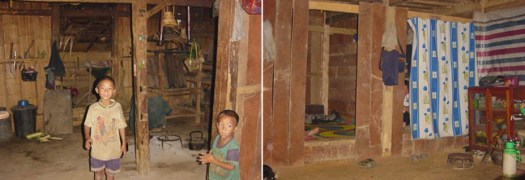
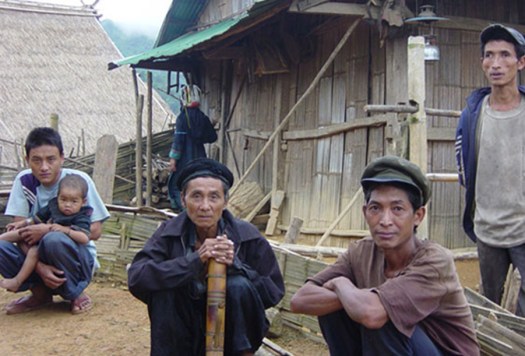
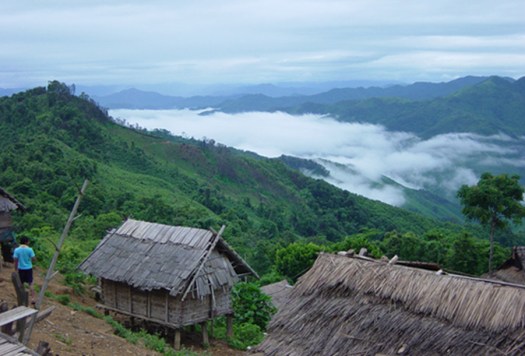
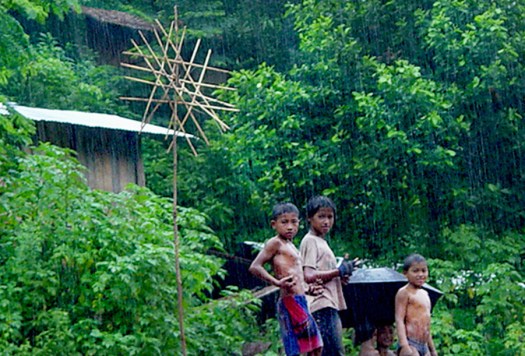


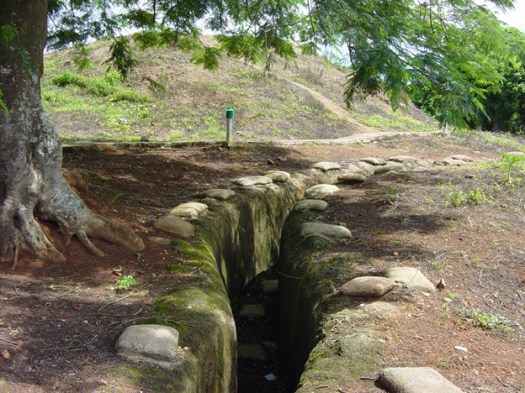
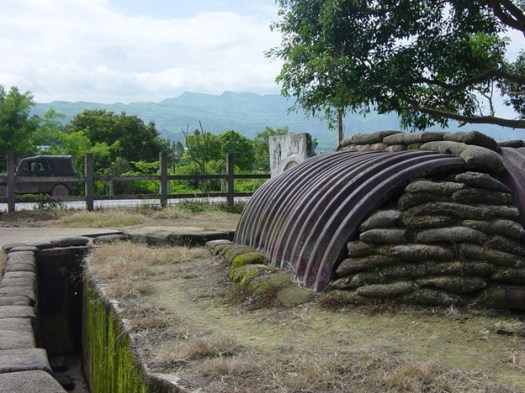


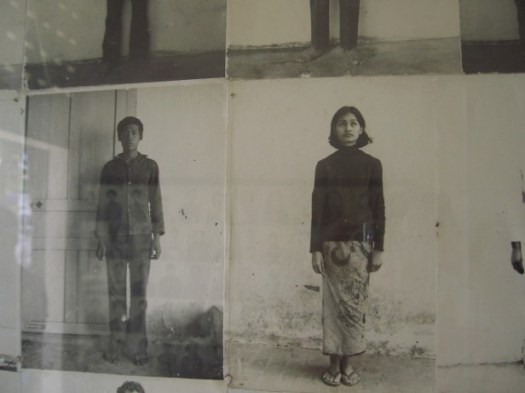

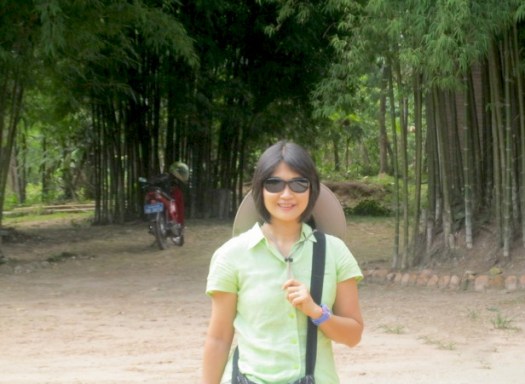
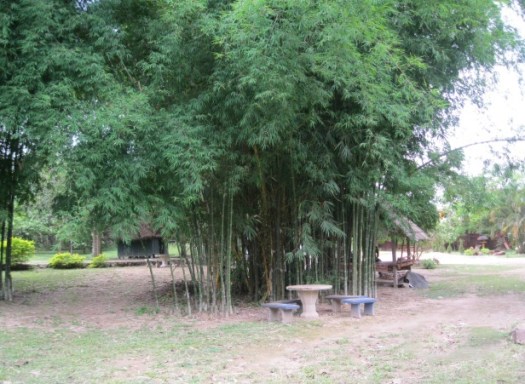

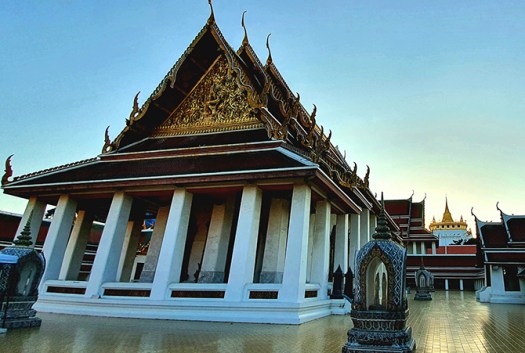
 Wow Laos
Incredible experience -surely one that will not be forgotten in life!!!
Teresa
Nice !!! and funny, I like you story, it’s very great experience !! I have never been there, I wish I’ll visit some day !!!
B^^
Jheez all that way and no fish! Mate you’ve been in the sun too long. Seriously Percy – never thought higher of you, well done brother!
David Ridler
Epic journey Percy. You are a braver man than I!!
Quite a story!! Certain parts of the story brought back memories of forgotten adventures. Very well written!!