A Mio Padre

It’s a very wet Sunday afternoon and I’m alone in this strange city, missing everybody and everything I love. Nothing is familiar; not the food, not the language, not the people. Despite the tropics, it’s a cold steady drizzle that hasn’t eased up since the early morning. Rivulets run down the large plants outside my window onto the grass. I see a large garden lizard sheltering under a giant leaf, looking as miserable as I am. Each time a droplet lands nearby, it jerks its head. The weather makes my beautiful garden look bleak and right now, I’d gladly exchange this lovely but isolated bungalow for a place in the city centre and some sounds other than the steady pitter-patter of rain on the foliage outside.

I long to hear a familiar voice but I arrived a week ago and haven’t made any friends. I moved into this house just a couple of days ago and there is no TV, no telephone, no internet connection. My books and music are still to arrive.

I have one CD, bought at duty-free in Bangkok last week. A language I don’t understand but music I love. Fortunately, the accompanying booklet is bilingual and I turn on my desktop.

A Mio Padre, Andrea Bocelli is addressing his father and I try following in Italian. I give up after the first two lines and read in English. All of a sudden, I want to hug the father I barely had. I want him beside me very badly. I struggle to breathe, swallowing the rapidly growing lump in my throat. The tears are building up and I bite my lip. This is ridiculous. That was so long ago.

But the memories come flooding back.

I am six years old and sitting in the veranda outside our ancestral house in Madras, tying my shoe laces. My three-year old sister is sitting beside me in a frilly pink frock, impatient with my mother and aunt, who are taking so long to get ready. The birthday party, we are going to must have started already. Then a postman rides up and without getting off his bicycle, shouts, “telegram”. I run in to call somebody. My aunt appears, signs for the message and goes inside. Almost immediately, I hear screaming. Laces untied, I walk into the house and there in the living room, collapsed on a sofa, is my mother. Her sister-in-law and some other women are wailing at the top of their voices. I am ignored and my eyes go to the floor and the telegram the postman just delivered. I pick up the pink paper and read the message typed on pasted white strips. “Joe expired – heart failure – seventh – stop”. I don’t understand and toss it back on the floor. Then one of my sobbing aunts hugs me and says something. I nod my head, not fully comprehending. I go outside, sit on the steps next to my sister and continue tying my laces. “Daddy’s dead,” I say to her and then getting caught up in the wailing inside, I too break into sobs.

And with the memories, the tears come gushing out, forty-four years later.


COMMENTS

                                            Deana Watson

October 12, 2011 at 9:46 am

This is simply beautiful, Percy. Your words put me into the setting, and helped me hear the music with you.

Cherry Gilchrist

October 12, 2011 at 9:48 am

This is very moving, Percy. You’ve combined careful control of the narrative with powerful emotion, and it works – it takes us with you, when the mood suddenly tips over into tears of grief. Also, you’ve conveyed your chosen theme of loneliness through the narrative itself, rather than ‘informing’ us you were lonely. The writing is honest and direct, and it leaves us with much to think about – what happens when our familiar props are taken away? (in your case, they are en route to the new home.) How does music act as a prompt to link us with long ago emotion? What does it mean, to re-connect with an early event in this way?

Iman Sidky

October 12, 2011 at 9:50 am

It’s really powerful, and it made me think of my own experience. I was 12 years old, and my sister also broke the news to me about my father.

Jill Coon

October 12, 2011 at 9:51 am

Hi Percy, Your first paragraph about moving in is what allowed me to immediately relate to the story. Anyone who has moved can identify with the feelings you were having and it allowed me to jump right in and connect. Then, you beautifully lead us down another path of music and strong emotions of memory. I think your writing speaks to the notion we’ve been reading about in our text — allowing the reader to relate using his/her own experiences, then weave in your own story. Well done! Jill

Louis Jansen Van Vuuren

October 12, 2011 at 9:52 am

Percy, I read your story with empathy. It is a piercing tale about longing and loss. You have skillfully linked the paragraphs with a tender thread of music. The end line is forceful and effective. It combines the here and the now with a memory of the past.

Peter Lourdes

October 20, 2017 at 12:31 pm

Percy:

This is beautiful: son missing father! Your father may shed tears as he reads it. Yours was not a small loss and it happened too early in your life. Painful family tragedy!

I was in Don Bosco Liluah when it happened but unaware of your family. But my dad sent me a short note about your mother becoming a widow so suddenly with so many children.

I never saw or knew your father. Pity!

Peter Lourdes

Juhi Rohatgi Williams

October 25, 2017 at 2:00 am

Beautifully written….so meaningful and touching!!. Your words convey all your expressions through the story. You are a born writer and very talented…writing was just one of your many talents!!! Glad you are immersed in it now. Very touching story!!


© Percy Aaron
Beware of the generals

On Sunday, July 3, Thailand goes to the polls. With both sides all but saying that they will not accept a decision that goes against them, the post-election scene promises to be as fractious as the run-up to the poll. More violence seems a given. The military, which deposed a democratically elected government a few years ago, is meddling again.  The following letter, which was published in one of the country’s leading dailies, remains as relevant to Thailand,  as for the country it originally referred to.

The dictator has gone. Long live the dictatorship!

The revolution in Egypt is only a partial success. The front man will be replaced with another front man. As long as the military is in control, nothing will really change. For the Egyptians to realize their aspirations they will not only have to send the soldiers back to the barracks, but ensure that they stay there.

Beware. When generals promise general elections, only generals get elected.

(Published in Bangkok Post, 15 February 2011)

Al the Liar

He threw one last file into his briefcase, patted his trousers to check that his wallet was in his pocket and walked out of the house. As he turned to pull the door shut the phone rang. Only his ex-wife called at this hour he thought and decided not to answer it. Sometimes he got a malicious delight in listening to her woes – her present husband was doing a better job of getting up her nose than he had ever done – but today he was not in the mood for her moaning. Sticking his middle finger out at the phone, he shut the door and went off with a spring in his step.

As he walked down the street Albert Walker smiled to himself. Today he would make it to the bus stop with more than a few minutes to spare, instead of the usual rushing that so annoyed the waiting driver and fellow passengers. The self-help book that he was reading had advised planning the next day’s schedule before going to bed and then getting up half an hour earlier. It seemed so obvious and he wondered why he had never thought of it before. The extra thirty minutes he spent in bed were quite a waste anyway. He couldn’t sleep worrying about so many things.

Maintaining his leisurely pace to the bus stop, Albert noticed, probably for the first time, the neat houses on his street. All of them looked the same, with identical facades and identical paintwork. The identical little gardens in front even seemed to have the same flowers. The local council was strict about that; no deviations were even considered.

Reaching the stop he was surprised that the usual commuters weren’t there waiting for the bus. That was probably because he was so early. On the bus he quite enjoyed chatting to fellow passengers, even though most times he couldn’t remember their names.

His mind wandered and he wondered if his marriage would have survived had he been more organized. His ex-wife had always grumbled: about his untidiness; his procrastination; and most especially, his forgetfulness. Often, when he hadn’t done something  she had asked, she couldn’t decide whether he had genuinely forgotten, or just couldn’t have been bothered to make the effort. “I’m going to call you Al the Liar,” she had once said. “I don’t know if you have Alzheimer’s, or if you’re lying because you were too lazy to do it.”

He glanced once more at the bus timetable, then at his watch and thought of the daily rush to catch the bus, leaving behind the unwashed breakfast things in the sink. All that is going to be a thing of the past, he resolved.

Then he remembered that in making the effort to leave the house earlier than usual, he had forgotten to have his morning cup of tea.

No matter, he would have one as soon as he got into the office. Being early was so much better than being late, he thought. Then one didn’t have to rush, forget things, or annoy people who were more punctual, or less forgetful.

The smile on his face was suddenly replaced by a frown. Hadn’t he put the kettle on the cooker? If he hadn’t had his tea, then the kettle was still on it, which meant that he hadn’t turned off the gas.

He tried to remember whether he had turned off the gas. Maybe he hadn’t put any water to boil. But the thought that he might not have turned off the cooker kept coming back. He looked at his watch again. There was still time; about ten minutes before the bus arrived. It was never on time anyway and besides Paul the driver always waited a few minutes more for older passengers like Albert. He could rush home and rush back before the bus came. Anyway, it was better to miss the bus than to go off to work without turning off the gas. He might come home to no house, he worried.

Albert Walker hurried back home, slightly annoyed with himself. He walked quickly past the identical houses with their identical little gardens. Before he reached his house his keys were out and ready.

The door was ajar and his annoyance at his forgetfulness increased. In deciding whether to answer the phone or not he must have forgotten to shut the door.

He rushed to the kitchen and saw that there was no kettle on the stove and the gas was turned off. He checked once again. The radio was on though he was sure that he had switched it off. He looked through the window and saw his neighbour, old Mrs. Smith, picking up a blouse from the grass. Sometimes the wind blew her washing into his backyard and she walked through a gap in the hedge to retrieve it. He often wondered why she didn’t use clothes pegs.

As he was rushing out of the kitchen he saw that the backdoor was open. He pulled it shut firmly and left the house making sure that the front door was locked too. He rattled the door knob to double-check and hurried back to the bus stop. He had made it in time; there were still two minutes left for the bus to arrive.

Old Mrs. Smith heard her radio go off. As she hung out the rest of the clothes she heard the backdoor shut. “Oh dear!” she said to herself, “the wind is stronger than I thought.” After she had finished hanging out the last of the clothes, she walked around her house to the front door. That too was shut.

Meanwhile, at the bus stop Albert Walker would have more than a few minutes to wait for the next bus. On Sundays and other holidays the buses came only on the hour.

August 2010


COMMENTS  

Devinder

June 22, 2011 at 2:42 pm

I enjoyed the story and wanted to find out what happened at the end but had to read the last paragraph twice. It might be better if you mention somewhere in the story that the contents of the houses are similar.

Sonam Inoka Khulu

January 25, 2013 at 4:46 pm

I can so relate to Al…not quite there, but I think I’m heading there. Great Story.

stevedsmnd

April 27, 2021 at 5:22 pm

I enjoyed this; nice little twist at the end.

© Percy Aaron

Mr Ghosh

Walking to the counter he handed over the bottle of perfume to the heavily made up, young cashier. She waved the bar code past the scanner and said, “That will be 4,200 baht, sir.”

‘That’s about $140’ he thought as he handed over his credit card. She swiped it, then printed the slip and gave it to him for his signature. Using his own pen he scrawled across the paper and handed it back to a perfectly manicured hand. “Thank you,” he smiled at the woman as he slipped the pen and card into the pocket of his blazer.

“Have a nice day, Mr. Ghosh,” she said handing over the bag with his purchase.

Turning around he almost bumped into another shopper, caught her eye, noticed the deep cleavage, apologized and walked around her. A few steps away he turned to take another look.  She had a very attractive face and figure but her unkempt, disheveled look seemed rather incongruous in a shop selling international brand name perfumes. Instinctively, he patted his pocket feeling the wallet inside. Briefly a thought came to him: some of Bangkok’s duty-free shops were notorious for framing innocent passengers of shoplifting. He hoped this voluptuous, young woman didn’t get into trouble.

Boarding time was still over an hour away and he strolled towards a bookshop. The shelves were full of glossy, forgettable trash. He mused that the more unreadable a book, the more attractive its cover. Jacket artists and designers were obviously more creative, or skilful, than writers. Or they worked harder.

He moved deeper into the shop browsing through the more serious stuff. As he flipped through book after book he noticed the same woman that he had seen earlier in the perfume shop, leafing through a magazine near the cash counter. He caught her eye and they smiled at each other in recognition.

After a while she walked up to him with a book in her hand. “Aren’t you the author?”

He stared back at her blankly. She held out the book in her hand, ‘The Sea of Poppies’ by Amitav Ghosh. She turned the book over, looked at the picture of the author on the back cover, and stared back at him. He took the book from her and looked at the photograph of a man with a thick mop of hair. Except for the grey hair and the complexion there was very little resemblance.

“Didn’t you write this book?” she looked at him quizzically. “I heard the salesgirl at the perfume shop call you ‘Mr. Ghosh’.”

Comprehension dawned on him and he threw his head back with a laugh. Another coincidence he thought: the surname. “No, I’m not,” he smiled. “In India, Ghosh is a very common surname,” he explained, “almost like a Smith.”

“Oh! I’m so sorry,” she flushed.

“That’s OK,” he touched her arm gently, but quite deliberately.

She bit her lip and went to put the book back in its place. Suddenly, she walked back with it. “Excuse me, Mr. Ghosh, could I ask you a favour?”

“Yes?” he smiled curiously.

“My father’s a great fan of Amitav Ghosh,” she said mispronouncing the surname as ‘gosh’. “It’s his 75th birthday next week. Could I take a picture with you? You look a lot like the author,” she smiled. “I’ll say I took a picture with Mr. Ghosh. Technically, I wouldn’t be lying,” she added mischievously.

He hesitated for a while but those large, limpid eyes dispelled any misgivings. Despite the unwashed look, she carried herself with a certain sensuousness that he found attractive and he gave in quite willingly. She quickly handed her camera to one of the staff standing by idly and requested her to photograph them. The salesgirl wondered who the man was. For good measure, positions were changed and a few more pictures were clicked. He felt his heart beat faster as she held his arm, pressing it against the side of her breast.

“Thank you so much,” she giggled and he smiled back caught up in the prank. Then she bit her lip thoughtfully. “One more favour please,” and without waiting for an answer rushed to the counter and bought the book. Dashing back to the man, she floored him with a smile as she asked him to autograph the novel.

“I’m sorry, I can’t do that,” he protested. “I’m not the author.”

“Why not?” she asked, giving him a look that made his heart skip a beat, “you are a Ghosh, aren’t you?” For the first time he realised what a husky voice she had.  “You have a beautiful smile, Mr. Ghosh,” she said. Her blouse had shifted exposing more cleavage and he noticed she wasn’t wearing a bra. She handed the book to him and he took the pen from his pocket. Despite his doubts, he smiled at the young woman’s craftiness.

“What’s your father’s name?” he asked, “what should I write?”

She thought for a while, and then said, “Just put ‘Happy Birthday, with best wishes’ and sign Amitav Ghosh.”

As he flipped the cover his misgivings returned and he paused for a moment. Then quickly writing, what she had asked for, he signed ‘a Ghosh,’ using a largish small ‘a’. He was a Ghosh after all. He was sure that she wouldn’t notice that. He felt better not being 100% part of her prank.

“Thank you so much,” she gushed, “this will really make my dad’s day. That’s so kind of you,” she went on, “thank you very much for being so sporting.” Taking the book and the pen from his hands, she surprised him with a moist kiss on the mouth and a hug.

He didn’t want the encounter to end and would have invited her for a drink but realised that he didn’t have the time. Seeing him look at his watch, she picked up her backpack, “Oh my God! I’m going to miss my flight too,” and rushed out of the shop.

After a quick visit to the toilet, he walked hurriedly towards boarding gate 8C with a smile on his face. The taste of the woman was still on his lips. They were making final calls for his flight and he threw his attaché on the x-ray machine and queued for the body search.

As he hurried past Gate 8A, his eyes caught the young woman through the glass enclosure. She was sitting next to an older unshaven man chatting animatedly as she flipped through the novel he had ‘autographed’ a short while ago. The man had a black pen in his hand which he was looking at closely. Instinctively, he patted the pocket of his blazer. His Montblanc Meisterstück wasn’t there. He checked all his pockets. The pen was missing.

“Bitch,” he muttered to himself angrily when he realised that he had been had. He was furious with himself. His wife had given him the pen for his birthday, two months ago. And from the credit card statements he had seen that it had cost a fortune. How was he going to explain this? He knocked furiously on the thick glass trying to draw her attention but it was useless. He had to let it go or he would miss his flight. He cursed her in all the three languages he knew.

In enclosure 8A, the woman smiled as she stared at the picture of the author. ‘Sucker’ she thought as her mind went back to the man who had signed the book. Her companion looked at her wondering whether it was the author’s ego at being recognized by an attractive, young woman or had she deliberately flaunted her sexuality? Either way, he mused, it was going to be quite profitable for him. “And he let you keep his pen?” he asked.

“I think he liked me. He even asked for my email address,” she lied looking at her companion turning the pen around in his hand. “That’s a Montblanc Meisterstück, worth about $800,” she emphasized. After a while she asked, “So, do we have a deal, $500 for the pen and an autographed bestseller?”

The man calculated that he could still turn a profit but feigned disinterest. “$150 is all I’m willing to pay,” he said with a take-it-or-leave-it shrug. “Besides,” he added, ‘if he gave it to you so easily, it couldn’t be a genuine Montblanc.” To disconcert her further he very noticeably moved his hand up and down, feeling the weight of the pen. “I’ll need to check it out. There are some excellent fakes around.”

She bit her lip suddenly deflated. “I’m not willing to go below $200,” she said after some thought.

With an exaggerated sigh of reluctance, he replied, “$175 is my last offer, though I think you’re really squeezing me.”

“Done,” she quickly replied before he changed his mind again.


COMMENTS

GHOSHAL

June 20, 2011 at 5:24 pm

Its a very unusual story set on a background in the Orient,but it kept my interest going till the end, in fact I just wanted the story to carry on….

Devinder

June 22, 2011 at 2:45 pm

Excellent read.

Melody Kemp

October 30, 2020 at 9:30 pm

Percy its grown up.. The story is now developed, rounded and gone is the
nudge wink aspect.. I really liked it.


© Percy Aaron

The hidden price of war

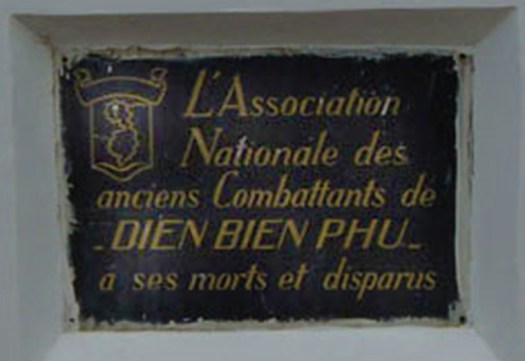
The National Association of Veterans of Dien Bien Phu. To their dead and missing

It is difficult to travel to Vietnam without encountering some reminder of its violent past. As a regular visitor to this beautiful and fascinating country, places like Hue, Quang Tri, Kon Tum, Khe Sanh, DMZ, etc bring to mind words and images of war that were part of a daily staple in my teens and 20’s. Consequently, my visits there always include the de rigueur visits to war museums and battlefields.

In the last few months I’ve visited museums, tunnels and terrain that were scenes of some of the most savage fighting in the twentieth century. All of them stand testimony to man’s inhumanity to man, to the fact that the greatest price is always paid by ordinary soldiers and civilians, and probably most poignantly of all, that all those sacrifices are forgotten with the march of time.

At the War Museum in Dien Bien Phu, two non-combat photographs taken during a lull in the fighting, struck me more deeply than any other.

The first showed women from some ethnic group serving food to Viet Minh guerrillas. The propaganda people who chose that photograph for display hadn’t noticed the look of fear and resignation on the face of the woman in front who had obviously been forced to sit on the lap of a soldier while he fondled her. Other soldiers leered at the women waiting behind her. The look of suffering and humiliation on her face struck me deeply. Truly in human conflict females always pay the greatest price. The women of the vanquished are always spoils for the victors. And when they’re from ethnic tribes or other marginalised people, they count for even less.

Whatever happened to the people in that photograph?

The second picture showed a couple of French soldiers staring blankly at the camera. The fatigue and utter despair on their faces leaped out of the picture. I couldn’t help wondering what was going through their minds knowing that they were completely surrounded and that their days were numbered. Were they reluctantly giving their lives for a cause they knew was unjust?

Whatever happened to the people in that photograph?

At the War Remnants Museum (renamed from the apt American War Crimes Museum) in Ho Chi Minh City the exhibits catalogued the murderousness of modern warfare. The high-tech barbarism of one side was being matched by the low-tech savagery of the other.

Equally moving was the exhibition of photographs taken by those who had lost their lives covering the war. None of the pictures glorified conflict.

Whatever happened to all the people in those photographs?

The only ones smiling in the photographs were the politicians and the generals, those people as far removed from the frontline as possible. Did they ever stop to think how many innocent lives would be snuffed out by their decisions, their blunders and their egos?

No leaders have the right to send their young men and women to lay down their lives on foreign battlefields, especially for causes that become meaningless a decade or two later.

When politicians wage war it should be mandatory for them to take up arms and lead their troops into battle, as rulers did in times gone by. Or they must be made to ensure that their sons and daughters are in the thick of fighting.

Then only may we spared the spectacle of a bird-brained braggart, donning a uniform he has brought shame to, leaping on the deck of an aircraft carrier and boasting prematurely, ‘Mission accomplished’.


COMMENTS

Jan

June 15, 2011 at 8:11 pm

Yet again…
a la HEMMINGWAY…
Wonderful piece, so well written, that i felt as though i was with you on that trip. Almost like our trip to Delhi….(all of 40 years ago) maybe you remember??
take care mi amigo. mucha suerte!

Jansan

Jan

June 15, 2011 at 8:12 pm

Lest I forget…
“You can’t say that civilization don’t advance, however, for in every war they kill you in a new way. ” – Will Rogers

Jansan

Jan

June 15, 2011 at 8:12 pm

In closing….
“What difference does it make to the dead, the orphans and the homeless, whether the mad destruction is wrought under the name of totalitarianism or the holy name of liberty or democracy?”
– Mahatma Gandhi
As you and your readers my see and hopefully understand….the Mahatma did ask the question.

Jansan

Jan

June 15, 2011 at 8:14 pm

The first casualty of war is innocence…

Jansan


© Percy Aaron

Barack Obama, Nobel laureate

The Nobel Peace Prize to President Barack Obama is bound to be controversial. The early news in the United States must have spoilt many a breakfast on the rabid Right, and the froth and foam would not have been from the morning espressos.

The Nobel Committee in awarding President Obama the prize for his “for his extraordinary efforts to strengthen international diplomacy and co-operation between peoples” would have been aware that their decision was not only hasty, but rather premature. It is likely the decision was more for his intentions, and an investment in future efforts. “We gave you the Peace Prize, now don’t backtrack, or cut deals that go against those hoping you deliver.” It is also possible that this was an attempt to give impetus to his peace attempts, keeping in mind how vicious and vociferous his opponents, especially at home, are becoming each time he takes a step.

But will ground realities allow President Obama to be worthy of the prize?

In Afghanistan he seems ready to up the ante in an ill-advised and immoral war.  If terrorist actions by a group of citizens were justification for invading a country, then the deeds of past U.S. governments would have made the United States the most invaded country in the world.

Will Mr Obama be able to stare down a small number of West Bank settlers whose intransigence causes so much unrest in the world as they usurp land they can have no moral justification over?

True, the president’s actions in trying to build bridges to the rest of the world are a welcome change from the Texan gunslinger, and his Mephistophelian ‘pardner’ before him. Some wit has suggested that the award was more an indication of just how bad the previous administration was.

Many of us think that President Barack Obama is the most charismatic and exciting leader on the world stage and desperately want him to succeed.

But Mr Obama might just find out that making peace in the world is as difficult as making peace with the Republican Party.

16 October 2010


© Percy Aaron

Non-issues in the U.S. elections

The quadrennial circus that is the process of electing a U.S. president is upon us once again. It throws up all kinds of performers long on style, short on substance. Most of them, including the pundits and the press, are as profound as the pancake on their faces.

Two elections ago, with a sleight of hands that would have been the envy of any juggler, a clown was thrust upon the country, a midget in mind and morality. Like any raconteur he told the people many stories: about chatting to God every day and about weapons of mass destruction.

Now as this process marches on to Election Day the theatre of the absurd becomes even more ridiculous.    The office being contested for is often referred to as the most powerful job in the world. Yet, listening to the issues being raised each day, one cannot help wondering whether this is just another episode of Trivial Pursuit.

Two issues regularly referred to, against one candidate, are race and experience.

This candidate is 50% black. So if he’s half black, he’s also half white. Why can’t he be referred to as white? Or biracial?

If being black is a crime, why don’t they come out and say it? Why don’t they come out and say discrimination and prejudice are bad things when practised elsewhere, but it’s O.K. when we do it. Everybody will understand, because most people already know who the world champions in hypocrisy are.

Being black was never an issue when a disproportionate number of black men were asked, or forced, to lay down their lives in the nation’s wars.

So is America ready to vote for a black man? Well if it isn’t, then shame on it. Spit on it!

The other issue being raised is of experience. The answer is simple. Since none of the candidates has been president before, neither has the experience. The incumbent has been president for almost eight years. Eight years later, not even his mother will say he is experienced.


COMMENTS

Jan

June 15, 2011 at 9:21 pm

You forgot to mention that the 50% “black candidate” is also 50% Muslim!!

Jansan


© Percy Aaron

Breath-taking double standards

Sometime ago I watched an interview with a senior, very articulate, Chinese official. At one point, in reply to a lop-sided question, he told the interviewer, “You westerners have the most breath-taking double standards”.

The recent Olympics have brought home to me how alive and kicking, these double standards are.

Remarks by a number of people I’ve met here, and reports in the western media, show how double standards have plunged to new depths of hypocrisy.

Prior to the Games, and during it, there was continuous criticism of Beijing’s security measures and the censorship. Nowhere was there the realization that tight security is inevitable nowadays at large, especially international, gatherings. Obviously, the authoritarian nature of Chinese society and the paranoia of its government, made such arrangements obvious to everybody. I remember reading about the U.S authorities having a tank posted outside one of the stadiums during the 1994 World Cup soccer. Even making allowances for football hooliganism, that was a bit of overkill.

Then there were the constant barbs about the training regimen of Chinese athletes, the use of professional performers for the opening and closing ceremonies (as if Olympic rules precluded these) and any number of other issues. Admiration for the performances of the Chinese sportsmen and women, or the organization and conduct of the Games, was always qualified with caveats about the oppressive nature of the government. The constant sniping about the cost of the Games made me wonder whether they had been asked to contribute to it. The Chinese, it seemed, could not do anything right.

Many articles criticized the lip-synching incident at the opening ceremony when a more ‘acceptable’ face was used instead of that of the little girl with the golden voice.

True, that incident like many other things that the Chinese government did, is doing, and will do, was deplorable. But who thought up playback singing, stage names, etc? In the world of make-believe and deceit few people are blameless.

The hypocrisy and meanness, or should it be madness, astounded me when some people kept hoping for a terrorist ‘incident’ that would disrupt the Games and embarrass the hosts. Shocking, shocking, shocking! Obviously, acts of violence against people one doesn’t like are acceptable.

‘Breath-taking double standards’, did we say? What an understatement!

Spread the Blame, Please

Some of my friends wrote in about a previous post, ‘Biased Broadcasting Corporation’ saying that I was ignoring the fact of inferior Chinese quality.

I think they missed the point of that post. I was not denying that many Chinese products are very shoddy in quality. What I was trying to show was the one-sidedness of a telecast from a news corporation that has, or at least had, a reputation for balanced reporting. To devote 19 minutes of an approximately 25-minute news program to problems with Chinese-made toys in the U.S., when there were so many news stories of equal or more importance,  seemed like a misplaced sense of priority. Or was it bias? Considering the spate in the number of recent reports on product quality from China, one could be forgiven for thinking that there is more to it than meets the eye.

Anyway, while there is no denying that many products coming out of China are of very poor quality, in some cases other people, not just the manufacturer, must share the blame for this.

While there are factories producing the ‘thirty-day wonder’ – if it lasts 30 days it’s a wonder – there are also factories producing top-of-the-range quality. Products coming out of these units are at par with anything elsewhere in the world. Even within the same factory the quality offered will depend on the price paid.

This is a fact ignored, or covered up, by China bashers and ignorant or biased journalists.

Many years ago when I was in business I made a trip to Australia to meet various buyers for my leather products. At one meeting with a big importer in Melbourne I was shown the product line that they were sourcing from China. The quality ranged from adequate to awful. Each item had ‘genuine leather’, or for additional snob value, vrai cuir or cuoio reale, embossed on it. The only genuine leather in each item was that particular part which carried the stamp. In most cases this was the most visible external component, while the rest of the product was made of imitation or synthetic leather. Often too, the leather portion was made from split, that part of the hide which is of poorest quality.

When I showed them samples of bags and small leather goods manufactured at my factory there was no reaction from some of the people in the room, while others remarked on the excellent quality. Then I gave them my prices and they were taken aback. I knew my products were being retailed at 10-15 times of what I was wholesaling them at.

They gave me sketches of a range that they would be running during Christmas that year and asked for samples and quotations. Weeks later we met again and they were very impressed both with quality and price. We waited for the boss, one of the persons who had shown no reaction at our first meeting, to arrive. When he came into the room he examined the goods and looked slyly at one of his assistants. He asked the prices and then told me that they were much too high. I knew that the price I was offering was at least a tenth of what they would eventually be retailed at but asked him what he thought the bags should cost.

He quoted prices that were 30% to 50% lower. I didn’t even bother to negotiate. I stood up, collected my samples and told him that he couldn’t afford my quality.

He tried to get back at me by saying that my prices were acceptable only for Italian products. I told him that I realised why quality manufacturers in India thought Australia, and the U.S., were the bottom end of the business.

That incident comes to mind nowadays when I read reports on ‘inferior’ Chinese quality.

The quality of products made in China depends on the prices that foreign buyers pay to the Chinese manufacturer.

Airbus and Boeing supposedly have Chinese suppliers for some aircraft parts. Surely they would not put passenger safety at risk by buying sub-standard components. I’ve just purchased an expensive iPod made in China. I’m sure Apple didn’t pay peanuts for that quality.

When many manufacturers closed down their factories in other countries and moved production to China, they did so to cut costs. Did they pass on those lower costs to the consumer? And in cutting costs did they turn a blind eye to cutting corners?

And what of the others who are culpable for the poor quality coming out of some Chinese factories. Most foreign buyers maintain well-to-highly paid quality control inspectors on site. In most cases to avoid compromise and corruption these inspectors are non-locals. Why weren’t they doing their job?

There are also other reasons when buyers accuse manufacturers of poor quality. Some of them are: products ordered have not clicked in the marketplace; competitors have similar products at lower prices; and the worst of all, trying to squeeze extra discounts from desperate suppliers with cash flow problems who are already operating on wafer-thin margins.


COMMENTS

Jan

June 15, 2011 at 9:04 pm

Once again Aaron..you have hit the nail on the head!
The buzz words in industry and commerce are now “downsizing”, “shareholder value”, profit maximizing”, just to name a few. The consumer / end-user does not even feature in this equation, except as a stupid consumer, tricked via “clever” marketing and “swanky” advertising into buying sub-standard products at a premium price.
China is currently in “focus” because of basic US fear that their entire manufacturing industry has slowly but steadily been relocated abroad – Mexico, China, India and even an erstwhile “enemy”…Vietnam.
As ABBA sang money, money, money….
PS Let’s just hope that these sub-standard Boeing parts aren’t installed in any planes that I board!
PPS Well argued and written…keep up the good work!

Jansan

Peter

June 15, 2011 at 9:05 pm

I agree Percy. People like Apple for example are producing all their products in China because it’s cheaper, but, they also insist the best top quality. I guess Mr. Job’s is paying the Chinese for their experience at making quality goods???? He makes a point of telling the press this when he is being bashed by the press for getting Apple’s products made in China. I must say that the Chinese can produce top quality goods if they are paid good money. It is a human fact of life – if you are paid well you produce better quality.

Good posting Percy. Keep it up.

Peter Markham

Peter

June 15, 2011 at 9:06 pm

For all your readers out there, a “must read” book…
The State of the American Empire – How the USA Shapes the World, by Stephen Burman
(University of California Press, Myriad Editions, 2007)
Deals basically with “the militarisation and economic subjugation of the global community and its commodification by corporate governance and by the American government.”

Jansan


© Percy Aaron

Benazir Bhutto

When people die suddenly, especially if they are young, we generally tend to speak well of them. Maybe that is how it should be.

However, the eulogies to Benazir Bhutto have been quite over the top. Fact is being mixed with large dollops of fiction.

The West says that she was a democrat. I think that their understanding of the term is rather different from mine. Benazir Bhutto wouldn’t have recognized democracy if it had gone up to her and introduced itself.

As prime minister of Pakistan she was as allergic to democracy as most Pakistani rulers have been, before and after her. She showed no respect for the country’s democratic institutions undermining even the judiciary. She treated members of the Pakistani People’s Party like servants in a feudal household and allowed her husband to get away with even greater excesses. As prime minister she was an expert in playing both sides against the middle and all sides against everybody. She encouraged fundamentalism when it suited her and rubbished it when it didn’t. She made deals with Musharraf, her devil, because of her lust for power and her belief in her ability to eventually outsmart him. That she thought she was the destiny of her country was supreme arrogance.

They say she was a modern woman. She was modern when travelling abroad, feudal back in Pakistan.

They say she was intelligent. But she wasn’t intelligent enough to realize, that in her country at least, being close to the U.S. was the kiss of death.

For a ‘democrat’ there were too many allegations of culpability in some murders, including those of her brothers.

And then there was the matter of the corruption; mountains and mountains of it.

In an impoverished country with foreign currency restrictions how did she get the money to afford the lavish lifestyle of holidays in the South of France, Switzerland and other snob destinations?

When she was investigated for corruption she often claimed that these were politically motivated. What did she say when these investigations were conducted by government agencies in the West?

She could hardly have been married to Mr. Ten-per-cent without being, at least, Mrs. Something-per-cent. When she insisted to reporters that her husband was clean, she was probably talking about his hygiene.

Press reports say that in her will, drawn up a few days before she returned to Pakistan, she wrote that if anything happened to her, her husband was to lead the PPP. Obviously, this ‘democrat’ hadn’t heard the term ‘party elections’.

This act – assuming the will wasn’t another fraud by Mr. Ten-per-cent – was one more indication of the contempt she had for her party, her people and her country.


© Percy Aaron