Percy Aaron – All for Nothing

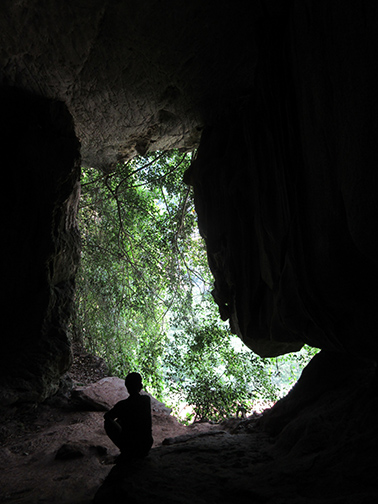
Cave in Laos photograph by Mark Ulyseas

( Live Encounters Poetry & Writing Volume Five November-December 2024https://liveencounters.net/2024-anniversary-editions/percy-aaron-all-for-nothing/ )

In a tiny village in northeastern Laos, poverty and misfortune make a tragic combination.

Mouk broke the hearts of all the young men in the village when she married Tham. Her beautiful face, twinkling black eyes and large dimples always made people feel special when she smiled at them.

Tham broke the hearts of all the young girls in the village when he married Mouk. He was goodlooking, muscular and hardworking. Unlike most of the other young men, he didn’t laze around playing cards, chewing tobacco or getting drunk. If he wasn’t in the field working alongside his father, he was helping his mother inside and outside their little hut. He was especially skilful at carving little figures from the pieces of wood that he saved from the kindling. Almost every child had a whistle, or a catapult made by him.

When little Pok was born all the village rejoiced. She was such a happy baby and like her mother, there was always a smile on her face. Everybody wanted to carry or play with her. By the age of four she was totally unafraid, hunting frogs and birds with her cousins.

One day, she wandered into the forest with the boys but lost them. A few hours passed before some of the children told Mouk. Dropping everything, she sent one of them to call Tham from the field and rushed off in the direction the children had last seen Pok. Soon Tham and a few villagers followed with sticks and knives. The forest while a source of food for the villagers, also had its dangers. There were plants that caused terrible allergies, poisonous snakes and occasionally wild animals. Some of the villagers even claimed that they had been chased by man-eating tigers. But the greatest danger of all were the bombies, little pellets designed to maim. American warplanes had sprinkled them indiscriminately during the war next door in Vietnam. These were uppermost in the panic-stricken minds of Pok’s parents.

Then they found her but their joy turned to horror. The little girl was standing at the edge of a large puddle laughing gleefully at the ripples she was causing each time she threw a stone into the water. The horrified villagers fled as a screaming Mouk grabbed Pok by the hair and slapped her several times.

By the time Pok and her parents had returned to their hut, word had spread about the child trespassing onto sacred land. Now nobody knew what revenge the enraged forest spirits would extract for their abode being defiled.

Over the next several days, Pok was locked inside their tiny room and various rituals were performed to propitiate the spirits. Tham and Mouk borrowed heavily to pay for the ceremonies.

Months later, little Pok fell sick. She started having seizures and losing consciousness. The whispers started as villagers remembered her throwing stones into the sacred pond. The village shaman prescribed various potions for the child and even more acts of atonement but nothing helped. Clearly the spirits were upset and she was being punished for desecrating sacred land.

When the shaman’s potions had no effect, the village chief told her parents to take her to the district hospital. The inexperienced and poorly trained doctor prescribed a course of antibiotics that left Pok very weak and even more disoriented. More visits to the hospital followed and Tham and Mouk went further into debt. There were evil spirits inside the girl’s head, the parents learned. Then a kindly nurse told them to take the girl to a hospital in Vientiane, the national capital. The treatment would be very expensive but there was no guarantee that their child would get better. They were devastated.

Back in the village, Tham, Mouk and his parents discussed what should be done. They pleaded with the villagers for help but the people were poor themselves. Besides, they were afraid to incur the wrath of the spirits.

Then the headman told them about factories in Thailand, where many people from other villages had gone to work, sending home more money every few months than they could ever earn from years of working their rice plots in Laos. Tilling the fields was more a man’s job and the factories preferred women whose work in garment-making was more delicate.

* * * *

Mouk and several women from her village had already spent a year at a garment factory in northeastern Thailand. The work was backbreaking but the long hours kept her mind off her family back home. Every time a colleague went home for a holiday, she sent back whatever she had saved. Then she waited eagerly for their return and news of her family. Tham and Pok missed her terribly, she was told. Also, Tham’s father had passed away and now he worked the fields alone. She considered visiting him and Pok but thought of all the money she would lose if she took a few weeks off. Next year, she would, she kept telling herself.

One day, Mouk overheard some of the women talking about places in Bangkok where girls earned more than 25,000 baht a month. That was incredible! With that kind of money, she could return home in a few months to start Pok’s medical treatment. An older woman told her that since she was beautiful, she could earn even more. Mouk didn’t understand that remark and gave it no thought. She and some of her friends discussed the matter and agreed to move to the Thai capital.

At the end of the month Mouk and two other young women arrived in Bangkok. The brother of the woman who had told them about the job met them at Mo Chit bus station. He would take them to a place where they could easily earn more than 25,000 baht a month, he assured them. Twenty-five thousand baht a month! Their faces filled with disbelief and greed. On the way Mouk’s mouth opened in amazement. Each building they drove past had more lights than her entire village. She couldn’t believe that there were so many cars and so many people in the world.

The taxi stopped at a building and they were taken into an office. A man and an elegantly dressed woman sat at a table that was bigger than Mouk’s house back in Laos. A younger man, with bulging biceps stood at the door. The woman, who was clearly the boss, told them to take off their clothes. Mouk was shocked. Only her husband had seen her naked. She stood staring at the woman unsure she had heard correctly. There were always misunderstandings in Thailand even though Lao and Thai were almost similar. After all she did have problems even understanding Lao, which was quite different from her native Khmu.

The other women shyly removed their blouses but Mouk stood still. The woman nodded to the man at the door, who stepped forward and slapped her hard across the head. Then grabbing her shoulders, he ripped open her T-shirt and pulled off her bra. He was powerful and before she could resist further, he had already yanked off her jeans and panties. The three women stood stark naked while the woman looked up and down at their bodies.

She barked something at the man who gave them back their clothes and led them to an upper floor where they were shown a room with a couple of mattresses on the floor and some wooden lockers.

Mouk was surprised when the next morning she did not have to rise early for work. Instead, later in the morning, another woman came to the room and told them that they would start work each day at 4.00 pm and finish at 3.00 am. They were given some beautiful clothes to wear and shown how to make up. kind of work they would have to do and were told they would have to sit and talk to men, pour their drinks, and try to get them to consume as much alcohol as possible. If the men wanted anything more, they could take them to the rooms upstairs, charge more and keep half the money.

The first night the thug who had hit Mouk in the boss’s office, raped her. He told her that he wanted half of all the money she made if she took customers to the rooms. Over the next six months, Mouk lost count of the number of men she had sex with. Some were gentle and generous, but others brutalised her.

A few times she wanted to take her life, but what would happen to Pok and Tham? True, she was making a lot more money than she had ever seen and another woman showed her how to hide her money inside her body. This way, she didn’t have to share everything with the young minders who took not only half their earnings, but also expected sex for free.

A doctor would visit them regularly for checkups, stressing the importance of making the customers wear condoms. Yet, he seemed to forget to wear one, when he got his free sex. Mouk stopped heeding his advice. If the customers didn’t want to use condoms, then she charged them double. It was simple.

Slowly the people in the club became like family. One of the minders, now her regular lover, brought her little gifts. On Sunday mornings the women women visited the local markets where Mouk bought clothes, cheap trinkets and fluffy toys for Pok. She even opened a bank account secretly and had already saved over 20,000 baht. She no longer sent money home when she found out that more than half was being pocketed by the carriers.

It was almost three years since she had left her village in northeastern Laos but every time she thought of returning, she decided to wait a few months longer and take back more money.

One Sunday morning, the girls wanted to go to Chatuchak, the massive weekend market but Mouk didn’t feel like joining them. She was feeling very tired. Her last customer had been with her till almost 4.00 am. Two days later she didn’t feel better and the doctor diagnosed the flu.

When she didn’t improve after a week, two of the girls accompanied to the hospital. She had to stay for a few days so that some tests could be done. One week later, there was no improvement and a friend from the nightclub came to the hospital with a suitcase containing her things. The Peacock Bar didn’t want her back. She had some terrible disease and would have to look for work elsewhere. Mouk was too tired anyway and put off the idea of looking for another job.

A fellow patient invited Mouk to share her hovel alongside the railway tracks. Too weak to work, she lay on a plastic sheet in one corner all day long. When she could struggle out of bed Mouk started working the streets, servicing street vendors and junkies, often in darkened doorways or inside the shack, if the others were at work.

As her conditioned deteriorated she didn’t have the energy to even get out of bed, soiling the rags she slept in. Soon she was too sick to even use the bedpan next to her. As the stench of shit got too much to bear, her hovel-mates threw her out. Back in the hospital, the staff didn’t seem to care.

A nurse suggested she go back to Laos; at least she would have family to take care of her. Back to Laos, she wondered? She hadn’t even thought of her husband and daughter in months. It had been more than a year since she had even received word from them.

A week later her lifeless body was heaped upon another in the police morgue.

In Mouk’s village in Laos, Tham wondered why there was no word from her. It was almost a year since he had heard from her and even longer since she had sent any money home. How he missed her! Even four years after she had left, he had still not got used to her absence. Fortunately, he had Pok, the spitting image of her mother, to keep him company. But some nights when the young girl cried for her mother, it was difficult, very difficult, not to shed tears too.

Each evening the other men in the village would meet for a drink and endless gossip. Tham could have joined them to ease the loneliness but he preferred to play with Pok and chat with his mother.

One day when the thought of another night without Mouk got too much, Tham decided to walk to the village where one of the girls who had left with Mouk lived. Maybe, they had some news. The village was about ten kilometres away and if he cut through the forest he could still be back by midnight.

The bombie that Tham stepped on, gave him no chance.. When he didn’t return by the next morning, his mother went to the village chief for help. By the time they found him, he had bled to death.

After the death of her son Tham’s mother tried to get in touch with Mouk. Word came back that she had left the garment factory more than two years earlier to work in Bangkok. They knew nothing of her current whereabouts.

After her father’s death Pok became even more introverted. The villagers shunned her as she was bad luck. Sometimes, they urged her grandmother to abandon her in the forest.

One day a team of researchers from the Institut de la Francophonie pour la médecine tropicale visited the village to gather data. Pok’s grandmother heard that some foreign doctors were among them. The old woman went to the camp they had set up and spoke to one of the volunteers accompanying the team. The young woman turned to the tall, white man and spoke to him in a language she didn’t understand. The foreigners talked to each other and asked to see the little girl.

The old woman took them to her hut and and watched as one of the doctors stuck a strange tube into his ears and then hold the other end against Pok’s stomach then chest. He pressed her stomach again and again and asked to see her tongue. The two white men and the young Lao woman continued speaking in their strange language. After a while, the young woman told Pok’s grandmother that they wanted her to bring Pok to Vientiane for some tests. She would not have to pay for anything, they assured her.

In Vientiane other doctors performed more tests on Pok. After a series of tests, a woman in a white coat, who spoke Khmu, mentioned words like epilepsy and phenobarbital, which meant nothing to the old woman. They gave her tiny white stones and told her that Pok must swallow one every day, for the rest of her life. And that soon Pok would be a healthy young girl.


© Percy Aaron

Percy Aaron is an ESL teacher at Vientiane College in the Lao PDR and a freelance editor for a number of international organisations. He has had published a number of short stories, edited three books and was editor of Champa Holidays, the Lao Airlines in-flight magazine and Oh! – a Southeast Asia-centric travel and culture publication. As lead writer for the Lao Business Forum, he was also on the World Bank’s panel of editors. Before unleashing his ignorance on his students, he was an entrepreneur, a director with Omega and Swatch in their India operations and an architectural draughtsman. He has answers to most of the world’s problems and is the epitome of the ‘Argumentative Indian’. He can be contacted at percy.aaron@gmail.com

The Homecoming

Entrance to Tam Piu Cave © Photograph by Martin Rathie.jpg
Tam Piu Cave © Photograph by Martin Rathie.jpg

( This short story first appeared in Live Encounters Magazine, September 2021:  https://liveencounters.net/2021-le-mag/09-september-2021/percy-aaron-the-homecoming/ )

Phet is crouched in the deepest interior of cave, eyes wide with fear. Resting his head against his father’s knee, he watches his five-year old twin, unafraid as always, playing catch-me-if-you can with some of the other village children. All around them people are screaming as they climb over those squatting near the entrance. Villagers who have found places are urging the stragglers to move faster. The cave is full but still they make place for the laggards. A dog, its tail tucked between its legs, is burrowing under the crouching bodies. Phet sees his grandmother at the mouth of the cave, hobbling inside on the arm of his aunt. The younger woman looks back anxiously; backwards, upwards. His mother pulls him and his father into another tunnel trying to create room where none is possible.

Then a blinding light and an ear-splitting explosion fills the cave with dust and debris. The next minute, his aunt, his grandmother and several others are just blood, bones and brains splattered over the rocks at the entrance. There is no time to grieve, or even scream. As the fires start, his mother grabs his hand. His father picks up another sibling, and they run, stepping into the crimson human pulp. All around them the cave is emptying as quickly as it filled up.

In the sky the warplane circles like a vulture observing carrion from above. As the villagers rush to the open rice fields, it turns around and dips down, slowing for a strafing run. Phet’s father stops and holds up his hand, they won’t make it, which right now is a good thing. In slow motion, they watch the plane’s machine guns stitching the shallow water of the rice fields, turning it from brown to red.

Tam Piu Memorial © Photographs by Martin Rathie.


The next day the old man returns to work, breaking his back in his little rice field. Despite the deaths the previous day, grieving is an unaffordable luxury when so many mouths remain to be fed. But a few nights later, over a rusty mug filled with the locally brewed rice wine, the tears come for his mother, his sister and his son Thip, Phet’s twin.

***

Since that fateful day, life had moved on. Things were still difficult for most villagers. There was still the constant hunger but at least there was peace – some kind of peace. Now at least, those big birds in the sky no longer rained death and indiscriminate destruction.

True, most promises weren’t kept and there was no end to the sacrifices being demanded. True, some people were expected to sacrifice so much more than others. Villagers who were close to the important people visiting from the towns, always seemed to have more for doing so much less. The village chief spent less time in the fields and more time assembling them after a hard day’s work exhorting them to grow more food. The exhortations were always the same: work harder; give more; be patient; and always be vigilant, especially of the enemies in their midst. Phet’s father was really confused. Usually, the enemies were those villagers who cared and shared the most. Those who had fought hardest during the revolution, were now the ‘enemies in our midst’. The old man couldn’t understand. Most times there was never enough food in the village and yet when these people from the towns arrived, the food and drink were plentiful, at least at their table. On each visit, they took away more than half the rice and vegetables grown by the villagers. They were taking away the food to distribute to others who had nothing, they said but it was difficult to imagine any village having less food than this one.

About five years ago, Bounmy his friend, had asked these important people if he could accompany them as they distributed the food to distant villages. He went off with them, very excited at the opportunity to ride in a truck. But he didn’t return and later they told him that he was working for the Party in another part of the country. Selfish Bounmy, not even keeping in touch with his elderly mother. On another visit, Kham the hardest working of them all, had pointed out to these important visitors that they looked healthier and stronger than any of the scrawny villagers and maybe they should stop making speeches and help in the fields. A few mornings later, a couple of them came back and took him away to meet the big chief in the capital. Now more than three years later, he hadn’t returned to his struggling wife and three children. The village headman said that he had met another woman, much younger than his wife, and married her. So it was always with those complaining: leaving without even saying goodbye to family and friends.

As the years went by, life began to ease for some villagers. A few had relatives overseas, people who had left before or during the war. Now they sent back money or parcels. Then a message would come from the town and the lucky ones would journey to the post office there.

True they had to part with almost half of what they received but they never grudged this as it was going to help those villages that had even less. The village headman took a cut too, but that was because he gave the villager a lift into town on his dilapidated motorbike. Despite having to give away almost two-thirds of what was received, there was always enough for a few chickens to share with friends. Gradually, some homes started acquiring bicycles and transistors.

Occasionally a visitor would arrive from these faraway lands to see relatives, trace their roots, and even to marry a local girl. Then they would pay for the slaughter of a pig or two and the whole village would be invited to party.

Early this year a man arrived from America looking for a bride from this village. As always with these visitors, he wanted to impress the local people by being generous with his food and drink. Each night the villagers got together with this Lao-American, sharing his bourbon or offering their homemade brew. The prospective groom, twice divorced, was in his late fifties. While the bride-to-be was just nineteen. But she was beautiful and her impoverished family could do with the handsome dowry promised. One night, after the liquor had taken effect the reminiscing began. Family histories were related, roots traced and ghosts from the past resurrected. Stories from the war were told and retold and those who had died were remembered. But of so many, there was no trace. Most families had paid a heavy price.

Then one night the visitor mentioned a colleague from the same factory back in Minnesota who had lost his whole family in the caves that day the warplane had come. A stranger had grabbed the five-year old’s hand and run, not letting go. And she hadn’t let go even after crossing the border into Thailand, not through all the years in refugee camps, or later in wintry Minneapolis. Aunt Mai had adopted the little boy and cared for him all the years, until the cancer got her last year.

***

Down from the mountains they came and after two days of arduous travel, Phet and his family finally arrived in the capital, Vientiane. Now they were at Wattay International Airport in their finest tatters. Phet, his parents and his three sisters went up to the observation deck while their children went up and down in the lift, pressing numbers at random. After a while, somebody spotted a plane in the sky, and a shout went out. Phet looked into the sky and squinted as the giant silver bird descended. Then memories from thirty years ago came flashing back. He started to shake uncontrollably. His frail old father held his arm, not knowing whether it was excitement, or just his son’s recurring malaria. Steadying himself against the railing Phet pulled up his shirt and wiped his forehead. He choked back a scream and gripped his father’s arm tightly.

The panic subsided by the time the screaming monster taxied to a stop on the tarmac. Phet’s sisters were giggling nervously while their children, bored with the lift, were gaping at the big bird now spitting out tiny dolls of men and women. From the distance, he watched the passengers walking towards the terminal clutching bags or bundles in their hands. He stared hard at all the men but couldn’t identify his twin, despite all the photographs exchanged since contact had first been made.

They took the lift to the ground floor and Phet saw the crowds milling around the Arrivals gate. His mother pushed through the throng, her tiny frame slipping between the people in front of her. His sisters, already teary eyed, struggled not to burst with emotion in front of these slick city folk. His father, too scared to go to the toilet in case his son disappeared for another thirty years, had wet his trousers. He didn’t look well at all.

Phet didn’t know how he would react when he met his twin face-to-face. Even at five, his brother had been his hero, his universe.

Then Phet saw his mother being hugged by a muscular, handsome lookalike. From behind the crowds, he could hear her shouting, crying. His sisters were rushing towards their long-lost baby brother. As he helped his father forward, the old man stumbled. Phet struggled to hold him upright, then saw his father, eyes closed clutching his chest.


COMMENTS

September 13, 2021 at 10:06 am

A powerful piece of writing.

Melody Kemp


September 13, 2021 at 10:08 am

Having a background as to where this might have happened, I enjoyed the story. Well written.

Devinder Raj

September 13, 2021 at 10:09 am

Oh Wow! Beautiful.

Charlotte


September 13, 2021 at 10:11 am

Very well written but it left me drained and sad.

Jeff Mason


September 13, 2021 at 10:12 am

‘… their finest tatters’ and the plane spitting out dolls’ are really creative!

Nidhi Asthana


September 13, 2021 at 10:13 am

Just finished ‘Homecoming’. A very interesting piece. Is this a made-up story by you, or are you retelling a true tale? Either way, a very well-written piece.

Steve Desmond

September 13, 2021 at 7:41 pm

Beautiful story…v touching!!

Juhi Williams


© Percy Aaron

Monica

Published in Surya magazine, December 1978

While in Bombay on holiday, I had gone one afternoon with some friends to a film, when I ran into her in the foyer of the cinema hall. Physically, she had changed so much. She looked more mature and lovelier. The vitality and dare-devilry which she had always exuded, still seemed to ooze from her and I felt great meeting her after such a long time. She threw her arms around my neck with a flourish and kissed me for a deliciously long time to the accompaniment of background sniggers and exclamations. I am sure that if the authorities could have guaranteed such pre-show spectacles regularly, their gate-receipts would have increased a hundredfold.

“What are you doing in Bombay? Are you on holiday? For how long? Where are you staying? You’ve got to spend a few days at our place. How’s your love life?” The questions were fired off one after the other, and even if she expected answers, she didn’t give me a chance to reply. Friends and film were forgotten as we rushed out of the hall. She was a person who loved life intensely, and lived every moment of it. So much seemed to happen to her each day, and not having seen each other for over four years, we naturally had much to talk about.

We got into her car and drove aimlessly around the city, talking and laughing, remembering all the good times we had had together. That evening after collecting my luggage from the place that I was staying at, I moved in with her.

“Where are your parents?” I inquired.

“Oh mum and dad are divorced,” she replied slowly and I detected a note of pain in her voice.  “I don’t know where she is. Dad is in Delhi on some business and should be back by the end of this week.”

“I’m sorry,” I muttered, rather surprised. Her parents had always struck me as being a particularly close couple.

“Me too. But don’t let that bother you,” and knowing her, the subject was closed. To her, regrets about the past were not only self-defeating but also a colossal waste of time. One had to live in the present, and if possible, try and manipulate the future.

I immediately regretted having moved in. Whenever, she had proved too much for me, I had sought refuge in her father’s company by provoking him into an argument on any subject. At first she had resented this, not liking the idea of having to share me with anybody. Later, as she came to realise that this was a tactical move on my part, she would throw a tantrum and swear that she’d never speak to me again; which usually meant for the next five minutes. But that would be sufficient time for me to disappear.

That night we lay in bed filling in each other on everything that had happened over the last four years. She told me of her innumerable affairs and I laughed at some of the incidents she related, for I could well imagine men being captivated by her beauty and joie de vivre, unable to hold on to her but foolish enough not to realise it. Nevertheless, I couldn’t help wondering as to the price she had paid, if she were really as unscathed as she appeared to be. Looking at her, I couldn’t help but feel guilty thinking of that incident a couple of years back and wondered to what extent I had been responsible for her emotional and sexual fickleness.

My mind went back to the time five years ago in Calcutta. I had wanted to make love to her but lacking the necessary expertise to seduce her, had instead given her the usual, “but then you don’t love me,” line and then had very shrewdly snapped, “the trouble with you is that you don’t know a thing about life or how to live it.”

The remark seemed to touch a raw nerve, even in a nineteen-year old girl, who had so much to learn about life. She capitulated. After that, the change in her was more profound than simply becoming my lover. Her sudden zest for living, or rather dangerous living, earned us the reputation of being a precocious and undisciplined pair. Though I was known as the ‘wild one’, her recklessness soon eclipsed mine. With her father’s transfer to Bombay, we eventually lost contact, and in a way I sobered down.

We were still talking when she suddenly suggested going for a swim to Juhu beach.

“At this hour of the night? Are you crazy?” I asked and turning over, pretended to sleep.

“Oh, come on,” she pleaded, “it will be great fun, swimming at night and after that we could go for a long stroll on the beach.”

“Ssh, don’t disturb me,” I mumbled, “I’m sleeping.”

“If you’re sleeping, how are you talking?” she demanded, turning aggressive.

“I talk in my sleep.”

She wasn’t the type to take no for an answer. She pulled the sheet off me and got up. “The trouble with you is that you don’t know a thing about life or how to live it. And I don’t see much hope for you because you’re getting old.”

“Who did you say is getting old?” I asked turning around.

“You’re not only getting old,” she snapped, “but deaf as well.”

We didn’t even bother to change out of our night clothes. After some fast and reckless driving, we reached Juhu. We found a deserted stretch of beach and while she parked the car, I walked towards the water with the bag containing our things. I unwrapped the towels but could not find my trunks. I waited for her to catch up with me.

“Where are my trunks,” I asked suspiciously. “Don’t tell me you’ve forgotten them?”

“No,” she smiled, “I just thought it would be fun swimming in the nude,” and then to preclude any argument, pulled off her nightie, threw it onto the sand and ran stark naked into the water. I had no alternative but to strip and follow her.

We swam for a long time and enjoyed ourselves thoroughly. We finally came out of the water and with the brine still dripping off us went for a stroll without even bothering to dry ourselves. We walked for a long time with our arms around each other. My thoughts were far away when I noticed that she was weeping silently. I thought I understood why but thought it best to just keep quiet. Instead, I held her more tightly.

It began to get cold and we turned back towards the spot where we had left our clothes but could not find them. Even though the beach was deserted, I had a feeling that our clothes had been pilfered. We walked towards the car and found that in spite of not being locked, it was thankfully intact. As we drove off, I felt awkward sitting naked in the car.

I didn’t know my way around Bombay, but was sure that in one of her infinite pranks, she was taking me on a nocturnal tour of the city. But I was not bothered, my immediate concern was getting past the durwan on duty at the building where she lived. We came to a halt.

“Anything the matter?” I asked anxiously.

“Seems like something is wrong with the engine,” she replied.

I was now very anxious. I didn’t relish the idea of being found naked in the car by some good Samaritan. And with her looks, there would be many.

“Is there enough petrol?” I inquired, trying to sound confident, even though  my idea of cars was limited to the knowledge that doors were for getting in and out, and that back seats had more uses than just carrying passengers.

“Why don’t you get out and push?” she suggested. “It might help.”

I groaned and looked around, not at all assured by the near empty street. I crept out, got behind the car and began pushing. I felt absolutely sheepish and to make matters worse, my feet hurt terribly as they grazed against the macadam.

She stuck her head outside the window. “Faster,” she yelled and I pushed harder.

After about thirty yards, I began to get tired. As I straightened out to take a rest, the car veered towards the centre of the road. I looked into the car to see her rocking with laughter. I walked around to her window.

“What’s so funny?”

“You,” she answered and I saw the tears rolling down her cheeks. “Get in, there’s nothing wrong with the car.”

“What?” I croaked.

“Oh, my darling idiot! There’s nothing wrong with the car. I just wanted to see you push the car. After all, I’ve never seen a naked man push a car.” I stood there gaping at her.

“Don’t be shameless, get in,” she laughed.

“You mean there’s nothing wrong?” I stammered incredulously.

“No,” she giggled. “I just wanted to see how you looked pushing the car.” I was furious and it took all my self-control from saying something really nasty. It was probably a mistake for she continued to tease me. “How obscene! You’re quite an exhibitionist, you know.”

“Shut up,” I roared.

“Why should I? Do you realise that you’re the first person in the history of mankind to have pushed a car down Marine Drive, stark naked, at this hour of the morning?” she laughed. “And even if future historians don’t debate the significance of this act, I’m sure you’ll at least make the Guinness Book of Records. Who knows, you might even rate a mention in the next time capsule.”

I was still fuming when we reached her place. “Stay in the car,” I ordered, “I’ll get you some clothes.”

I was getting out of the car, when she put her hand on my shoulder. “Darling,” she whispered and I paused, seeing that she wanted to apologise, “when we get upstairs, do remind me to ask for your autograph.”

I brushed her hand aside and walked silently towards the building. The durwan was, thankfully asleep and I rushed silently past him. Rather than wait for the lift, I raced up the stairs. I was opening the door to her second floor flat when I heard her voice downstairs. I walked down stealthily and peeped through the first floor landing.

She had walked into the building and was waiting for the lift, deliberately make as much noise as possible to awaken the old durwan.

He opened his eyes, rubbed them sleepily, looked at her and then shut them again. What he had seen must have suddenly registered for he opened his eyes and sat bolt upright. She turned around, smiled at him and stepped into the lift. He stood up uncertain of what he had seen and I charged up the stairs. As the lift doors opened, I dragged her out and into her flat.

“Are you crazy? When are you going to grow up?” I whispered angrily.

“Don’t you yell at me,” she snapped. “Now that you’re a celebrity don’t think you can throw your weight around.”

She wasn’t taking me seriously and I realised that there was no point in arguing with her. We got into bed and she could see that I was still angry. She tried to make up, but I ignored her and pulled the sheet over my head.

“So you insist on fighting?” she asked. “Well, I don’t want to spoil your holiday. I’m going.” Then she paused, “Don’t forget you’ve got an interview at 10.00 am with the international press.

I peeped from under the sheet and saw her pull on a pair of jeans. She left he flat and I didn’t quite mind as this time, she was clothed. I expected her to be back after a short while.

I waited for her until noon that day and when she didn’t arrive, I left a note saying that I would be at my friend’s place. I went to his house and apologised for moving out so abruptly. I spent the afternoon there and returned in the evening. There was still no sign of her. I sat up late waiting, unable to understand this childish and stubborn behaviour. Next morning, after breakfast, I decided to check with her friends. I felt especially guilty as I was staying in her house. Moreover, her father was due soon and I wanted to save myself any unnecessary explanations.

Later, that evening I still had no word from her. Knowing her, I was reluctant to go to the police but finally made up my mind to do so. I need not have bothered as they came to the flat that night and finding me there, took me in for questioning. They had found her on Juhu beach. She had been raped several times and then brutally murdered.


© Percy Aaron

A Touch of Frenzy

(Published in The Sunday Statesman, New Delhi, 5 September 1976)

I was getting desperate. It was already 9.30 am and still the babysitter hadn’t arrived. She hadn’t even called, which was so untypical of her. Since my wife’s death two years ago, she came in whenever the kindergarten was closed to look after Tina, my four-year old daughter, while I was away at work. And today, just when I had a vitally important meeting, she had to be late.

I had just been appointed a director in my company and today was the first time that I would be meeting the rest of the board in my new capacity.

I was striding up and down the living room glancing at my watch every now and then, when the bell rang. I opened the door and there stood my younger brother. I was relieved to see him; not because I hadn’t seen him in ages but because I could get him to look after Tina until the babysitter arrived.

“I was passing by and saw your car in the driveway. Thought I’d say hello.”

Strange time of the day to visit I mused but draped a smile over my face. “What a pleasant surprise! Tina will be delighted to see you.”

“Hello Uncle Tony, how are you?” she clutched my trousers as she offered him a large and friendly smile. They were both very pleased to see each other.

“Hello, my little princess,” he smiled awkwardly.

I made a quick decision. “Tony, I have a problem. The babysitter hasn’t arrived yet and I have an important meeting in an hour. Could you look after Tina until Suzie comes in?”

“Ah, uh, O.K,” he hesitated, “I’m between jobs anyway.”

I hustled him. “She isn’t any trouble and she’ll tell you which cartoons are her favourites.  Help yourself to the fridge.”

Though making friends wasn’t his forte, I was sure Tony could handle Tina until the babysitter arrived. My daughter was the spitting image of her mother, whom my brother had always adored. In fact, the only reason he had ever visited us in the past was because my wife would fuss over him. They had got on really well. After her death his visits had become more and more infrequent, till they had stopped altogether. This hadn’t really bothered me as we had never been close.

I gave him a final set of instructions and prepared to leave. Tina, in that delightful way that reminded me so much of her mother was already drawing him out of his shell. Kissing her and thanking him once again, I sped off to the office, barely arriving on time.

At the office I grabbed my papers and headed towards the conference room. A couple of people congratulated me on my appointment as I slipped into my chair around the swimming pool-sized table.

Despite being the youngest, and most inexperienced, director great responsibilities were being handed to me. The financial crisis of the last year had devastated our company and the last six months had been especially disastrous. With the economy looking up, bold initiatives were currently being planned to regain our once pre-eminent position in the market and I was to be in charge of implementing the new strategy. If the rumours that I was being groomed for the top job were true, then truly big things were expected of me. That must have been the reason for my uneasiness.

An hour or more had passed and I was still feeling uncomfortable. I tried to concentrate but could not. Something kept nagging me and I just couldn’t put my finger on it. I was looking distractedly at one of the calendars in the room advertising sanitary ware, one of our product lines, when God, it suddenly struck me.

Sanitary, sanatorium.

A cold sweat broke out as I remembered that day some thirty years ago. My brother, who was being treated for TB in a sanatorium, had savagely attacked two other inmates. For some inexplicable reason he had gone for two boys, almost killing one of them. Numbness seized me as memories of that day flashed past.

It was a Sunday, visiting day, and my parents and I had gone to the sanatorium to see him. As usual, he was indifferent to our presence. My mother fussed over him but he hardly reacted. He lacked the vitality normal to 14-year olds and it was assumed that this was due to his illness. He preferred being indoors by himself and was so different from me. I was good at studies and sport, he at neither.

While we sat on the grass having lunch some children were playing cricket nearby. A few of the fielders were throwing their hands in the air appealing noisily. After one particularly raucous appeal my brother charged onto the field. Grabbing the bat from the batsman, he attacked the nearest fielder. When the batsman tried to stop him he turned on him with such ferocity that a number of fielders fled in terror. My father and a number of the male nurses rushed onto the field and with considerable effort subdued him. The image of him frothing from the mouth haunted me for ages. The batsman was rushed to hospital where he remained in a coma for nearly a week. After that my brother was treated in isolation and later spent time in a psychiatric hospital. I don’t know what the doctors told my parents but I noticed he was always kept away from other children.

Without excusing myself, I rushed out of the conference room and raced home. Driving back at breakneck speed, I heard myself repeating over and over again, “Please God, don’t let anything happen to Tina. She’s everything I have; don’t let anything happen to her.” After my wife’s death Tina meant everything to me; she was my sole link to what had been the happiest days of my life.

Reaching home I rang the bell and when the door wasn’t opened immediately I started pounding on it desperately. After a while my brother opened the door and I yelled, “Where’s Tina?” He didn’t answer. He seemed frightened, almost guilty. I pushed him aside and charged into the flat calling to her. I ran from room to room searching for her but she was nowhere to be found. “Where’s Tina?” I yelled again and again but he kept cringing back, too frightened, or too guilty to answer.

“Where’s Tina?” I grabbed him by the shoulders shaking him with all my strength. He murmured something. I yanked his head back so that I could look into his eyes. “Where’s Tina?” I screamed again.

“I don’t know,” he whimpered.

“What? Where have you hidden her?”

“Uh, I don’t know,” he stammered.

That’s when I lost control of myself. I buried my fist into his face. As he fell to the floor I started kicking him; in the head, in the stomach, anywhere, everywhere.

“Give me back my Tina,” I begged, I howled.

Then picking up an antique, brass candle-stand I hit him across the head. I hit him again and again pleading with him to give back my Tina. That’s when I heard a little noise from the next room. I hurled the door open and there was she behind the curtain, one little finger across her nose, hushing me.

“Ssh papa. Don’t tell Uncle Tony where I am. Want to play with us?”


COMMENTS

Sarah

December 8, 2012 at 10:25 am

Oh! Didn’t see that one coming at all. I feel quite shocked. I’ll read it again and write more later.

Sarah Riley

Anna

December 8, 2012 at 10:27 am

Oh my goodness, Percy, what a story. Shivers went through my body three times at the end.

It starts off in such a mundane way, seeming only to tell the sad but common story of a father who is too caught up in work to care about his brother who comes to visit, or about leaving his daughter for an important meeting.

Just re-read the last bit and got the shivers again.

Anna Lundberg

Anna

December 8, 2012 at 10:28 am

PS the title is disturbingly oxymoronic, with just a TOUCH of frenzy (who’s? the brother’s, we think at first, but then the man himself?) – but what devastating consequences.

Anna Lundberg

Mary

December 8, 2012 at 10:29 am

Wow, Percy! I didn’t see that coming either. You’re carried along by the story and it reads so easily that the twist is indeed shocking. How easily the frenzy switches from one to the other. The point where he remembers the reason for his unease – where it clicks – reminded me of a scene in the film The Usual Suspects at the end, where a character makes a similar kind of connection prompted by something he sees written on a noticeboard. The title is great as it doesn’t give anything away at the outset but speaks volumes afterwards…

Mary O’Neill

Sarah

December 8, 2012 at 10:30 am

The first time I read this I thought it seemed a little bit ordinary for a Percy special. But that was just the lull before the storm. Disturbing, to say the least. (The story, not you, Percy). Very neat and clever. (Both).

Sarah Riley

Kathryn

December 8, 2012 at 10:30 am

Oh wow Percy, this was unexpected, left me feeling a bit disturbed! Really well written though, the tension and the dad’s fear was palpable, I also felt sorry for the poor brother, I hope he didn’t end up killing him?!! Goes to show us how we get so caught up with our own lives that we could ‘forget’ such significant things about people who are meant to be closest to us, and also it’s sad that he immediately assumed his brother had done something terrible to Tina, uggh, I can’t imagine unleashing that sort of rage onto family, even one with a history of psychiatric illness! Scary.

Kathryn Tse

Tania

December 8, 2012 at 10:31 am

Shivers, me too. He killed him right? Makes me feel guilty that even as a reader I thought that Tony had done something to Tina. My only point of minor ‘critique’ would be that would something as important as your brother having attacked a child in the past be easily forgotten, especially when choosing someone to take care of your child? I appreciate he was too focused on work to remember it – maybe a further, disturbing twist would be that he does remember it in the beginning, but has no other choice than to leave Tina with him – and then as the meeting progresses he starts to panic more and more at the idea until he has formed the entire ‘murder’ scene in his head by the time he gets home.
I agree with Sarah – seems like a ‘normal’ and down to earth story for your standards Percy! – and Anna – in that the choice of title is genius!

Tania Thomas

Gabrielle

December 8, 2012 at 10:33 am

OK, I also had a problem believing that this guy would have left his daughter with a brother with a violent past. But maybe the protagonist doesn’t remember until that moment because it didn’t happen, or at least the way it is described in the story? Why is the wife dead? Maybe it is the father that in fact is the delusional psychopath, and is projecting his repressed memory of being instutionalised and attacking two boys onto his brother. Perhaps this is why they have a strained and distant relationship–the brother is wary of him. This then also explains how the father is capable of violently attacking and likely killing his brother. This makes the story way creepier for me, even if it’s all in my head!

Gabrielle Phyo

Judith

December 8, 2012 at 10:33 am

I’m also slightly confused as the guy must have been over 14 when his brother attacked the two men, so I’m not sure why he wouldn’t remember this.
I thought the ending was brilliant – the build up was intense, and the reader comes to the same conclusion as the protagonist that his daughter is in danger.
We also seem to have found a common theme in the treatment of mental patients – people will always assume the worst of them, which makes their unfortunate lives even worse.

Judith Donnelly

Caroline

December 8, 2012 at 10:34 am

Don’t they say the brain can suppresses painful memories so that either immediately, or over time, it can be repressed entirely, with only a powerful trigger to bring the memory to consciousness…which might explain how he’d misplaced his brother’s violence from the past? But I’m no clinical psychologist!! You could switch it around and have the babysitter leave the child in the hands of the Uncle who’s called round as she has to leave but that’s too easy – we are probably supposed to question why he’s left the girl with his unstable bro, and the narrator’s state of mind. He doesn’t seem to have come to terms with wife’s death and thought of losing his child has driven him to a crazed attack himself. ‘Nice’ irony that he judged his brother to be a psychopath, and he’s the one unable to act rationally.

Caroline Mcshane

Jacky

December 8, 2012 at 10:35 am

Great pace, and build up to the end Percy. Two things – I too find it hard to take that he wouldn’t remember the incident until after he’d left his brother with the child, and also, wouldn’t Tina be upset by the sound of her uncle being bashed on the head – or the sight of blood? Minor points though! Great twist that, as adults, it’s the narrator who is the violent one.

Jacky Barrett-Mcmillan

Angela

December 8, 2012 at 10:36 am

I really hope the poor brother survives!! Such a good twist at the end which I really didn’t expect. The dead pan narration belies the seething anger of the narrator which is released at the end…he is the ticking time bomb-not his brother. Very effective and very visual..would like to hear how matter is resolved and believe that brother ok

strange that yesterday read an article in guardian of how man had killed his own child and attacked his wife in frenzied unpremeditated attack…tragic and reminded me of this story

Angela Flynn

Percy

December 8, 2012 at 10:38 am

The idea came to me after reading a news item about a man who one night thought he heard a prowler in the house and shot his young son who was going to the toi


© Percy Aaron

Al the Liar

He threw one last file into his briefcase, patted his trousers to check that his wallet was in his pocket and walked out of the house. As he turned to pull the door shut the phone rang. Only his ex-wife called at this hour he thought and decided not to answer it. Sometimes he got a malicious delight in listening to her woes – her present husband was doing a better job of getting up her nose than he had ever done – but today he was not in the mood for her moaning. Sticking his middle finger out at the phone, he shut the door and went off with a spring in his step.

As he walked down the street Albert Walker smiled to himself. Today he would make it to the bus stop with more than a few minutes to spare, instead of the usual rushing that so annoyed the waiting driver and fellow passengers. The self-help book that he was reading had advised planning the next day’s schedule before going to bed and then getting up half an hour earlier. It seemed so obvious and he wondered why he had never thought of it before. The extra thirty minutes he spent in bed were quite a waste anyway. He couldn’t sleep worrying about so many things.

Maintaining his leisurely pace to the bus stop, Albert noticed, probably for the first time, the neat houses on his street. All of them looked the same, with identical facades and identical paintwork. The identical little gardens in front even seemed to have the same flowers. The local council was strict about that; no deviations were even considered.

Reaching the stop he was surprised that the usual commuters weren’t there waiting for the bus. That was probably because he was so early. On the bus he quite enjoyed chatting to fellow passengers, even though most times he couldn’t remember their names.

His mind wandered and he wondered if his marriage would have survived had he been more organized. His ex-wife had always grumbled: about his untidiness; his procrastination; and most especially, his forgetfulness. Often, when he hadn’t done something  she had asked, she couldn’t decide whether he had genuinely forgotten, or just couldn’t have been bothered to make the effort. “I’m going to call you Al the Liar,” she had once said. “I don’t know if you have Alzheimer’s, or if you’re lying because you were too lazy to do it.”

He glanced once more at the bus timetable, then at his watch and thought of the daily rush to catch the bus, leaving behind the unwashed breakfast things in the sink. All that is going to be a thing of the past, he resolved.

Then he remembered that in making the effort to leave the house earlier than usual, he had forgotten to have his morning cup of tea.

No matter, he would have one as soon as he got into the office. Being early was so much better than being late, he thought. Then one didn’t have to rush, forget things, or annoy people who were more punctual, or less forgetful.

The smile on his face was suddenly replaced by a frown. Hadn’t he put the kettle on the cooker? If he hadn’t had his tea, then the kettle was still on it, which meant that he hadn’t turned off the gas.

He tried to remember whether he had turned off the gas. Maybe he hadn’t put any water to boil. But the thought that he might not have turned off the cooker kept coming back. He looked at his watch again. There was still time; about ten minutes before the bus arrived. It was never on time anyway and besides Paul the driver always waited a few minutes more for older passengers like Albert. He could rush home and rush back before the bus came. Anyway, it was better to miss the bus than to go off to work without turning off the gas. He might come home to no house, he worried.

Albert Walker hurried back home, slightly annoyed with himself. He walked quickly past the identical houses with their identical little gardens. Before he reached his house his keys were out and ready.

The door was ajar and his annoyance at his forgetfulness increased. In deciding whether to answer the phone or not he must have forgotten to shut the door.

He rushed to the kitchen and saw that there was no kettle on the stove and the gas was turned off. He checked once again. The radio was on though he was sure that he had switched it off. He looked through the window and saw his neighbour, old Mrs. Smith, picking up a blouse from the grass. Sometimes the wind blew her washing into his backyard and she walked through a gap in the hedge to retrieve it. He often wondered why she didn’t use clothes pegs.

As he was rushing out of the kitchen he saw that the backdoor was open. He pulled it shut firmly and left the house making sure that the front door was locked too. He rattled the door knob to double-check and hurried back to the bus stop. He had made it in time; there were still two minutes left for the bus to arrive.

Old Mrs. Smith heard her radio go off. As she hung out the rest of the clothes she heard the backdoor shut. “Oh dear!” she said to herself, “the wind is stronger than I thought.” After she had finished hanging out the last of the clothes, she walked around her house to the front door. That too was shut.

Meanwhile, at the bus stop Albert Walker would have more than a few minutes to wait for the next bus. On Sundays and other holidays the buses came only on the hour.

August 2010


COMMENTS  

Devinder

June 22, 2011 at 2:42 pm

I enjoyed the story and wanted to find out what happened at the end but had to read the last paragraph twice. It might be better if you mention somewhere in the story that the contents of the houses are similar.

Sonam Inoka Khulu

January 25, 2013 at 4:46 pm

I can so relate to Al…not quite there, but I think I’m heading there. Great Story.

stevedsmnd

April 27, 2021 at 5:22 pm

I enjoyed this; nice little twist at the end.

© Percy Aaron

Mr Ghosh

Walking to the counter he handed over the bottle of perfume to the heavily made up, young cashier. She waved the bar code past the scanner and said, “That will be 4,200 baht, sir.”

‘That’s about $140’ he thought as he handed over his credit card. She swiped it, then printed the slip and gave it to him for his signature. Using his own pen he scrawled across the paper and handed it back to a perfectly manicured hand. “Thank you,” he smiled at the woman as he slipped the pen and card into the pocket of his blazer.

“Have a nice day, Mr. Ghosh,” she said handing over the bag with his purchase.

Turning around he almost bumped into another shopper, caught her eye, noticed the deep cleavage, apologized and walked around her. A few steps away he turned to take another look.  She had a very attractive face and figure but her unkempt, disheveled look seemed rather incongruous in a shop selling international brand name perfumes. Instinctively, he patted his pocket feeling the wallet inside. Briefly a thought came to him: some of Bangkok’s duty-free shops were notorious for framing innocent passengers of shoplifting. He hoped this voluptuous, young woman didn’t get into trouble.

Boarding time was still over an hour away and he strolled towards a bookshop. The shelves were full of glossy, forgettable trash. He mused that the more unreadable a book, the more attractive its cover. Jacket artists and designers were obviously more creative, or skilful, than writers. Or they worked harder.

He moved deeper into the shop browsing through the more serious stuff. As he flipped through book after book he noticed the same woman that he had seen earlier in the perfume shop, leafing through a magazine near the cash counter. He caught her eye and they smiled at each other in recognition.

After a while she walked up to him with a book in her hand. “Aren’t you the author?”

He stared back at her blankly. She held out the book in her hand, ‘The Sea of Poppies’ by Amitav Ghosh. She turned the book over, looked at the picture of the author on the back cover, and stared back at him. He took the book from her and looked at the photograph of a man with a thick mop of hair. Except for the grey hair and the complexion there was very little resemblance.

“Didn’t you write this book?” she looked at him quizzically. “I heard the salesgirl at the perfume shop call you ‘Mr. Ghosh’.”

Comprehension dawned on him and he threw his head back with a laugh. Another coincidence he thought: the surname. “No, I’m not,” he smiled. “In India, Ghosh is a very common surname,” he explained, “almost like a Smith.”

“Oh! I’m so sorry,” she flushed.

“That’s OK,” he touched her arm gently, but quite deliberately.

She bit her lip and went to put the book back in its place. Suddenly, she walked back with it. “Excuse me, Mr. Ghosh, could I ask you a favour?”

“Yes?” he smiled curiously.

“My father’s a great fan of Amitav Ghosh,” she said mispronouncing the surname as ‘gosh’. “It’s his 75th birthday next week. Could I take a picture with you? You look a lot like the author,” she smiled. “I’ll say I took a picture with Mr. Ghosh. Technically, I wouldn’t be lying,” she added mischievously.

He hesitated for a while but those large, limpid eyes dispelled any misgivings. Despite the unwashed look, she carried herself with a certain sensuousness that he found attractive and he gave in quite willingly. She quickly handed her camera to one of the staff standing by idly and requested her to photograph them. The salesgirl wondered who the man was. For good measure, positions were changed and a few more pictures were clicked. He felt his heart beat faster as she held his arm, pressing it against the side of her breast.

“Thank you so much,” she giggled and he smiled back caught up in the prank. Then she bit her lip thoughtfully. “One more favour please,” and without waiting for an answer rushed to the counter and bought the book. Dashing back to the man, she floored him with a smile as she asked him to autograph the novel.

“I’m sorry, I can’t do that,” he protested. “I’m not the author.”

“Why not?” she asked, giving him a look that made his heart skip a beat, “you are a Ghosh, aren’t you?” For the first time he realised what a husky voice she had.  “You have a beautiful smile, Mr. Ghosh,” she said. Her blouse had shifted exposing more cleavage and he noticed she wasn’t wearing a bra. She handed the book to him and he took the pen from his pocket. Despite his doubts, he smiled at the young woman’s craftiness.

“What’s your father’s name?” he asked, “what should I write?”

She thought for a while, and then said, “Just put ‘Happy Birthday, with best wishes’ and sign Amitav Ghosh.”

As he flipped the cover his misgivings returned and he paused for a moment. Then quickly writing, what she had asked for, he signed ‘a Ghosh,’ using a largish small ‘a’. He was a Ghosh after all. He was sure that she wouldn’t notice that. He felt better not being 100% part of her prank.

“Thank you so much,” she gushed, “this will really make my dad’s day. That’s so kind of you,” she went on, “thank you very much for being so sporting.” Taking the book and the pen from his hands, she surprised him with a moist kiss on the mouth and a hug.

He didn’t want the encounter to end and would have invited her for a drink but realised that he didn’t have the time. Seeing him look at his watch, she picked up her backpack, “Oh my God! I’m going to miss my flight too,” and rushed out of the shop.

After a quick visit to the toilet, he walked hurriedly towards boarding gate 8C with a smile on his face. The taste of the woman was still on his lips. They were making final calls for his flight and he threw his attaché on the x-ray machine and queued for the body search.

As he hurried past Gate 8A, his eyes caught the young woman through the glass enclosure. She was sitting next to an older unshaven man chatting animatedly as she flipped through the novel he had ‘autographed’ a short while ago. The man had a black pen in his hand which he was looking at closely. Instinctively, he patted the pocket of his blazer. His Montblanc Meisterstück wasn’t there. He checked all his pockets. The pen was missing.

“Bitch,” he muttered to himself angrily when he realised that he had been had. He was furious with himself. His wife had given him the pen for his birthday, two months ago. And from the credit card statements he had seen that it had cost a fortune. How was he going to explain this? He knocked furiously on the thick glass trying to draw her attention but it was useless. He had to let it go or he would miss his flight. He cursed her in all the three languages he knew.

In enclosure 8A, the woman smiled as she stared at the picture of the author. ‘Sucker’ she thought as her mind went back to the man who had signed the book. Her companion looked at her wondering whether it was the author’s ego at being recognized by an attractive, young woman or had she deliberately flaunted her sexuality? Either way, he mused, it was going to be quite profitable for him. “And he let you keep his pen?” he asked.

“I think he liked me. He even asked for my email address,” she lied looking at her companion turning the pen around in his hand. “That’s a Montblanc Meisterstück, worth about $800,” she emphasized. After a while she asked, “So, do we have a deal, $500 for the pen and an autographed bestseller?”

The man calculated that he could still turn a profit but feigned disinterest. “$150 is all I’m willing to pay,” he said with a take-it-or-leave-it shrug. “Besides,” he added, ‘if he gave it to you so easily, it couldn’t be a genuine Montblanc.” To disconcert her further he very noticeably moved his hand up and down, feeling the weight of the pen. “I’ll need to check it out. There are some excellent fakes around.”

She bit her lip suddenly deflated. “I’m not willing to go below $200,” she said after some thought.

With an exaggerated sigh of reluctance, he replied, “$175 is my last offer, though I think you’re really squeezing me.”

“Done,” she quickly replied before he changed his mind again.


COMMENTS

GHOSHAL

June 20, 2011 at 5:24 pm

Its a very unusual story set on a background in the Orient,but it kept my interest going till the end, in fact I just wanted the story to carry on….

Devinder

June 22, 2011 at 2:45 pm

Excellent read.

Melody Kemp

October 30, 2020 at 9:30 pm

Percy its grown up.. The story is now developed, rounded and gone is the
nudge wink aspect.. I really liked it.


© Percy Aaron

My Birthday

(Note: This short story got me more rejection slips than all my other writing combined. One editor wrote me a personal note that he loved it but couldn’t understand how it could fit into his magazine’s fiction section. It also got me two job offers from national magazines. Years later, it was read by a psychotherapist, who asked me if it was really fiction. He asked permission to use it in a psychotherapy seminar at the University of Chicago.) 


Today is my twenty-fifth birthday. Being the silver jubilee of my existence on earth, I guess it ought to be a particularly significant day for me. But I feel that I’ve already lived twenty-five years too long.

I’m having a massive attack of depression, which in itself is not unusual, only this one is the most severe, ever. Have you ever experienced one? If not, you have no idea how fortunate you are. Believe me, it’s terrible. I don’t know about depression in others, but I suppose each one has his or her own experiences. And if they’re anything like the ones I get, you have my deepest sympathy. Felicity of language could never explain adequately, the intense misery.

It’s like you’re going down a narrow mine shaft and that feeling of sinking is worse because you’re descending into total darkness. You are drowning slowly but dare not cry for help because others might hear you and laugh at you in your predicament. You are suffocating but dare not shout out for it will only invite ridicule. Huge hands knead your heart as if it were of Plasticine. Two gigantic plates start to crush your skull but at the last moment ease off the pressure.  Starting again and suddenly stopping. Crush, relax, crush, relax. All above you people are rushing past oblivious to the peril you are in. You try to choke a cry, fail and start sobbing uncontrollably. You hate yourself for the show of weakness but are unable to do anything about it. You are creeping towards that line that divides sanity from insanity and are terrifyingly aware of it.

Life can be miserable, and boring too when it’s in a shambles. It’s especially worse when you’re one of those types that is unwilling to fight your way out of the rut because you like wallowing in self-pity. You think sensitivity is a good thing, that it’s essential for creativity. And martyrdom too. And since in this case sensitivity is being kicked in the teeth you allow it to happen again and again. You force yourself to be aware of the feelings of others and not of your own; which is being thin-skinned in a cock-eyed way. And if you are the romantic or emotional type and women play an important role in your life, you get kicked ever so often. This is not to suggest that women are poison but the very nature of man-woman relationships makes the chances of having an ideal partnership as remote as winning the jackpot or writing a bestseller.

Occasionally you do get the chance to kick back but those you kick do not deserve it and those who deserve it, kick you first. I think of the woman who still obsesses me and it hurts to think that she now probably considers me just an episode in her past. That is if she even remembers me. I remember the woman who loves me, ‘a hundred million, billion times and if there’s anything more than that, I love you that too,” and I’m sorry that I cannot reciprocate. It’s really one large, vicious and unhappy circle.

I’ve been kicked a number of times recently; good and proper. Each time I’ve taken a sanctimonious and martyred attitude and come back for more. I got my last dose only yesterday. The emotional hangover I’ve got explains this depression I’m having on this twenty-fifth birthday of mine.

I know how to spite her, how to make her suffer! I’ll commit suicide. When she hears about it she’ll be filled with remorse. So will anybody who has ever done me a wrong turn. But then I realise that I will only be cutting off my nose to spite my face. And when she hears about it her reaction will be typical, “poor sod”, or more likely, “stupid sod.” So I try to take my mind off such morbid thoughts by thinking about something else. Anything else.

I look at the papers and see that the witch hunt is gathering momentum. I hope that Mrs Gandhi gets what she deserves for all the unhealthy precedents she has created. I read about the present leaders, who claim that they have no personal scores to settle, but aren’t doing a good job of masking their thirst for revenge. I read about the antics of some of our ministers and wonder if they constitute a central cabinet or national circus. My mind wanders to their policy of prohibition and think, “What nerve! who are they to impose their whims on others?” I wonder how many paying lip service to this cause, will actually practise it in private. I’m willing to bet that liquor will not be any more difficult to obtain. I think of their desire to impose Hindi throughout the country and I remember my experiences in railway stations in Patna, Varanasi and Allahabad. In those bastions of Hindi, I with my limited knowledge of the language have had to patiently read the timetables to those who spoke the vernacular fluently. There are statistics, fudged I’m sure, that show Hindi is the most widely spoken language in India and I wonder what percentage are literate in it.

I am touring Rajasthan and today I’m in Udaipur. Beautiful Udaipur!

The Rajputs seem to have had a glorious past but I cannot help feeling that a good portion of their history is sheer legend. Public spirit must have something to sustain it, even if only tales of valour.

I notice that there are fewer beggars to be seen in this state than in Bihar, Uttar Pradesh and West Bengal.

What interests me are the Rajasthani women, with their shapely figures. I feel that if the peasant women were only more feminine, they would have been a very comely lot. Their blouses are so short that they cover only half their breasts and when they carry anything on their heads, which is often, the blouses ride up to their necks. I am amused to note that in spite of this, their faces remain covered all the time.

Thinking of women, my mind comes back to the woman I love who does not love me anymore; to the woman who is the cause of this king-size depression that I’m having on this twenty-fifth birthday of mine. I sit and brood, longing for her. Suddenly I get a brain wave. I know, or at least I think I know, how I can forget her.

And I stuff some money into my pocket as I make my way in search of a brothel.


COMMENTS

Louknam Phrachanpheng

August 26, 2011 at 9:13 pm

Good story ^^but I had to read it twice to understand..