The Ivory Suvarnabhumi

The Ivory Suvarnabhumi is ideal for somebody needing easy access to Bangkok International Airport. Though the airport is just about 2 km away aircraft noise is non-existent.

What added to our time getting to the hotel from the airport was the thirty-minute wait for the free airport pick-up service. The driver was very apologetic though.

The hotel is compact, but with rooms that are surprisingly spacious, comfortable and spotless. What I liked best was the bright and cheerful colour chosen. Ivory naturally.

Staff at the hotel were at a minimum and I wondered if these were serviced apartments.  However, the front office person did try hard tracking down a telephone number for us.

There is a restaurant in front of the building but I didn’t think it was part of the hotel and anyway, the fare offered was extremely limited in choice. We checked in at about 9.30 pm and then went in search of something to eat but there was nothing to be found. For Bangkok, the streets were surprisingly deserted. I got the impression that it was an industrial area with a lot of warehouses that were locked for the night.

This hotel has to be accessed by taxi.

Bravo Hotel – bravo!

The Bravo Hotel in Pyin Oo Lwin is much better than Lonely Planet makes it out to be.

It’s easy to miss it because in a very central part of town that is crowded with shops and signboards. And the boutique in the front obscures the entrance.

Inside, the hotel was much better than it looked from the outside. The owner tried a bit of hard sell but since we were tired after a long day in, and from, Mandalay, he had already half convinced us. We checked out the rooms and were pleasantly surprised. And at $15 a night, including breakfast, it was a steal.

Pyin Oo Lwin was cold and wet and we were grateful for the clean, large room. The beds and blankets were inviting, comfortable and warm. The toilet too, was clean with plenty of hot running water.

The corridors and landing were decorated with various bric-a-brac, some tasteful, others kitschy. Breakfast was supposed to be at 7.30 am but was about 15 minutes late.

The owner and other staff were extremely helpful, offering tips on how to get the most of our stay in the town, advising us on prices etc., sometimes getting us better prices than our Burmese friend had negotiated for us. We were even lent some guide books.

The Bravo Hotel is great value for money.

Shah’s Village – Kuala Lumpur

Shah’s Village Hotel is an older property that has seen better days but it still is a very charming, comfortable and convenient place to stay.

The lobby is spacious and has a colonial feel to it. A wide staircase leads to the rooms and one can almost imagine descending those stairs, formally dressed, to a ball. The rooms are big and clean and come with a mini fridge and safe.

The restaurant serves excellent food and the breakfast buffet, which is included in the rate, is varied and substantial.

The pool area is surrounded by thick foliage with a rainforest quality to it.

The staff are helpful, yet unobtrusive.

Unlike many hotels that claim otherwise, the Wi-Fi here really works.

The hotel is less than a five-minute walk from the Taman Jaya LRT and so getting to the city centre is very easy. A little further away is the Amcorp Mall with a wide range of shopping choices. About a 15-minute walk is P. J. Baru, a restaurant which offers some of the best food in Kuala Lumpur and never seems to close. I’m not sure whether a 2.00 am meal there is dinner or breakfast!

Karin Hotel – Udon Thani

Karin Hotel is as central as central can be. It’s a ten-minute walk to Central Plaza, presumably the most central place in Udon Thani.

Despite being a strictly no-frills, budget hotel it is surprisingly good value for money.

The rooms are adequate though the beds could do with a change of mattresses. The springs in them have long since retired. But then the bounce goes out of most of us as we age.

The good thing about the TV set is that it discourages staying in the room and watching the idiot box.

The rooms in the new wing are better but more expensive. If you’re looking for a place to just shower and sleep, the old wing is perfectly adequate.

The food in the restaurant can be given a miss. Missing the breakfast is mandatory if you don’t want a bad start to the day. So don’t pay the extra charge for that option.

The staff at the reception have been there for a while and over the years they have mellowed. They are a little more polite nowadays. And speak a little more English too.

Udon Thani offers a range of good eating places but none of them are in the vicinity of the hotel.

On Writing

I was a compulsive reader by about the age of ten but hated anything to do with writing. That was work. In school, the topics for essays were guaranteed to freeze the fingers and atrophy the brains. One of our teachers had a system of grading that always tripped me up. Students who showed considerable improvement over the previous week got A’s, while those who didn’t, got D’s and had to do the assignment again.  Thus, weaker classmates could get higher grades than the better ones. True, this encouraged those who couldn’t write, but for others thought capable of producing good work, those weeks when our efforts were “deemed inadequate” could be discouraging.  I was writing essays for friends who did my math or Hindi homework. They’d get high marks for composition but I’d have to rewrite mine because of “insufficient improvement”. The number of ideas I had was limited and trying to ration them out amongst the 2-3 essays that I had to write the night before put a strain on my brain, my fingers, and on my grades.

In my early 20s I thought I’d like to be a writer. I started off with a couple of letters to the editor and though I had some short stories published I didn’t see myself as a writer. Writers were people who wrote books, I thought. And that was hard work.

Then with my 25th birthday approaching I was expecting a massive depression.

On that day, a year before, my heart had been broken and I still hadn’t got over it. I decided that I’d be able, from the depths of my despair, to write something really profound. I was on holiday, far away from the city that we both lived in.  It was my birthday and I decided to treat myself to lunch in the beautiful, and expensive, Lake Palace Hotel in Udaipur. I was a bit overwhelmed by my surroundings. But there was nobody to share the meal with, or the shock of the bill when it arrived.

My birthday came and went. Weeks later I remembered that I had forgotten to be depressed. I had missed the chance to wallow in despair and profundity. So I faked a depression and wrote a short story. I thought it was really good and sent it off. But it got me my first rejection slip. The editor had got it wrong, I thought. This was real literature. Submission after submission was followed by rejection after rejection. Seeing all those rejects gave me a depression.  And this one wasn’t faked.

Based on the story, one magazine did offer me a job as a staff writer. That was some consolation for the rejection slip they included in the envelope. But if they had a problem with my story, I had a problem with their politics and I declined politely.

Since then there has been little inclination to write. Once in a while I feel differently but prudence and procrastination suppress any literary urges.

@ Percy Aaron, 29 July 2013

Step back in time

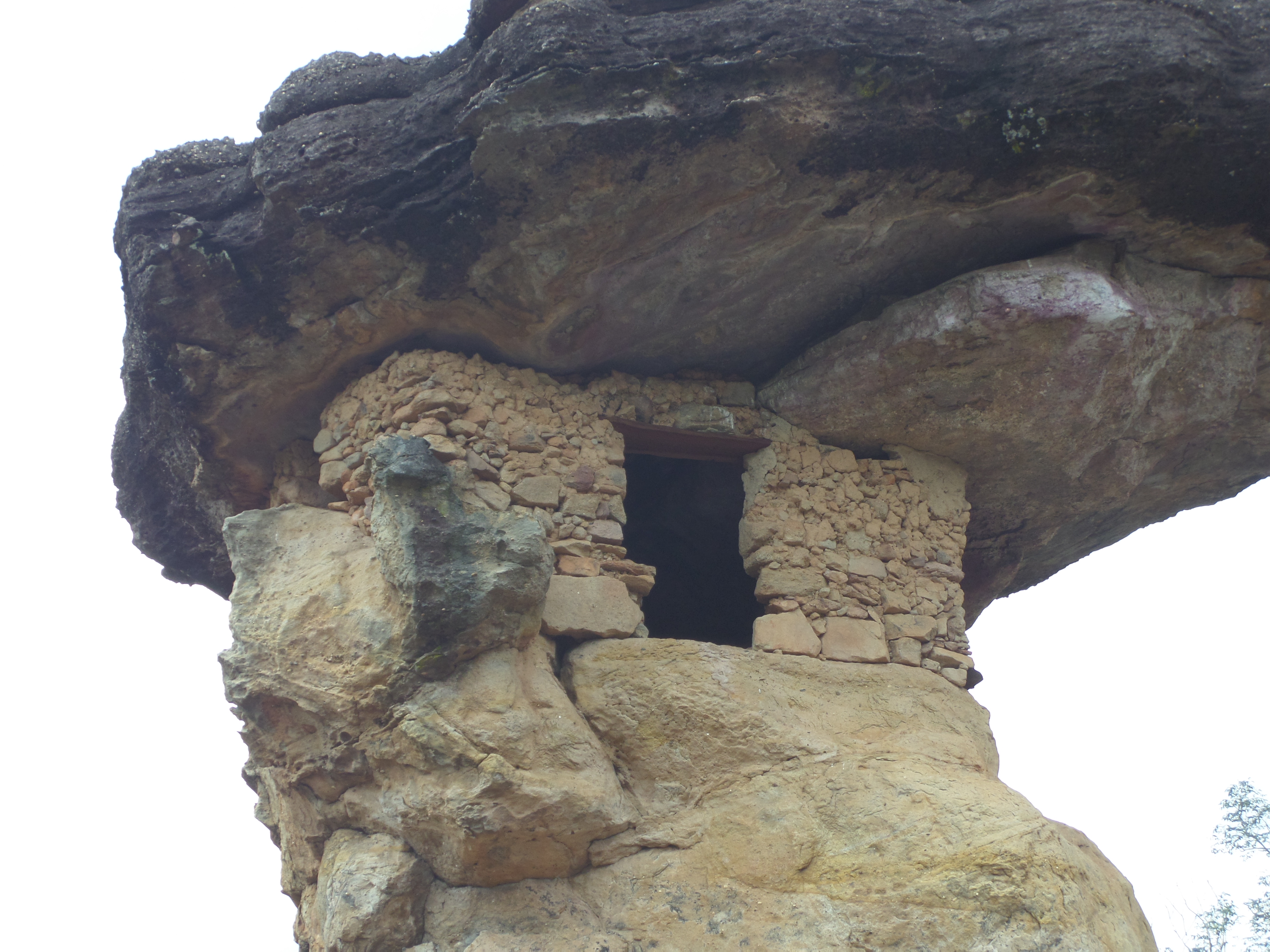
Approximately 75 km from Udon Thani, in Ban Phue District, is the Phu Prabhat Historical Park.

Geologists suggest that millions of years ago the area was covered by glaciers and when these melted the resulting moraine, or debris, caused the strange formations of stone. The area is scattered with unusual shapes of menhir (stand-alone rocks) and archaeologists believe that around the 14th -16th centuries of the Buddhist calendar, Buddhists and Hindu hermits lived here. These men are believed to have prayed, meditated and in general, retreated from the world in their little rock-hewn abodes. Looking at these rocks, the Hoh Nang U-sa in particular, one cannot help but wonder about the tools and techniques, these ancient people used in their building activities.

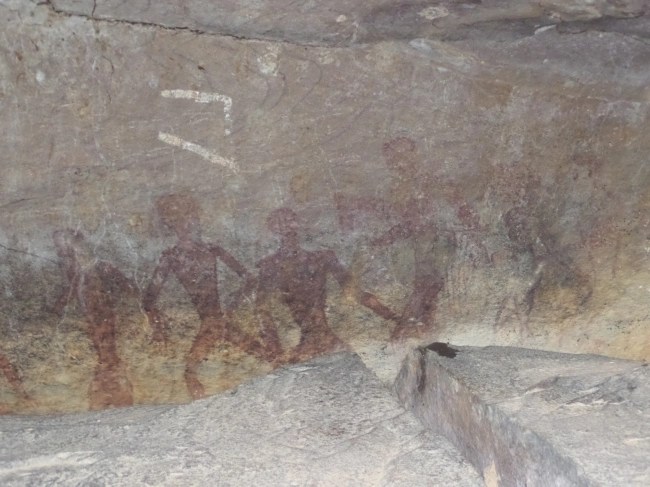
On some of the rocks one can still see carvings or drawings of men and beasts from many centuries ago, though time and the elements are slowly eroding these. However, I suspect that some of the Buddha images strewn around the place are of more recent vintage.

(Photographs by Devinder Raj)

The park is well-maintained and the entrance fees of 100 baht per person is a pittance for the opportunity to spend a few hours in a tranquil setting while the mind wanders back many centuries in time.

Thoughts on Rabindranath Tagore’s ‘Jogajog’

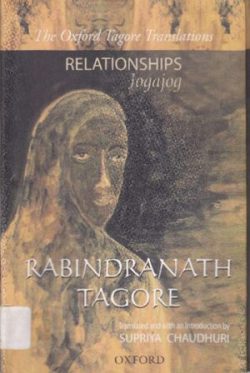
Relationships by Rabindranath Tagorecopy

(This article was first published in Live Encounters: https://liveencounters.net/2021-le-mag/07-july-2021/percy-aaron-my-thoughts-on-relationships-jogajog-by-rabindranath-tagore/)

The story revolves around the Chatterjees and the Ghoshals, two families locked in a feud that goes back some generations. While the former have fallen on hard times, the latter have seen their wealth grow rapidly within one generation due to the acumen and single-minded ambition of Madhusudan, the head of the Ghoshal family.

The story was first serialized in the literary journal Bichitra under the title Tin Purush. When it was published as a novel in 1929, Rabindranath Tagore changed its name to Jogajog. Supriya Chaudhuri, the translator of this edition, the fifth in the series by Oxford Tagore Translations, opted for Relationships as the word nearest in meaning to the author’s original choice. The book contains a note by Tagore as to why he chose Jogajog and the translator, in her longish introduction, explains her choice of Relationships.

Bipradas, the scion of the Chatterjee clan is in declining health, physically and financially. Marriage has passed him by for a variety of reasons. Madhusudan is single too but now that he has accumulated great wealth, he wants a wife, but not just any wife.  He has his eyes set on 19-year old Kumudini, the unmarried youngest sister of Bipradas.

Kumudini Chatterjee, the main protagonist, is “beautiful, tall and slender like a stalk of tuberose; her eyes were not especially large, but they were deep black, and her nose was drawn exquisitely, as though made of flower-petals. She was as fair as a white conch-shell with two graceful hands whose ministering touch was like the gift of the goddess Lakshmi; one could only accept it gratefully”.

If her physical description is quite over-the-top, her skills in other areas are equally so. In chess, she is “so skilled that Bipradas had to play with some caution” and “Bipradas’s hobby was photography. Kumu too learnt the art”. She knows Sanskrit, reads the classics and is an accomplished esraj player. One gets the impression that had she taken up tennis, she would have won Wimbledon.

Her brother Bipradas is “handsome as a god” and skilled in everything he touches, be it chess, the classics, Sanskrit, playing the esraj and hunting. Despite not being a very believable character, he does come across as likeable. One gets the feeling that had he been as good in business as he was in the arts, the family would not have been in such dire straits financially.

The hagiographic characterization does not stop with Kumudini or Bipradas. Their father “was tall and fair-skinned, with a mane of shoulder-length hair and large finely-drawn eyes whose gaze bespoke unchecked mastery……” He “possessed great strength and a handsome body…

Besides having all these exceptional qualities, the ‘good’ people are invariably tall and fair-skinned, while the others are not. While “Madhusudan was not ugly, he was exceedingly hard-featured. What struck one immediately was his dark face….. His wiry hair was as curly as any African’s…. He was short… His arms were hairy”. By character, he “was obsequious in his politeness, his face lit up constantly in hospitable smiles” especially when he was with English people. Shyamsundari, the widow of his elder brother, is “dark BUT beautiful” – as if these two qualities are incompatible. That she has an affair with Madhusudan is contemptible.

The lopsided characterization of the ‘good’ people versus the ‘bad’ people continues with little attempt to balance out the characters.

It is the mindless superstition that makes Kumudini such a bogus unattractive character.  In a letter to the poet Radharani Debi, Tagore tries to explain his heroine. “She had installed in the figure of her deity the complete ideal of manhood that inwardly, unknown to herself, had attracted her mind on the threshold of adolescence.  In point of fact, she had given her womanly love in the guise of worship to that deity. This Kumu, caught up in the mist of her belief, imagined that it was her deity who had beckoned her through a proposal of marriage…”   This excessive religiosity is not piety but a sign of mental health issues. That she believes it is divinely ordained that she marry a man she has never met, then finds him repulsive, makes no attempt to communicate with him, and for whatever reason, makes him feel inferior, only makes her more unlikeable. I wonder if Madhusudan ever saw her smile?

“Ever since their mother’s death, Bipradas had become entirely dependent on Kumu’s care. …everything was in Kumu’s charge. He had become so accustomed to this that nothing pleased him in daily use unless it was touched by Kumu’s hand”.  The admiration between brother and sister for each other is mutual. At best it’s protective, at worst, incestuous.

This novel was written more than a hundred years ago and the main impression is of a suffocating caste-ridden Bengali society mired in rituals and mindless superstition. It couldn’t have been very pleasant being a woman.

While it’s not fair to judge a novel written about one hundred years ago by 2021 standards, I did find the characterization unconvincing, especially when coming from the great Rabindranath Tagore.

For the nineteen years of her girlhood an intense sense of purity had enveloped and pervaded her every limb”. Was Rabindranath Tagore’s Kumudini meant to be a caricature of somebody he knew?


© Percy Aaaron

Western media and the Middle East

“If you don’t read the newspaper, you’re uninformed.
If you read the newspaper, you’re mis-informed.”
–  Mark Twain

I was in my mid-teens when the 1967 Middle East crisis was reaching boiling point. The novels of Leon Uris had filled me with admiration for the spirit of the Jews and so, my sense of fairness was outraged that tiny Israel was surrounded by these big, bad nations and that more Arab states were sending regiments to assist their ‘blood brothers’. I went to the principal of my school and demanded that he send student volunteers to fight alongside the Israelis. I wanted my name first on the list. He looked at me in exasperation and said that I should worry about my poor grades and leave the fighting to the armies there. He must have realised that he had offended me because in a more mellow tone, added that any fighting would end quickly because both sides would soon run out of armaments.

Then the Six-Day War happened and the roles of David and Goliath were reversed. Later, brought up on a weekly diet of Time and Newsweek bias and gung-ho Hollywood garbage, I tended to see the world through the haze of American propaganda. But after Bangladesh, Chile and the Pentagon Papers, the scales fell from my eyes. As I learned to be more discerning in my reading, I felt cheated by the fact that all media organizations had a slant, determined by their governments in some states, or by the owners’ business interests in others. And the truth? Damn the truth.

When the war in Ukraine broke out last year, I was teaching a course on Bias in the Media at my school. Several of my colleagues and friends, mainly American and British couldn’t understand why India didn’t fall in line with the perspectives coming out of, mainly, Washington and London. The readings in the course were often too difficult for the students and since I wanted them to understand the concept of bias, I showed them how the western media was covering the conflict vis-à-vis news organizations in China, India and other countries that didn’t toe the western line. Very effectively, I got the message through. One student, sharper than the others, pointed out that in the west, people tend to believe most things they read, whereas in countries where the press was controlled by the government, people tend to disbelieve most things in print.

The Hamas attack on several Israeli targets has once again highlighted the bias in the Euro and Anglosphere.

CNN and the New York Times in particular, but even the BBC and the Guardian, are full of reports of individual Israeli victims. The coverage of the death and destruction being rained down on the people of Gaza, most of whom are non-combatants, is disproportionately less. The imbalance is probably similar to the number of casualties on either side. The life of a light-skinned Israeli appears to be more valuable than that of a brown-skinned Palestinian. A Semite in a yarmulke evokes more sympathy than a Semite (for that is what Palestinians are too) in a hijab.

“Israeli murderers are called commandos; Arab commandos are called terrorists.”                                     
                                                                    – George Carlin, American humorist

It’s a fact that even if these armchair ‘journalists’ did try to be even-handed, AIPAC and other pro-Israeli lobbies would destroy their careers completely. While most of us swallow our principles from time to time when we have to put food on the table, washing cars or dishes is surely more honorable than shutting our eyes to the carnage in Gaza. Reporting misinformation is as dishonest as not reporting the truth. In the present situation, willful omissions are as criminal as willful commissions.

Freedom of the press is guaranteed only to those who own one’                                                                    
                                                -A.J. Liebling in the New Yorker

If you think that the United States is a shining example of free speech, think again. The hypocrisy of U.S. president Biden, asking the Emir of Qatar to rein in Al Jazeera, whose reporters on the ground in Gaza are showing what overwhelming Israeli force is doing to the people and the city. Likely to inflame passions around the Arab world, the president said. But passions in the non-Arab world are being inflamed too, at the indiscriminate and disproportionate destruction. Witness the growing number of demonstrations around the world of people calling for a ceasefire, or the rising tide of anti-Semitism, in Europe especially.

In U.S. universities, supposedly beacons of free speech and questioning minds, students are being threatened and academics are being censured, or losing their jobs outright, just for calling for a ceasefire and an end to the killing. So, being critical of Israel is tantamount to being anti-Semitic. Nothing is said about the anti-Semitism towards the Palestinians. I admit that I am confused. How can a white European Jew, be more Semitic than a brown Palestinian one?

What the Nazis did to Lidice in Czechoslovakia, the Israelis are doing to northern Gaza.

The Guardian, quotes casualty figures from Gaza as coming from the ‘Hamas-controlled Ministry of Health’. Yes, of course, governments control their ministries. Would this newspaper refer to the Tory-controlled NHS?  Friendly administrations such as Saudi Arabia, no matter how despotic, are governments; unfriendly ones are regimes.

Some historical facts to educate those at Fox, CNN, the New York Times, et al.

The Balfour Declaration was an undertaking by one people, to give away the land of a second people, to a third people. This wasn’t the first time, nor would it be the last time, that Britain, that arch colonial master of divide and rule, was taking, or giving away things, that didn’t belong to it.

The Zionists pushed for a Jewish state as the only guarantee for their safety and security. The western powers, for various reasons, including guilt, acquiesced in the creation of Israel. To achieve this, the Palestinians who had lived on the land for centuries, were displaced to make way for Jews from other parts of the world but mainly from Eastern Europe. In other words, the Palestinians were made to pay the price for the Holocaust and European anti-Semitism.

Following its massive victory in the Six-Day War in June 1967, Israel annexed Arab lands in Egypt, Jordan and Syria. However, with the Camp David Accords, the Sinai was returned to Egypt. This did not happen in Jordan or Syria and these territories are often referred to as the Occupied Lands.

UN Resolution 242, which called for the return of all Arab lands seized in 1967 in exchange for firm guarantees of peace, is the most flouted UN resolution in the history of the world body. This was and is done in connivance with the United States.

In 2006, Hamas overwhelmingly won the elections in Gaza, certified as free and fair by Jimmy Carter and other international observers. But like it has always done with governments it does not approve of, the United States refused to recognize the victor.  We can only wonder, how much different the situation in the Middle East might have been, had Hamas not been cast in the role of a pariah?

Published in 14th Anniversary Edition, Live Encounters Magazine, Volume One Nov-Dec 2023.


© Percy Aaron

Against All Odds

I cried because I had no shoes until I saw a man who had no feet – Old Russian proverb

“I see my name, country and score flashing on the electronic board and I blink many times. I have won silver for my country and myself. I have done it and I can’t believe my eyes. My wildest dreams have come true and the tears start flowing. A short while later, my happiness is tinged with sadness: my family, my friends and my coach aren’t here to share this moment of a lifetime with me. I cannot explain how alone I feel, that the people I care for the most are not here with me. The silver around my neck would have been more than gold, had they been here.”

When Phouthavong Sisavengsouk (Pim) lifted 151 kg to win silver at the 7th ASEAN Para Games, Myanmar 2014, he put to rest the disappointment he had felt at the previous games in Indonesia 2011. A miscommunication between his coach and the judges had seen him disqualified on a technicality. So near and yet so far.

I’m no stranger to broken bones and have had my leg in a cast a few times. I remember the feeling of utter inadequacy and the extreme frustration at not being able to do the things that came so naturally to people around me. Watching Pim, polio-stricken as a child, swivel his wheelchair to load a five-kilogram plate on the barbell, his ready smile and his general cheerfulness, reminded me that I had not been a very patient or pleasant person, when I had had broken limbs. I heaved a sigh of relief that I had got away so lightly.

The disappointment in Indonesia was hard to take and despite the regular visits to the gym, he became increasingly dispirited. Two years ago he met American Sam Hollrah, working out at the same gym and they soon became gym buddies. Sam, a powerlifter in his native Texas, gave Pim tips on improving his technique. More importantly, Sam got Pim to focus on the future, not on his past. “I pushed him. I didn’t let him feel sorry for himself. If he dropped something, he had to pick it up himself,” Sam told Champa Holidays.

Then the big chance came and he was given two months to prepare for the 7th ASEAN Para Games in Nay Pyi Taw in Myanmar. He wet to another gym in the evenings for a further two hours of weight training. He worked harder on his triceps and shoulders. Sam advised him to lose weight, so that he could enter in a lower category. He stayed away from sugar and alcohol and increased his intake of fruit and vegetables. The preparation cost a lot of money stretching his family’s limited resources. Pim received a small amount from the Lao Paralympic Committee but it was inadequate. The cash award of 10 million kip ($1,250) promised to him for winning the silver medal will be welcome when it eventually arrives.

Champa Holidays asked Pim what he did when he wasn’t working out, did he have other interests? He used to play basketball but that was too difficult from a wheelchair. Also, he preferred working alone. He draws when he has the time and makes handicrafts from dried coconut shells. So, was he an artist or a powerlifter? He held up his silver medal with a chuckle.

But he is not resting on that success. His immediate goal is to take part in the Asian Para Games in Incheon, South Korea in October this year but that depends on his finding sponsorship. And Rio 2016? Pim rolls his eyes and his face fills with a big smile.

Does Pim see himself retiring? No, he says, but in the future he’d like to become a trainer, working especially with people like himself. So, does he have any message for young Lao people today? He thinks for a while, then answers. “If you want something really badly, you have to work for it.” Then looking at Sam, he adds with a big smile, “ and only listen to people who tell you, you can do it.”

(Published in Champa Holidays – Apr-May 2014)

Chef Chandra – in touch with his roots

Talking to Chef Chandra Vongsaravanh is like attending a combined lecture on gastronomy, the environment, culture, history, linguistics and more. A veritable walking encyclopaedia, we were spellbound with his wide and diverse knowledge. Despite his unassuming demeanor, once you get Chandra started, his passion for taking Lao cuisine to the world is soon apparent.

While studying economics at Budapest University, he ran a restaurant during term breaks. After graduating he decided he liked cooking more than counting and found himself a job with the Marriott Hotel in the Hungarian capital, preparing a variety of Asian, French and Hungarian dishes. In 1996, he opened his own signature restaurant in that city. As his reputation spread, he was invited to take part in a number of European cooking forums and even served time as a TV celebrity chef. The Smithsonian Institute in Washington D.C. invited him and a number of other international master chefs to take part in cooking demonstrations spanning a month and a half.

He returned to Laos in 2000 with his Hungarian wife and opened his first restaurant the following year in Luang Prabang. A cooking school followed, which has seen around 30,000 enrolments. Chandra, who speaks six languages will be presenting a cooking show on Lao TV in the coming months and a cook book will be published later this year. A man of many interests, he is also the founder of the Luang Prabang Royal Ballet Theatre, Phra Lak Phra Lam.

Chef Chandra took time off his busy schedule to talk to Champa Holidays and started by emphasizing the relationship that Lao cuisine and culture has to the four basic elements: air, earth, fire and water. The Lao people were animists long before Buddhism came to the country and it is their belief in their belief in the spirits of the forest that influenced their cuisine. Lao cooking is very simple and only what is available, in season, should be used. “Nothing more than what is essential, should be taken from the trees or the earth,” he stressed.

Khao niaw (sticky rice) is the very soul of Lao food according to Chandra, and even Lao people are unaware of this. No other country has accorded such a central role to this rice. It, rather than steamed rice, is offered to the monks in the morning taak baat. At weddings, a ball of rice, divided in half and eaten by the bride and groom with arms intertwined, signifies two halves becoming a whole. Sticky rice is never thrown away but instead left outside for the birds, he said.

Our lesson in gastronomy segued into history. “Hundreds of years ago, large parts of northeastern Thailand were part of Laos. The food, language and culture were the same.” After the war on Vietnam, the Lao diaspora increased and many needed to earn a living in their adopted countries. Some opened ‘Thai’ restaurants, since Lao cuisine was unknown. While Thai food increasingly popular, diners were unaware of the difference between Isaan cuisine and Thai mainstream dishes. Chandra’s mission is now to rectify that misconception and see that due credit is given to Lao food.

“Anything that is not natural, destroys the organisms of the body”

 Since the environment and the elements are so integral to Lao cuisine, we asked Chandra what he thought about the increased use of chemicals in agriculture and galloping global deforestation. “If you look around the region, China, Vietnam, Thailand, all their forests have gone. Here in Laos, we still have some forests. We must protect them.” He agreed that this was a matter of grave concern that needed to be addressed without delay. The indiscriminate use of agrochemicals worried him, as biodiversity is critical to food supplies. Every insect plays its part in rejuvenating the environment. He is also alarmed by the rise in fast foods and additives, something that is completely alien to Lao culture.

(Published in Champa Holidays, Feb-Mar 2014)


© Percy Aaron